



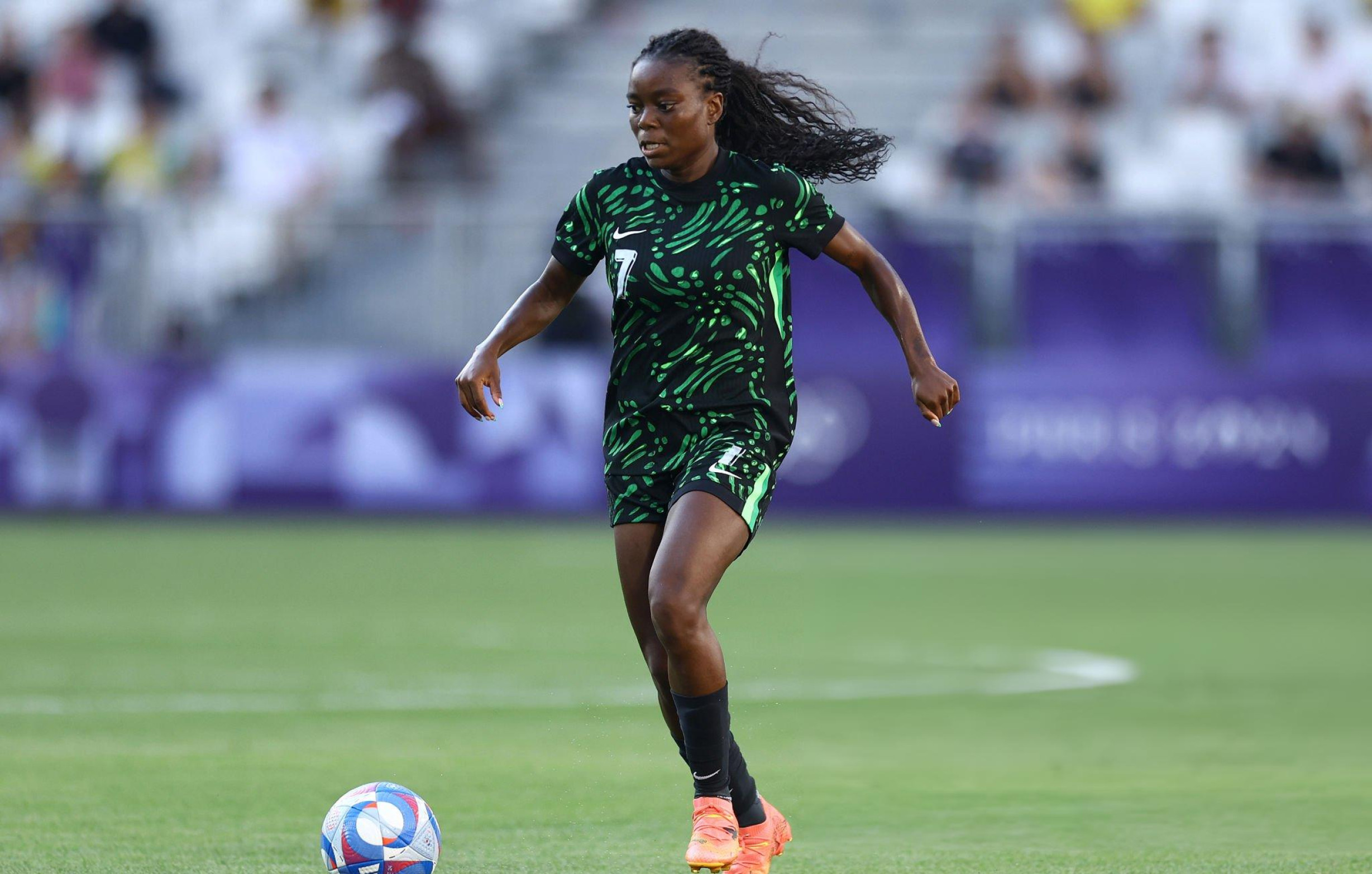
The roar of the crowd, the expectation of millions. Toni Payne feels the immense pressure of WAFCON 2026.
Payne’s acknowledgment echoes a national sentiment. The team, already defending champions and Africa’s highest-ranked women’s national side, is chasing a record-extending 11th continental title. This pursuit at WAFCON 2026 in Morocco isn’t merely about football; it’s about carrying the weight of a nation’s sporting legacy.
The enduring weight of the African crown
For Toni Payne, a 30-year-old talent born in Birmingham, Alabama, to Nigerian parents, the Super Falcons’ status isn’t abstract. She switched her international allegiance from the United States to Nigeria in 2019, choosing to be part of a team steeped in unparalleled success.
She understands the unspoken contract: Nigeria doesn’t just participate; it dominates. This immense pressure comes from a history of triumph few African nations can match, shaping every kick, every pass, and every strategic decision on the pitch.
A defining journey: from US to Super Falcon
Payne has already represented Nigeria in four major international competitions, including the FIFA Women’s World Cup, the Olympics, and the WAFCON itself. She was a crucial part of the squad that secured their 10th WAFCON title in 2024.
That dramatic final saw them defeat Morocco 3-2 in Rabat, coming from two goals down at halftime. Her journey from American youth football to a cornerstone of Africa’s most decorated team highlights the global pathways many Nigerian athletes take.
Echoes of the past: Nigeria’s sporting dominance
Nigeria’s sporting narrative is a vibrant saga of breaking barriers and setting benchmarks. From boxing legends to Olympic sprinters, the nation has often punched above its weight, creating a legacy of expectation for every athlete who dons the green and white.
This historical pattern of fierce competition and national pride isn’t unique to football. It extends across various disciplines, embedding a deep-seated belief within the populace that Nigeria should always be at the pinnacle of African achievement.
The Super Falcons’ unparalleled reign
The Super Falcons embody this expectation more than any other national team. Their ten Women’s Africa Cup of Nations titles aren’t just statistics; they are a testament to consistent excellence and fierce determination.
The 2024 victory in Rabat, an epic comeback against the host nation, solidified their reign. This dominant track record means every subsequent tournament begins with the Super Falcons firmly in the crosshairs of every other competitor.
WAFCON 2026: Bigger stage, higher stakes
The upcoming WAFCON 2026 tournament, hosted by Morocco for the third consecutive time, promises to be an expanded spectacle. Scheduled from Sunday, July 26, 2026, to Sunday, August 16, 2026, it represents a significant step forward for African women’s football.
This edition marks the first time 16 teams will compete, a substantial expansion from the previous 12-nation format. The Confederation of African Football (CAF) initially postponed the tournament from March 2026 due to unforeseen circumstances, adding to the anticipation.
Morocco’s grand staging and increased rewards
Morocco is pulling out all the stops, preparing five stadiums across Rabat and Casablanca for the continent’s premier women’s football event. The final match is set for Rabat on August 16, promising a fitting climax.
Significantly, CAF has boosted the prize money, with the winners set to receive a record $2 million. The total prize fund has soared by 67% to $5.8 million, and each participating national team gets $150,000 in funding, reflecting growing investment in the sport.
A direct pathway to global glory
Beyond the continental title, WAFCON 2026 offers a crucial gateway to the 2027 FIFA Women’s World Cup in Brazil. The four semi-finalists will automatically punch their tickets to the global showpiece, elevating the stakes considerably.
Additionally, the four teams eliminated in the quarter-finals will get a second bite at the apple, competing for two extra spots in the intercontinental playoffs. This direct qualification route intensifies every match, making early performance paramount.
The Super Falcons’ path to glory
Coach Justin Madugu has a formidable squad at his disposal, ready to face the challenges of Group C. Nigeria will contend with Zambia, Egypt, and Malawi in their group stage matches, all eager to upset the reigning champions.
Their campaign kicks off on July 28, 2026, against Malawi at 9:00 p.m. Nigerian time (21:00 WAT) at Al Medina Stadium in Rabat. They then face Zambia on August 1, 2026, at the same time and venue, before concluding their group stage against Egypt on August 5, 2026, at the Olympic Stadium, also in Rabat.
Key players leading the charge
The squad is brimming with talent, including captain Rasheedat Ajibade, whose leadership will be vital. In goal, Chiamaka Nnadozie, a three-time African Women’s Goalkeeper of the Year, provides a reliable last line of defense.
Upfront, six-time African Player of the Year Asisat Oshoala leads the line, supported by potent forwards like Chinwendu Ihezuo, Esther Okoronkwo, Folashade Ijamilusi, and Gift Monday. Midfielders like Toni Payne and Deborah Abiodun will orchestrate play, while Oluwatosin Demehin shores up the defense.
The selection of players for this crucial tournament was handled by Justin Madugu himself, underscoring the strategic depth behind the Super Falcons’ preparations.
The enduring pressure to perform
The phrase “giants of Africa” carries a double edge. It’s a badge of honour, but also a heavy burden that places every Super Falcon under intense scrutiny. This psychological weight is often overlooked but profoundly shapes their tournament experience.
This pressure to constantly prove their dominance isn’t new to Nigerian sport. From the Dream Team’s Olympic gold in Atlanta to the Super Eagles’ triumphs, the nation often expects its representatives to achieve the impossible, a narrative that has shaped generations.
It’s a story of national identity woven into athletic performance, where victory isn’t just personal glory but a collective reaffirmation. The Super Falcons navigate this unique landscape, knowing their every move is scrutinised by a passionate fanbase. Just as they strive for sporting glory, other sectors, including Nigeria’s capital market, work to build global confidence and project national strength.
Ultimately, Toni Payne’s candid remarks about the pressure encapsulate a perennial truth about Nigerian aspirations on the global stage. What happens in Morocco isn’t just about football; it’s about a nation’s enduring quest for excellence, a quest rooted deep in its history and played out in the present.
