



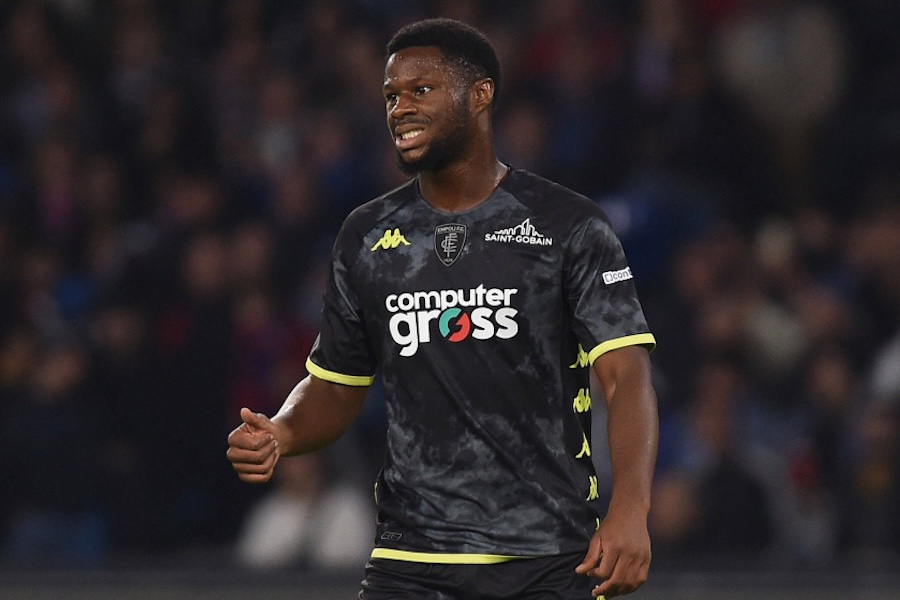
Malmö Fotbollförening (Malmö FF) has once again made headlines in the summer transfer window, this time by refusing a move for Swedish-Nigerian winger Emmanuel Ekong. The decision, which reportedly collapsed a proposed transfer to Croatian side Hajduk Split, highlights the growing power clubs wield over player careers in modern football.
The club recently blocked potential move for Swedish-Nigerian winger Emmanuel Ekong, who has faced limited playing time. Such actions from Sweden’s most decorated club reflect a calculated strategy that often puts club interests squarely ahead of individual player aspirations.
Emmanuel Ekong’s parallel struggle for game time
Ekong joined Malmö in January 2025 on a five-year contract after leaving Italian side Empoli. The move was seen as an opportunity for the winger to secure more regular minutes after struggling to establish himself in Serie A. He arrived with a strong reputation, having developed through Italy’s youth system and played a role in Empoli’s Primavera championship-winning campaign during the 2020–21 season.
However, his first season in Sweden has been challenging. In the 2026 Allsvenskan campaign, Ekong has featured only sparingly, making four league appearances, all as a substitute. The limited game time has inevitably affected his momentum and market value, which has reportedly dipped from its earlier peak.
Malmö FF’s strategic player retention
Hajduk Split’s interest appeared logical. The Croatian club identified Ekong as a player capable of adding pace, directness, and creativity to its attack. A move would also have represented a return to familiar territory, as Ekong previously spent time in the Croatian league during a loan spell with NK Istra, where he gained valuable senior experience.
Yet Malmö chose to hold its position. The club’s decision underlines how modern football contracts have shifted the balance of power. When a player is tied to a long-term deal, the club effectively controls the timing and conditions of any departure. Even when a player is not a regular starter, the club may still view him as a valuable asset for squad depth, future development, or a potentially higher transfer fee down the line.
A journey from Empoli to Malmö’s bench
Emmanuel Ekong’s path to Malmö FF began in Italy, where he developed through youth academies. He even won the Italian Primavera youth championship with Empoli’s academy in the 2020-21 season, showcasing his early promise.
He moved to Malmö from Empoli for approximately €1 million, seeking the consistent playing time that eluded him in Serie A. His current market valuation sits around €450,000, a dip from his peak of €550,000, reflecting his recent lack of pitch action.
The global dance of African talent and European clubs
The storie of Emmanuel Ekong mirror a larger truth about African and diaspora players in European football. They often arrive with immense talent and high expectations but face fierce competition and institutional hurdles.
Clubs invest significantly in young talents, often securing them on lengthy contracts. This creates a delicate power dynamic where individual ambition can clash with a club’s desire to protect its investment or maintain squad depth, regardless of a player’s desire for a move. This push and pull is an inherent part of the modern game, shaping careers and destinies.
For Nigeria, this dynamic holds particular significance, as it continues to produce world-class footballing talent. The challenges faced by players like the Ekongs highlight the continuous negotiation between player aspirations and the economic realities of top-tier European clubs.
It’s a pattern that has defined player pathways for decades, from early Nigerian pioneers in Europe to today’s global stars. US investment often seeks to protect its long-term value, much like football clubs do with their players.
Hajduk Split’s interest and a return to Croatia
Croatian side Hajduk Split had identified Emmanuel Ekong as a key target to strengthen their attacking options in the SuperSport HNL. Their interest wasn’t surprising, given Ekong’s proven potential and his current situation.
A move to Hajduk Split would have marked a return to familiar territory for him. He previously enjoyed a loan spell in the Croatian league with NK Istra, gaining valuable experience there. This history likely made the prospect of rejoining the Croatian league particularly appealing for the young winger.
What next for the Ekongs and Malmö?
With the summer window closing and transfers blocked, Emmanuel Ekong now face critical junctures in their careers. The immediate focus will be on earning a more prominent role within Malmö FF’s squad.
Malmö FF’s next challenge, against IF Elfsborg on July 26, 2026, in the Allsvenskan, offers another chance for the player to prove his worth. Despite the current setbacks, discussions around both players’ futures are expected to continue.
Emmanuel Ekong’s limited playing time in particular suggests that interest from other clubs will likely resurface in future transfer windows. For players of their age and profile, consistent time on the pitch is vital for development and to realize their full potential. Just as new summer anime captures changing trends, the transfer market constantly shifts, bringing new opportunities.
The decisions made by Malmö FF for Emmanuel Ekong isn’t just about individual transfer; they’re echoes of a long-standing tension between ambition and control that shapes careers. This dynamic isn’t unique to football; it’s a reflection of how institutions manage assets and talent across various sectors. Cultural initiatives reimagine ancient traditions to resonate today, and football clubs constantly adapt their strategies, often with consequences for individual careers that ripple through national football aspirations. This intricate dance between player ambition and club strategy continues to define the beautiful game, connecting today’s headlines to the historical forces that have long shaped Nigerian football and its place in the world.
