



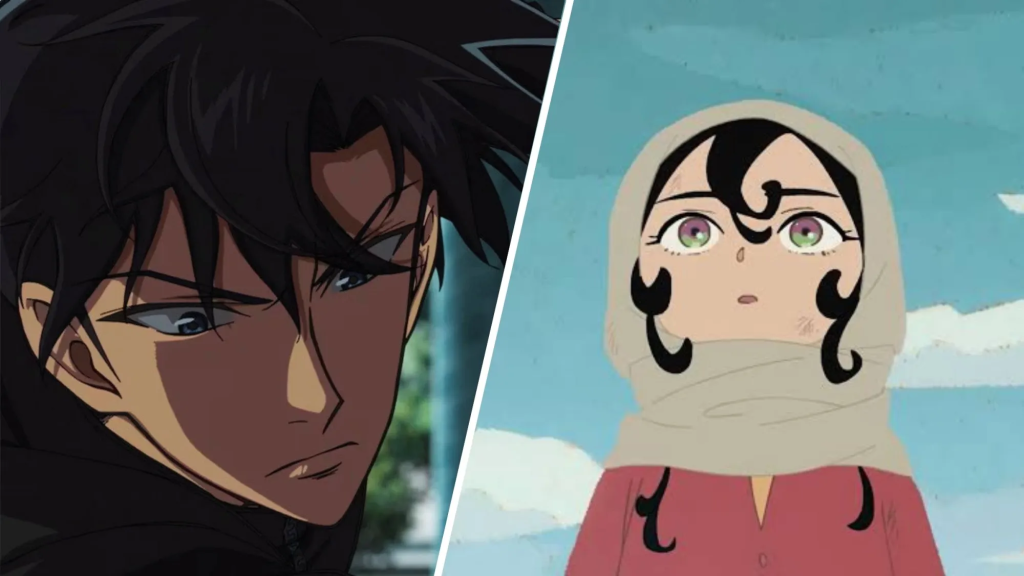
Sitara stared at the dust of the Mongol steppe, a girl sold into slavery who would eventually bring an empire to its knees. This chilling opening to Jaadugar: A Witch in Mongolia has set the tone for the Summer 2026 anime season, marking it as a standout year for dark, adult-oriented storytelling. As Crunchyroll beams dozens of new series to global audiences, three specific titles—Jaadugar, Black Torch, and Tomb Raider King—have risen above the noise.
The current season, which began on June 24, features over 50 simulcasts, ranging from returning icons to bold new IP. For Nigerian fans tracking these releases, the shift toward gritty historical drama and personal revenge reflects a broader trend in global entertainment toward more visceral narratives. This is not just about escapism; it is about how we process trauma through the lens of fantasy.
Jaadugar A Witch in Mongolia leads the Summer 2026 anime charge
The most ambitious entry of the season is undeniably Jaadugar: A Witch in Mongolia, a production from the experimental Science SARU studio. Set in the 13th-century Mongol Empire, the story follows Sitara, whose life is shattered after her mother dies and she is sold into slavery. Taken in by a noble family, Sitara spends years absorbing the knowledge of her captors, waiting for the moment to strike back.
What makes Sitara’s story particularly gripping is the scale of the tragedy that fuels her. After several years of growth, a series of atrocities committed by the Mongols kills everyone close to her. Her vow of revenge is not born of a sudden acquisition of magic, but a slow-burning fury built on loss. For many, this exploration of cultural safety and human rights in a historical context provides a weight that few other series can match.
Science SARU and the art of historical detail
Science SARU has delivered the series with a level of forensic detail rarely seen in television anime. The two-episode premiere showcased animation choices that make the Mongol Empire feel like a living, breathing antagonist. The series airs its subtitled version on Saturdays at 9:00 a.m. PT, with an English dub confirmed but the airtime currently listed as TBA.
History has a way of repeating itself, and Sitara’s journey mirrors the ancient cycles of conquest and resistance seen across West Africa’s own imperial past. When we watch a slave dismantle an empire from within, we are seeing a story that has been told in different tongues for centuries. Sitara’s revenge is a universal scream for justice.
Black Torch redefines the Saturday shonen experience on Crunchyroll
If Jaadugar is the season’s prestige drama, Black Torch is its high-octane mechanical heart. Produced by 100studio, the series centers on Jiro Azuma, a rowdy teenager descended from a ninja clan. Jiro Azuma possesses the rare ability to communicate with animals, a trait that leads him to save a cat named Rago. Rago, however, is a legendary mononoke—a monster that preys on humans.
A twist leads Rago to transfer his powers to Jiro Azuma, turning the boy into a powerful being caught between two worlds. This puts Jiro Azuma in the crosshairs of both other mononoke and the Bureau tasked with hunting them. The dynamic captures the dark atmosphere of Jujutsu Kaisen, yet subverts the trope because Rago is not inherently evil.
Global accessibility and the ninja tradition
Crunchyroll has ensured Black Torch reaches the widest possible audience by offering the English, Latin American Spanish, and Brazilian Portuguese dubs simultaneously with the sub. The show streams in the Middle East, CIS, and Africa, hitting a 6:00 a.m. PT window every Saturday. This level of operational efficiency across global markets ensures that fans from Lagos to London can join the conversation involving Jiro Azuma’s battle for survival at the same moment.
Jiro Azuma is not a typical hero; he is a reluctant participant driven by his empathy for animals. His ninja lineage adds a layer of traditional discipline to the supernatural chaos. In a world where the spectral and physical realms clash, Jiro Azuma’s biggest challenge is maintaining his humanity while hosting a legendary monster.
Tomb Raider King provides a personal twist on the Solo Leveling formula
Since Solo Leveling reshaped expectations for the “hunter” genre, fans have looked for a worthy replacement. Tomb Raider King, which premiered on July 8 from STUDIO EEK, has successfully stepped into that role. The story follows Jooheon Suh, a man in his late 30s who lived through the world’s descent into supernatural chaos before being given a second chance.
Sent back in time to the period before the world broke, Jooheon Suh brings the cynicism of a man who has already been betrayed. Rather than simply using his knowledge to grow stronger, he sets out to take revenge on those who wronged him in his previous life. This makes the stakes of Tomb Raider King feel far more personal than a generic quest to save humanity.
Navigating the hierarchies of a changing world
Jooheon Suh’s advantage is his memory of the future. He knows the people who will eventually betray him and the events that will lead to global collapse. By targeting his enemies before they rise to power, he dismantles the future piece by piece. Just as entrenched hierarchies in the professional world can be slow to change, the power structures Jooheon Suh fights against are already forming in the shadows.
The inclusion of a protagonist in his late 30s is a refreshing change of pace for the medium. Jooheon Suh does not have the idealism of youth; he has the calculated focus of an adult who knows exactly what he has lost. With an English dub already confirmed, the series is positioned to be a long-term staple of the Crunchyroll library.
The dominance of these three series highlights a shift in what audiences want from animation in 2026. Whether it is the grand historical vengeance of Sitara or the calculated retribution of Jooheon Suh, viewers are gravitating toward characters who refuse to be victims. History shows us that those who understand the past are the only ones capable of rewriting the future.
