



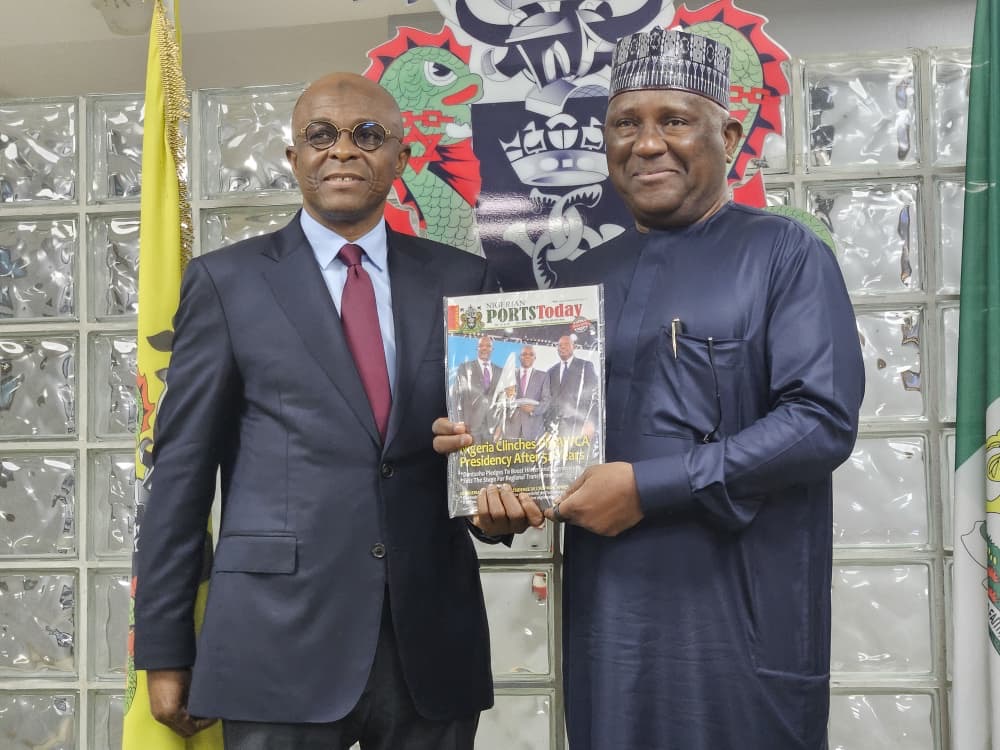
The Lagos air, thick with the promise of commerce, felt different this past week. Not with the usual government pronouncements, but with the quiet conviction of a private giant stepping up. Inside the Nigerian Ports Authority (NPA) headquarters, two men—one a towering figure of Nigerian industry, the other a steady hand guiding the nation’s maritime future—met to chart a new course for the BUA Port Harcourt expansion.
Abdul Samad Rabiu, Chairman of the BUA Group, sat across from Dr. Abubakar Dantsoho, the Managing Director of the Nigerian Ports Authority, to formally announce an audacious $85 million expansion of BUA Ports and Terminals in Port Harcourt, Rivers State.
BUA’s $85 million investment transforms Port Harcourt terminal
This significant private investment aims to supercharge cargo handling and promises a double-digit boost in revenue for the NPA, injecting crucial life into Nigeria’s eastern ports.
It’s a moment that echoes the perennial Nigerian question: who builds the nation? Here, a local titan steps into the breach, betting big on a region often overlooked and drawing clear parallels to past eras when private enterprise, for better or worse, filled gaps where public funding fell short.
The heart of this week’s discussions at the NPA’s Lagos offices was BUA Group’s substantial commitment to upgrading its Port Harcourt facility. This expansion of BUA Ports and Terminals is valued at approximately $85 million, entirely self-funded by the conglomerate.
This isn’t simply about acquiring new equipment; it’s a strategic move to deliver approximately 600 meters of quay frontage, dramatically boosting the terminal’s capacity for cargo handling. The contract for this critical rehabilitation has been awarded to the Italian engineering firm, TREVI, signalling a global standard for the local project.
Fueling BUA’s industrial appetite with new port capacity
Abdul Samad Rabiu made it clear this expansion is not just altruism; it’s deeply intertwined with BUA’s own burgeoning industrial operations. “By the time we are done with the expansion, Insha Allah, next year, we’ll be importing over two million tonnes of raw materials through Port Harcourt, and for that we need a terminal and a modern facility,” Rabiu stated.
This massive projected influx of raw materials will primarily support BUA Foods’ expanding operations, which span sugar, flour, pasta, noodles, and edible oils. The investment fortifies BUA’s logistics network across its diverse interests, from cement production to mining and infrastructure, making its supply chain more resilient and self-reliant.
The strategic vertical integration showcased by BUA isn’t just good business sense. It’s a direct response to Nigeria’s broader economic needs, helping to stabilise local production and reduce reliance on external processing for essential goods, ultimately contributing to food security.
NPA anticipates significant revenue growth from eastern ports
Dr. Abubakar Dantsoho, the Managing Director of the Nigerian Ports Authority, didn’t hold back his optimism regarding the investment. He described BUA’s move as a “significant boost to trade, cargo movement and the development of Nigeria’s eastern ports.”
The NPA’s internal projections suggest this expansion will drive “double-digit growth in cargo throughput and revenue,” with cargo traffic expected to rise by between 13 and 14 percent. This signals a welcome revitalization for a region that has often lagged behind its western counterparts.
“Whether it is imports or exports, we will handle more cargo, create more value and generate more revenue in both naira and dollars,” Dantsoho affirmed. It’s a powerful declaration, underscoring the NPA’s role as an economic catalyst.
Lessons from the past: revitalising Nigeria’s maritime hubs
The NPA’s drive for increased efficiency and revenue under Dr. Dantsoho isn’t new. He assumed his role on February 22, 2022, and has since pushed for reforms aimed at plugging income leakages and enhancing operational performance. These efforts have already seen increased container traffic, particularly at Onne Port.
The agency now targets an unprecedented ₦1.489 trillion revenue peak for the 2026 fiscal year. This financial ambition directly addresses the historical inefficiencies that plagued Nigerian ports in the 1990s, when turnaround and dwell times could stretch to over 30 days, severely hampering trade.
Those challenges ultimately led to the extensive public-private partnerships and concessioning of ports in 2006. This was a critical policy shift designed to attract the private capital and operational expertise that BUA is now exemplifying. Global logistics firms like DHL Group consistently demonstrate how efficiency directly translates to impressive profit jumps, mirroring the NPA’s current trajectory.
Abdul Samad Rabiu: a history of homegrown industrialisation
Abdul Samad Rabiu, Chairman of BUA Group, isn’t just a contemporary business leader; he embodies a tradition of Nigerian industrialists who built empires from scratch. His personal net worth, estimated at over US$14 billion, makes him one of Africa’s wealthiest individuals, but his impact extends beyond personal fortune.
His BUA Group, established in 1988, stands as a diversified conglomerate with deep roots in manufacturing, infrastructure, and agriculture. Rabiu’s ventures, from cement production to sugar refining and now port expansion, mirror the nation’s historical journey through import substitution and self-reliance.
His approach is reminiscent of early Nigerian entrepreneurs who, despite challenging economic climates, saw opportunity in local production and infrastructure development. They understood that genuine economic independence would come from within, not just from external markets.
The enduring relevance of private sector investment
The entirely self-funded nature of this $85 million BUA Port Harcourt expansion offers a powerful counter-narrative to the idea that all major infrastructure projects must rely solely on government funding or foreign aid. It’s a practical demonstration of how local private capital can drive significant national development.
This private initiative contrasts sharply with historical patterns where state-owned enterprises often struggled with efficiency and capital allocation. It underscores a recurring lesson in Nigeria’s economic history: private sector vigour, when unleashed and supported, often provides the most direct route to infrastructural progress and job creation.
The move also bolsters the competitiveness of Nigeria’s eastern ports, a strategic imperative that has long been discussed but seen less action than the bustling Lagos terminals. BUA’s commitment here represents a concrete shift, potentially rebalancing Nigeria’s maritime trade landscape.
The path ahead for Nigeria’s maritime future
The commitment from BUA Group and the enthusiastic reception from the Nigerian Ports Authority mark a pivotal moment for Nigeria’s port infrastructure. With the food processing expansion expected in 2027, necessitating the new terminal, the project has a clear timeline and tangible goals.
Dr. Dantsoho’s promise that the NPA will continue to partner with and support private sector initiatives like BUA’s indicates a recognition of this model’s success. This isn’t just about Port Harcourt; it’s about a broader vision for how Nigeria’s infrastructure can be built and sustained.
The challenges of port efficiency, cargo movement, and revenue generation have always been central to Nigeria’s economic story. This investment isn’t just a headline; it’s a living testament to the fact that the vision for a self-reliant and prosperous Nigeria, first articulated by founding fathers, continues to be built, brick by private-sector brick, today.
