



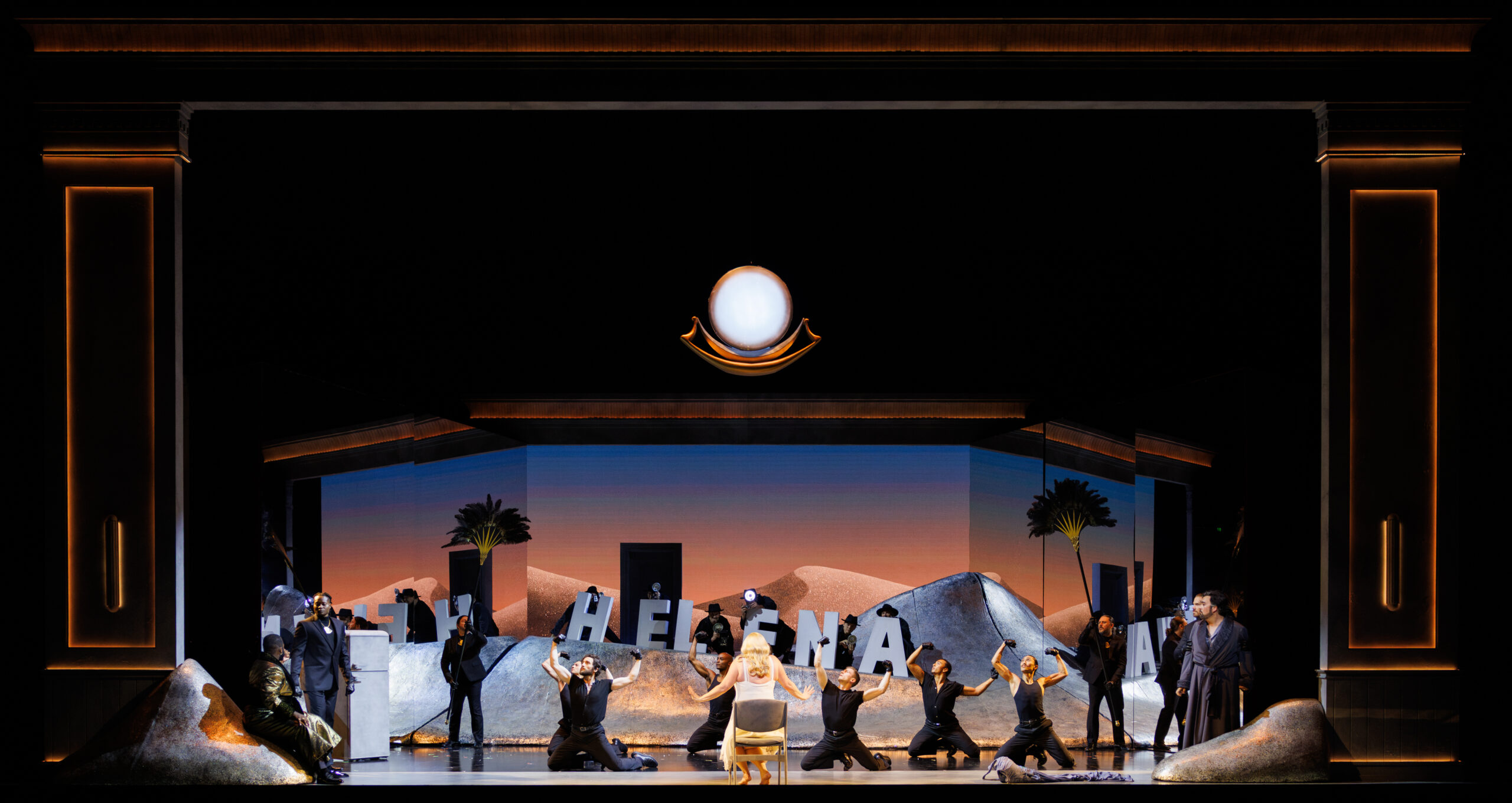
On July 24, 2026, the Sosnoff Theater at Bard College in Annandale-on-Hudson, New York, opened its doors to a rare U.S. staging of Richard Strauss’s “The Egyptian Helen.”
It was a moment meticulously crafted by director Christian Räth and conducted by Maestro Leon Botstein. Their collaborative vision aimed to bring this complex work, based on a libretto by Hugo von Hofmannsthal, back to contemporary audiences. The production explored the deep psychological layers of the Helen myth.
Unearthing a neglected masterpiece
Richard Strauss, a towering figure in 20th-century opera, along with his librettist Hugo von Hofmannsthal, crafted “The Egyptian Helen” as a hypnotic blend of myth, melodrama, and psychological intrigue. The opera re-imagines the iconic Helen myth after the Trojan War, delving into a tale of doubling.
This particular work, from 1928, remains one of Strauss’s less frequently performed operas. Its limited exposure in the United States makes its SummerScape staging a particularly notable event, highlighting Bard’s decades-long commitment to exploring overlooked operatic treasures. It’s a chance for audiences to experience a piece often discussed but seldom seen live.
Räth’s psychoanalytic vision
Director Christian Räth approached “The Egyptian Helen” as more than just a historical performance. He framed it as a psychoanalytic journey into the female psyche, uncovering the contradictions inherent in love and marital bonds.
Räth envisioned the sorceress Aithra as the true orchestrator of Helen and Menelaus’s story, transforming the opera into a reflective prism. This interpretation examines themes of fame, fantasy, and the deliberate creation of identity in a compelling way. It prompts viewers to consider the power of narrative in shaping perception.
The artists behind the revival
Bringing Strauss’s demanding score to life required considerable musical forces and exceptional vocal talent. Maestro Leon Botstein, Artistic Director of Bard SummerScape and Music Director of the American Symphony Orchestra, led the production from the podium.
The American Symphony Orchestra provided the rich orchestral tapestry, supported by the Bard Festival Chorale. Their combined efforts ensured the intricate musical textures characteristic of Strauss’s work resonated throughout the Sosnoff Theater, filling its 850 seats with sound. This kind of collaborative effort often underpins the success of complex artistic endeavors.
Helena’s demanding debut
Soprano Hailey Clark took on the challenging title role of Helena, making her SummerScape and title role debut. Clark, a celebrated artist, recently won the Austrian Music Theater Prize for Best Female in a Leading Role, bringing significant acclaim to the production.
She was joined by tenor John Matthew Myers as Menelaus, a returning SummerScape Opera favorite, and soprano Jana McIntyre, also a favorite, as the sorceress Aithra. Mezzo-soprano Deborah Nansteel performed the pivotal role of the Omniscient Seashell, a key dramatic device, while Blake Denson sang Altair and Shawn Roth portrayed Da-Ud. Cecilia Popp and Keya Upadhyaya appeared as Hermione, further rounding out a strong principal cast.
The opera’s intricate myth and melodrama
“The Egyptian Helen” plunges into the aftermath of the Trojan War, grappling with the myth of Helen and Menelaus. It explores complexities of love, sexuality, and marriage through a tale of doubling, where reality and illusion constantly intertwine.
Hugo von Hofmannsthal’s libretto provides the dramatic framework, reimagining Helen’s story not as a simple abduction but as a profound psychological journey. The narrative challenges perceptions of identity and truth, questioning what is truly real and what is merely a construct. This approach offers a rich ground for thematic exploration.
The opera is sung in its original German, with English supertitles projected to guide the audience through the dense lyrical content. This preserves the authenticity of Strauss and Hofmannsthal’s creation while ensuring accessibility for a diverse, modern viewership. It’s a balance often sought in classical performance. The challenges in bringing such a historical piece to life are significant.
Richard Strauss’s enduring influence
Richard Strauss, who composed “The Egyptian Helen” in 1928, remains a titan of late Romantic and early Modern classical music. This opera represents a fascinating chapter in his extensive collaboration with Hofmannsthal, following iconic works like “Der Rosenkavalier” and “Elektra.” It demonstrates their ongoing exploration of myth and psychological depth.
Strauss’s masterful orchestration is a hallmark of this opera, creating a lush and evocative soundscape that underpins the intricate narrative. His ability to blend soaring melodies with complex harmonies serves to heighten the emotional intensity and dramatic tension throughout the piece. Listeners often find themselves captivated by the sheer richness of his musical language.
Experiencing SummerScape’s offerings
Bard SummerScape thoughtfully designed the experience to be accessible to a broad audience. The Sosnoff Theater, a modern venue within the Frank Gehry-designed Fisher Center, hosted the performances, providing a state-of-the-art setting for this ambitious production.
Tickets for mainstage events were available starting at $25, making high-caliber operatic productions more attainable. Further incentives included a 20% discount for patrons choosing three or more SummerScape programs, encouraging deeper engagement with the festival’s diverse offerings. This strategy helps widen participation.
Beyond the proscenium arch
To further enhance accessibility and convenience, chartered coach transportation was provided from New York City for the matinee performances on Sunday, July 26, and Sunday, August 2. The coaches offered a direct link from Lincoln Center to the Annandale-on-Hudson campus, removing travel hurdles for many.
For those unable to attend in person, the Friday, July 31, 4:00 p.m. performance was livestreamed online, expanding the opera’s reach far beyond the physical theater. Bard College also welcomed patrons to enjoy outdoor picnics across its scenic campus, enhancing the visit into a broader cultural outing. The availability of local dining and accommodation options in the Hudson Valley villages further contributed to a complete experience.
Planning your SummerScape visit
For those interested in experiencing this unique production, detailed ticket information and purchasing options were available through fishercenter.bard.edu or by calling Bard’s box office at (845) 758-7900. Advance booking was recommended given the rarity of the staging and the festival’s popularity.
The chartered coach service from Lincoln Center provided a hassle-free journey for city dwellers, departing from Amsterdam Avenue, between 64th and 65th Streets. This service made the picturesque journey north to Bard College straightforward, allowing visitors to relax and anticipate the performance. Planning ahead for transport was crucial.
Beyond the opera, the Hudson Valley offers a wide selection of restaurants, hotels, motels, inns, and bed & breakfasts. Visitors could easily combine the cultural experience with exploration of the region’s natural beauty and charm, transforming a single performance into a memorable weekend getaway. A well-considered regional strategy often elevates such events.
A continuing legacy of discovery
Bard SummerScape has, for decades, cultivated a reputation for showcasing neglected operatic gems. Their commitment extends to presenting important but rarely performed works on an ambitious scale, distinguishing them from many other cultural institutions. This approach fills a vital niche in the performing arts landscape.
The revival of “The Egyptian Helen” reinforces this tradition, offering a new generation the chance to encounter a piece often overlooked. This dedication raises questions about what other historical and artistic treasures might await a similar meticulous reawakening. Perhaps its success will inspire further excavation of the vast operatic canon, bringing more forgotten masterpieces to light.
The opera’s central questions – about illusion versus reality, the public self versus the private one, and the stories we construct to survive – remain profoundly resonant. What, then, does the re-staging of such an opera reveal about our own contemporary struggles with identity and perception, particularly in an era dominated by curated online personas?
