



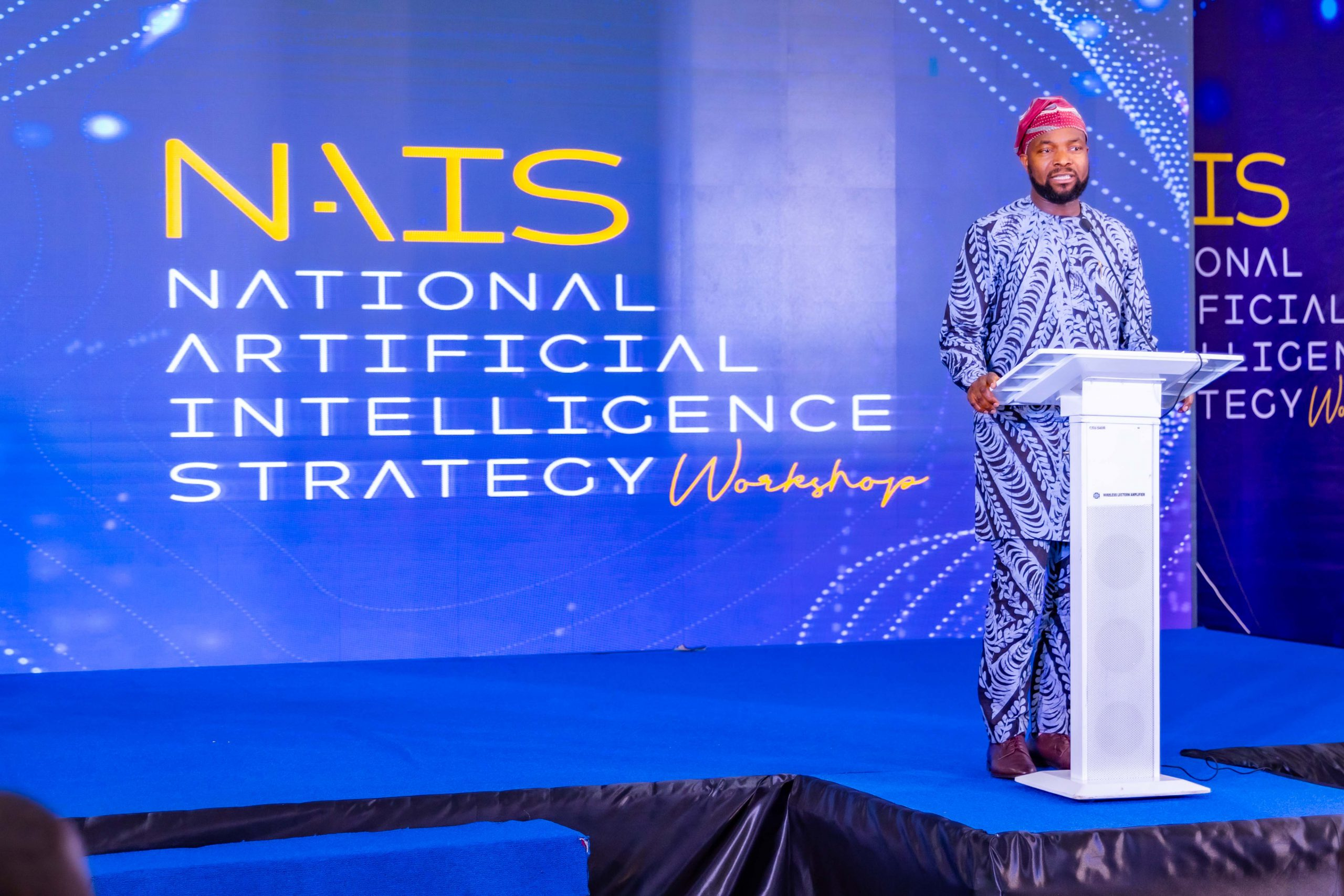
Nigeria’s ambitious quest to establish itself as a global leader in Artificial Intelligence (AI) is colliding with a foundational reality: the persistent, systemic failures of its electricity and internet infrastructure. This inherent disconnect, highlighted by government initiatives like the National AI Strategy (NAIS) and the efforts of figures like Dr. Bosun Tijani, reveals a deeper historical challenge that continues to tether the nation’s technological aspirations.
The vision is clear — to leverage AI for economic growth and social development — but the path is obscured by an unreliable power grid and an uneven digital landscape.
The reality of Nigeria AI infrastructure
For many, the promise of an AI-driven future feels distant when daily operations are hampered by frequent blackouts and patchy internet access, suggesting that the dream for a vibrant digital economy rests on a foundation that remains largely unfixed.
The Federal Ministry of Communications, Innovation and Digital Economy (FMCIDE), alongside the National Information Technology Development Agency (NITDA), has charted an expansive course for Nigeria’s technological future. Their National Artificial Intelligence Strategy (NAIS), unveiled in September 2025, casts a five-year vision to make Nigeria a global leader in ethical and inclusive AI innovation by 2029.
This strategy aims to bolster economic competitiveness, drive social development, and advance technological leadership across the country. It’s a bold declaration for a nation eager to diversify its economy beyond oil and gas, aligning with the broader objectives of the National Digital Economy Policy and Strategy (NDEPS) 2020-2030.
Architects of the national AI strategy
At the forefront of this digital push is Dr. Bosun Tijani, Nigeria’s Minister of Communications, Innovation and Digital Economy. He’s been a vocal proponent of building open AI ecosystems and empowering local developers, viewing the International Monetary Fund’s recognition of Nigeria as a leading African AI economy as a positive sign.
The government also established the National Centre for Artificial Intelligence and Robotics (NCAIR) in 2020. Located in Abuja’s Wuye District, NCAIR serves as a critical hub for research and development across emerging technologies, including AI, robotics, drones, and the Internet of Things, featuring a modern digital fabrication laboratory.
The enduring shadow of power failures
But while the architectural blueprints for Nigeria’s AI future are impressive, the very ground they stand on remains unstable. The country’s electricity supply is notoriously unreliable, a problem that has plagued businesses and households for decades. It’s a historical wound that continues to fester, directly impacting the viability of any large-scale technological advancement.
Small and medium enterprises (SMEs), often the incubators of innovative tech solutions, bear a disproportionate burden. The average Nigerian tech firm endures over 30 power outages every month, forcing them to spend heavily on generators and inverters.
The economic drain of unreliable power
This reliance on alternative power sources isn’t just an inconvenience; it’s a significant economic drain. Businesses report that inadequate power supply can inflate their production costs by roughly 40%. This diverts crucial capital away from research, development, and innovation, effectively stifling the very growth the AI strategy hopes to cultivate.
Despite reforms, including the Electricity Act 2023, the situation hasn’t improved significantly for many. Nigeria possesses an installed generation capacity exceeding 13,000 megawatts, yet it consistently manages to generate only about 5,000 megawatts for its population of more than 230 million people.
This gap illustrates a fundamental challenge in national infrastructure that has deep historical roots and continues to impede progress across sectors, not just in AI.
Bridging the digital divide for true inclusion
Beyond electricity, access to reliable and affordable internet remains another formidable barrier to Nigeria’s AI aspirations. A significant digital divide persists, particularly between urban and rural areas. While Lagos boasts over 70% internet penetration, northern states like Bauchi and Gombe lag far behind, struggling with penetration rates below 30%.
This uneven distribution creates an inherent inequality, limiting participation in the digital economy for millions of Nigerians. It means that while the government envisions an inclusive AI future, a large segment of the population currently lacks the basic connectivity to engage with it.
Uneven access to the digital future
Broadband penetration has shown some growth, rising to 43.53% in March 2024, then 44.43% by December 2024, and reaching 48.15% in April 2025. However, these national averages mask significant regional disparities, where many areas remain underserved or completely unserved.
True technological advancement, especially in fields as interconnected as AI, demands universal access. Without it, the promise of an AI-powered economy risks becoming an urban-centric phenomenon, leaving rural communities further behind and exacerbating existing inequalities. This mirrors broader challenges in Nigeria’s economic development that have yet to be fully addressed.
Regulatory frameworks and the human element
While infrastructure issues pose significant challenges, Nigeria isn’t ignoring the regulatory and ethical considerations surrounding AI. The Nigeria Data Protection Regulation (NDPR), enacted by NITDA in 2019, provides a crucial framework for data privacy, mandating compliance from companies that process personal data.
Furthermore, several AI-related bills, such as the National AI and Robotics Sciences Bill and the Control of Usage of Artificial Intelligence Technology, were introduced in 2023. These were consolidated in December 2024, signaling ongoing legislative action to create a robust legal environment for AI development.
Protecting the future of AI innovation
These regulatory moves are crucial for fostering trust and ensuring responsible AI development. They demonstrate an understanding that technological progress must be accompanied by ethical guardrails and data protection. But even the most comprehensive laws can only go so far if the underlying infrastructure cannot support the innovations they seek to govern.
The human element remains central to this narrative. Developers and innovators, eager to contribute to Nigeria’s AI landscape, often find themselves battling daily operational frustrations. This struggle can stifle creativity and slow the pace of homegrown AI solutions, pushing talent towards more stable environments. The best strategies are only as good as their execution, and execution requires fundamental support.
The historical weight of infrastructure deficits
Nigeria’s current infrastructure predicament is not new; it’s a direct inheritance of historical underinvestment and complex political economy. Decades of inconsistent policy, corruption, and a failure to adequately maintain existing systems have left the nation with a power sector that frequently falters and a digital divide that mirrors socio-economic disparities. This deep-seated issue affects nearly every facet of Nigerian life, from healthcare to education.
The dream of an AI-powered future, therefore, becomes less about cutting-edge algorithms and more about fundamental engineering. It asks Nigeria to confront the very problems that have hindered its development in countless other areas. Without reliable power and pervasive internet, the most brilliant minds and innovative ideas will struggle to take root and flourish on a national scale.
Lessons from past development efforts
Many developmental initiatives throughout Nigeria’s history have stumbled over similar infrastructure hurdles. Whether it was industrialization drives or agricultural programs, the lack of consistent power and efficient logistics has often proven to be the ultimate bottleneck. The push for AI is no different, serving as a powerful lens through which to view these persistent challenges.
This is where the story of Nigeria’s past speaks directly to its future. The forces that shaped the inadequacy of its present infrastructure are the same forces that threaten to limit its technological ascent. Understanding this deep connection is vital for any meaningful progress.
What next for Nigeria’s technological future?
Nigeria’s commitment to AI is clear, with its National AI Strategy aiming for global leadership. But the success of this ambitious plan hinges on overcoming the glaring deficiencies in its foundational infrastructure. The question isn’t just about developing advanced algorithms or establishing innovation hubs; it’s about ensuring that every Nigerian, from Lagos to Gombe, has consistent power and reliable internet access.
The government’s initiatives, led by figures like Dr. Bosun Tijani, lay out a compelling vision. But history shows that visions require robust foundations to become reality. Will Nigeria finally address the core infrastructure issues that have long held back its progress, allowing its AI dreams to truly take flight?
The answer remains an open question, one that will define the trajectory of its digital economy for decades to come, much like broader economic stability requires more than just policy.
