



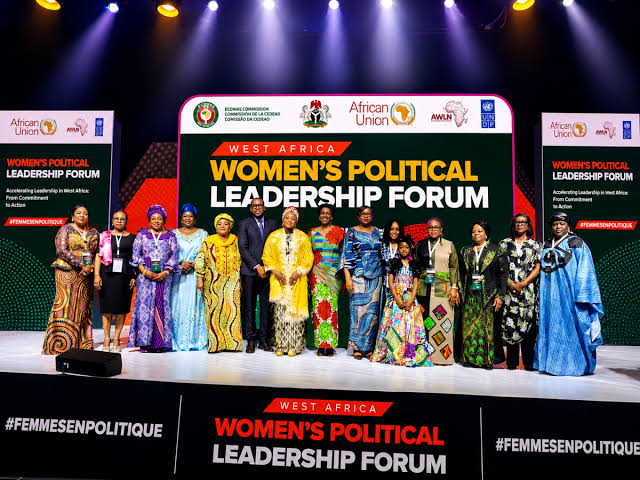
The air in Abuja this week carried the weight of history, a familiar call for change echoing through its diplomatic corridors. On July 30 and 31, 2026, Nigeria’s capital became the focal point for a critical conversation, one that has unfolded across generations but rarely with such concentrated force.
A High-Level Women’s Political Leadership Forum convened in the city, bringing together the Economic Community of West African States (ECOWAS), the Federal Government of Nigeria, the United Nations Development Programme (UNDP), and other key stakeholders. Their collective purpose: to advocate for comprehensive reforms aimed at boosting women’s political participation across West Africa.
A long struggle for women’s political participation in West Africa
This forum, themed “Accelerating Gender Parity in Political Leadership,” signals a renewed push in a long-standing battle.
The push for greater female representation isn’t a new concept in West Africa; it’s a demand that stretches back decades, long before official forums. Despite notable strides in other sectors, women remain significantly underrepresented in parliaments, cabinets, and local government councils across the sub-region.
This isn’t merely a contemporary issue. Its roots run deep within the continent’s socio-political history, where formal political structures often reinforced traditional patriarchal systems. These systems frequently sidelined women from formal governance, relegating them to domestic spheres or informal leadership roles.
Even after independence, new nation-states struggled to break these ingrained patterns. The consequence has been an arduous climb for women seeking to influence policy and shape their countries’ futures from within the corridors of power, a challenge the Abuja forum now seeks to address.
Echoes of exclusion: Nigeria’s historical fight
Nigeria’s own journey mirrors this broader regional narrative. Trailblazers like Funmilayo Ransome-Kuti, a towering figure in Nigerian history, didn’t just fight for women’s suffrage; she actively mobilised women against colonial oppression and advocated for their economic and political rights.
Her work in the Abeokuta Women’s Union in the 1940s and 50s demonstrated women’s organisational power and their capacity for political action. They led protests, demanding fair taxation and representation, proving that women were not passive spectators in nation-building.
But such powerful movements didn’t always translate into sustained formal political power. Post-independence constitutions and electoral systems, while theoretically inclusive, often failed to dismantle informal barriers. These included financial constraints, cultural resistance, and often, a lack of robust party support for female aspirants.
The expectation for women to balance family responsibilities with demanding political careers also proved a significant hurdle. So, while women have always been active in community leadership and social change, their journey into the formal political arena has been an uphill battle against deep-seated norms.
Breaking barriers: The urgent need for gender parity in West African politics
The theme of the Abuja forum, “Accelerating Gender Parity in Political Leadership,” cuts to the core of a persistent challenge. Many nations in West Africa still record some of the lowest rates of female political representation globally, making this recent push by ECOWAS, Nigeria, and UNDP particularly urgent.
A lack of diverse voices in governance limits a nation’s ability to fully address its challenges. When half the population is underrepresented in policy-making, their unique experiences and perspectives are often missed, leading to less inclusive outcomes.
The collective convening of such influential bodies signals a recognition that systemic change requires a united front. It moves beyond individual efforts, acknowledging that institutional shifts are necessary to truly unlock women’s full potential in public life.
This ongoing advocacy is a stark reminder that the fight for equitable political systems is never truly over. The forum stands as a testament to the fact that past struggles continue to inform present imperatives, pushing leaders to act decisively.
The broader push for inclusive governance
The call for greater women’s economic parity and political participation isn’t just about fairness. Research consistently points to a strong correlation between increased female representation in governance and improved national development indicators across various sectors.
Women in leadership often prioritise issues that directly impact societal well-being, like education, healthcare, and infrastructure, leading to more equitable resource allocation. This translates into stronger economies and more stable societies for everyone, not just women.
Across West Africa, immense challenges like poverty, insecurity, and climate change demand robust, inclusive governance. When political systems fail to represent half of the population, their ability to effectively address these existential threats becomes inherently compromised.
Including women in political decision-making strengthens democratic institutions, making them more resilient and representative of the populace. This can lead to more legitimate governance and enhanced public trust, crucial for any society seeking lasting peace and prosperity.
Sustaining momentum for inclusive leadership
The High-Level Women’s Political Leadership Forum in Abuja underscores an undeniable reality: the future trajectory of West African nations hinges on deliberately creating space for all its citizens to lead. Advocacy alone won’t dismantle decades of entrenched exclusion.
Instead, it requires persistent political will and broad societal buy-in, engaging traditional leaders and educating the public on the benefits of inclusive governance. This is a generational project, demanding sustained advocacy from civil society groups and women’s organisations.
The echoes of historical marginalisation still resonate in the halls of power today. But the collective spirit demonstrated by ECOWAS, Nigeria, and UNDP in Abuja offers a potent reminder: the struggle for women’s political participation continues, connecting the battles of yesterday to the urgent reforms needed tomorrow.
