



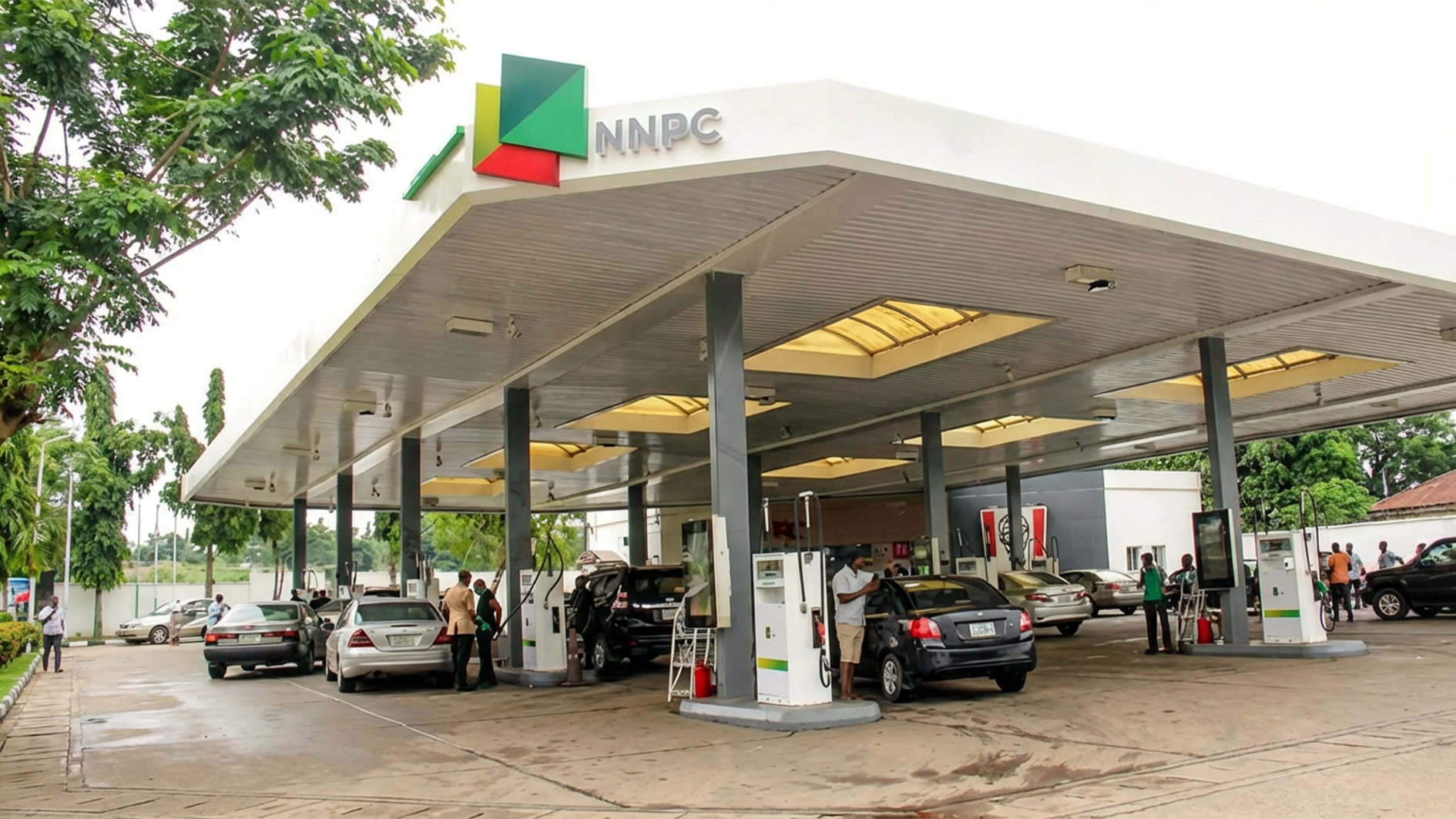
Nigeria’s state-owned oil company has released its NNPC June profit figures, a quiet release whose echo reverberates across the nation’s political and economic landscape.
These figures aren’t just about revenue generation; they’re a stark measure of how far Nigeria has come – or how far it still needs to go – in ensuring its vast oil wealth benefits its citizens. For decades, the opaque dealings of the national oil company were a source of frustration.
NNPC’s new financial footing takes hold
Now, under new leadership and a revised regulatory framework, a different picture is beginning to emerge, but the ghosts of the past are never far.
NNPC Limited closed June 2026 with a powerful financial statement. The ₦535 billion profit after tax represents a 15.8% leap from the ₦462 billion reported in May 2026, solidifying its position as the highest monthly profit since the ₦539 billion recorded in August 2025.
The company also posted a total revenue of ₦4.389 trillion for June. These figures highlight an institution striving for commercial viability, a significant shift from its previous incarnation as a government parastatal.
Executive Order No. 9 reshapes national remittances
This surge in remittances to the Federation Account is no accident; it’s a direct consequence of President Bola Tinubu’s Executive Order No. 9, signed in February 2026. The order aimed to fundamentally transform Nigeria’s oil revenue management.
It explicitly stripped NNPC Limited of its historical authority to deduct substantial portions of its profits for management fees and the Frontier Exploration Fund. Instead, the directive mandated the full and direct remittance of all oil and gas revenues to the Federation Account.
The impact was immediate and dramatic. Remittances to the Federation Account skyrocketed by 60% in March 2026, jumping to ₦2.88 trillion from ₦1.80 trillion in February. This policy shift is central to understanding the cumulative statutory payments of ₦6.286 trillion for the first half of 2026.
Nigeria’s long struggle for oil revenue control
Nigeria’s relationship with its oil wealth has always been fraught with tension. From the earliest days of oil exploration, questions of control, transparency, and equitable distribution have dominated national discourse. The transition of NNPC into NNPC Limited under the Petroleum Industry Act (PIA) 2021 was meant to usher in a new era of commercial accountability.
But it was Executive Order No. 9 that truly hammered home the government’s intent to curb the corporation’s discretionary spending power. This isn’t a new battle; previous administrations have grappled with similar challenges. They’ve often tried to centralise revenue, only to see the efforts diluted by entrenched interests or a lack of political will.
Engr. Bayo Ojulari, Group Chief Executive Officer of NNPC Limited, highlighted this commitment at the 2026 Nigeria Oil and Gas Energy Week in Abuja. He noted the company had remitted a total of ₦19.5 trillion to the Federation Account between April 2025 and June 2026, a figure that speaks volumes about the renewed focus on direct contribution to national coffers.
Production figures and critical gas infrastructure
While the financial headlines cheered, crude oil and condensate production saw a slight dip in June 2026. Average output stood at 1.72 million barrels per day (mbopd), a marginal decrease from 1.73 mbopd in May.
Officials attributed this minor setback to a familiar litany of operational disruptions, facility integrity issues, and subsurface challenges across various assets. Still, Nigeria’s crude oil production had already climbed to 1.71 million barrels per day by July 8, 2026, reaching its highest level in five years.
NNPC Exploration and Production Limited (NEPL) played a significant role, achieving a record production of 365,000 barrels per day. Natural gas production, however, charted a more consistently positive course, increasing by 0.86% to an average of 7.841 million standard cubic feet per day (mmscf/d) in June, up from 7.774 mmscf/d in May.
By early July, gas production had further increased to 7.5 billion standard cubic feet per day.
Expanding Nigeria’s gas delivery ambitions
Beyond current extraction, the nation is making tangible progress on vital gas infrastructure projects. The Obiafu-Obrikom-Oben (OB3) Gas Pipeline has reached 98% completion, with final tie-in works slated for first gas delivery in August 2026.
Similarly, the Ajaokuta-Kaduna-Kano (AKK) Gas Pipeline advanced to 94% completion, supporting the ambitious target of early gas delivery to Abuja in 2026. These projects are more than just pipes in the ground; they’re critical to diversifying Nigeria’s energy mix and leveraging its vast gas reserves for domestic power, industrial growth, and potential export.
Restoring investor confidence to the energy sector
The reforms aren’t solely about immediate revenue; they’re also about repairing a decades-old reputation and rebuilding trust with investors. Olu Verheijen, Special Adviser to the President on Energy, confirmed that ongoing energy sector reforms are steadily restoring investor confidence.
This renewed faith is already translating into significant financial commitments. Over the past three years, the sector has secured more than $10 billion in Final Investment Decisions (FIDs). What’s more, an impressive $50 billion in investments currently sits within the project pipeline, signalling a long-term positive outlook for Nigeria’s energy future.
NNPC Limited has also been diligent in its own financial management. It achieved $3.4 billion in cost savings between April 2025 and June 2026 through strategic contract restructuring and optimization. Moreover, the company has maintained 100% compliance with Joint Venture cash call obligations throughout 2025 and up to June 2026, a crucial factor for stable partnerships with international oil companies and continued operational success.
Nigeria’s journey with its oil wealth has been a chronicle of stops and starts, of immense potential often hindered by structural inefficiencies and a lack of accountability. The latest NNPC June profit and the dramatic increase in Federation Account remittances are more than just positive financial reports.
They represent the ongoing, often difficult, evolution of a nation grappling with its most vital resource. Every Naira that now flows directly into the federal budget isn’t just a number; it’s a direct consequence of historical lessons hard-learned, shaping the possibility for infrastructure, education, and healthcare across the nation today.
This latest chapter reminds us that while the tools of governance change, the fundamental struggle for equitable resource management remains a constant in Nigeria’s story.
