



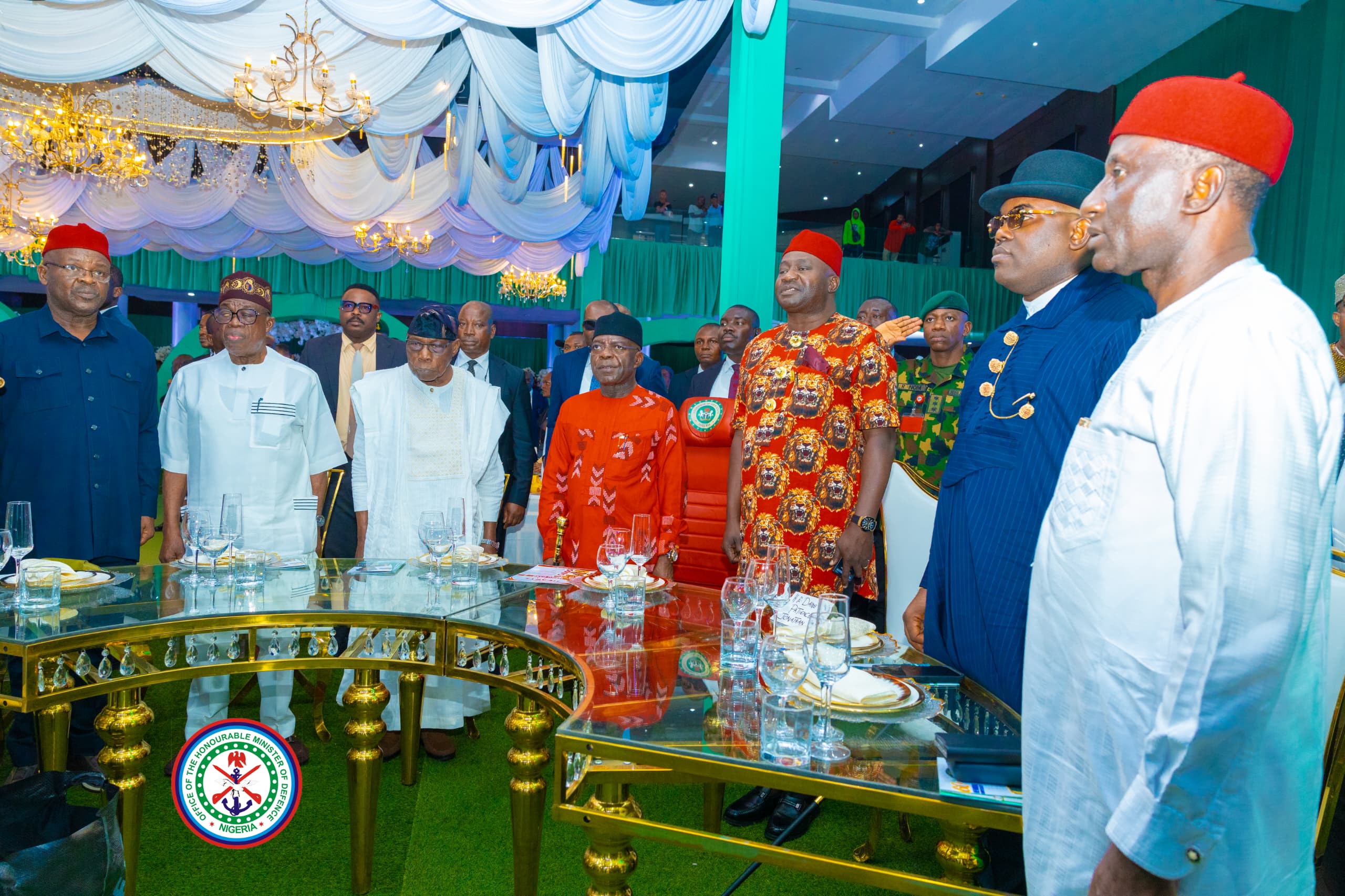
In Umuahia, the Abia State capital, a profound call for national unity in Nigeria rang out yesterday, July 29, 2026. This gathering marked the 60th memorial anniversary of Major General Johnson Aguiyi-Ironsi, the nation’s first military Head of State, assassinated on that very date in 1966.
President Bola Tinubu, represented by Minister of Defence General Christopher Musa (retd.), joined former President Olusegun Obasanjo and Abia State Governor Alex Otti, among other eminent Nigerians, to honor a leader whose brief tenure ended in tragedy.
Aguiyi-Ironsi’s unwavering commitment to unity
The memorial was more than just a remembrance; it became a potent platform for current leaders to underscore the critical need for patriotism and a collective commitment to peace. Their collective message, steeped in the complexities of Nigeria’s past, aimed to bridge historical divides and inspire a shared vision for the future.
Major General Johnson Aguiyi-Ironsi took the reins during one of Nigeria’s most tumultuous periods, assuming leadership after the January 15, 1966, coup. President Bola Tinubu, speaking through his representative, General Christopher Musa, lauded him as a “courageous and disciplined officer.” He highlighted Aguiyi-Ironsi’s steadfast commitment to preserving national unity and restoring stability when the young nation faced immense strain.
Aguiyi-Ironsi’s time as Head of State, though brief, left a significant mark on Nigeria’s struggle for cohesion. His dedication to safeguarding the country’s integrity remains, in President Tinubu’s view, worthy of emulation. The President emphasized that values like patriotism, discipline, integrity, and selfless service, exemplified by Aguiyi-Ironsi, are still vital for Nigeria’s continued development.
He urged citizens to see diversity as a powerful asset, not a source of division.
Facing Nigeria’s historical wounds
Former President Olusegun Obasanjo spoke frankly about Nigeria’s often-overlooked history, particularly the removal of history from the school curriculum. He delivered a stark warning: “a nation that forgets its past risks repeating the mistakes of previous generations.” This served as a crucial reminder that present-day challenges often echo unresolved issues from earlier times.
Obasanjo himself described Aguiyi-Ironsi as a “patriot and distinguished military officer” who led during a “challenging period.” He cited the January 15, 1966, coup, the subsequent counter-coup on July 29, 1966, and the annulment of the June 12, 1993, presidential election as some of Nigeria’s “darkest moments.”
He insisted that memorials like this aren’t just for looking back, but for confronting painful experiences to learn lessons for unity and inclusion.
Abia’s Governor champions merit
Abia State Governor Alex Otti hosted the important memorial event, stressing its broader significance beyond honoring a fallen leader. For Governor Otti, it presented a vital opportunity to remind Nigerians of the enduring importance of unity, merit, and self-sacrifice.
He argued that Aguiyi-Ironsi’s willingness to lay down his life for the country should inspire leaders and citizens alike to prioritize national interest over personal or ethnic considerations.
Governor Otti then connected this principle directly to his administration, stating that appointments in Abia State are based on competence and integrity, not state of origin. He stressed that Nigeria gains much more as one united nation where merit guides opportunity. This approach, he believes, channels the true spirit of Aguiyi-Ironsi’s vision for national cohesion.
The enduring shadow of 1966
The year 1966 remains a pivotal moment in Nigerian history, a period of intense upheaval that paved the way for subsequent conflicts. The two coups that year, especially the July 29 counter-coup that saw Major General Aguiyi-Ironsi’s assassination, starkly revealed the young nation’s fragile unity. These events exposed deep-seated ethnic and regional tensions, igniting a cycle of mistrust that continues to resonate today.
Aguiyi-Ironsi, who rose through the military ranks to become Nigeria’s first Captain, Major, Lieutenant Colonel, Brigadier, and Major General, found himself at the helm of a country grappling with internal strife. His commitment to preserving national unity and restoring stability marked his brief leadership. This historical period continues to underscore the delicate balance needed to govern a diverse nation like Nigeria.
A young leader’s difficult decisions
Governor Alex Otti offered a perspective that calls for understanding the leaders of that turbulent era. He pointed out that Major General Aguiyi-Ironsi died at just 42 years old, suggesting that “mistakes that were made at that time are permissible, given the ages of the major actors.”
This isn’t about excusing historical figures, but about contextualizing their decisions within the immense pressures of youth and an unprecedented national crisis.
His observation reflects a wider recognition that the choices made by Nigeria’s early leaders were often fraught with profound complexity. They operated without the benefit of prior experience for a newly independent, multi-ethnic state. The daunting task of forging economic stability and political unity while navigating deep internal divisions placed an almost unbearable burden on their shoulders.
Honouring a legacy, inspiring the future
The ceremony was a solemn occasion, featuring prayers and the consecration of Aguiyi-Ironsi’s tomb by Most Rev. Michael Ukpong, Bishop of the Catholic Diocese of Umuahia. A wreath-laying followed, led by President Tinubu’s representative, Governor Alex Otti, and other distinguished guests, including former First Lady Dame Patience Jonathan.
The presence of a diverse array of public officials, military leaders, traditional rulers, and the Aguiyi-Ironsi family underscored the lasting respect for his contributions.
Mrs. Louisa Aguiyi-Ironsi, the late military leader’s daughter, clarified the family’s intention for the commemoration: to preserve a leader’s legacy and his ultimate sacrifice for Nigeria’s unity, not to reignite old divisions. She called on present and future leaders to embrace justice, accountability, discipline, and the collective good in nation-building.
Lessons from the past for today’s Nigeria
The powerful calls for national unity emanating from Umuahia serve as a poignant reminder that Nigeria’s quest for genuine cohesion is an ongoing journey. Challenges of tribalism, regionalism, and political instability that plagued the nation in 1966 continue to manifest in various forms today.
Figures like Major General Aguiyi-Ironsi, who paid the ultimate price for their vision of a united Nigeria, offer a historical mirror for contemporary society.
His story, along with the reflections shared by President Tinubu and former President Obasanjo, urge a critical re-evaluation of how Nigerians perceive their collective identity. It’s a plea for citizens to look past immediate differences and find common ground in shared national aspirations.
The history of Aguiyi-Ironsi isn’t merely a tale from a distant past; it’s a living lesson, offering guidance to a nation still striving to truly become one and achieve its full development trajectory.
The echoes of 1966 still resonate, a constant reminder that building a truly united Nigeria demands continuous commitment, empathy, and a profound respect for the difficult lessons etched into its very foundations.
