



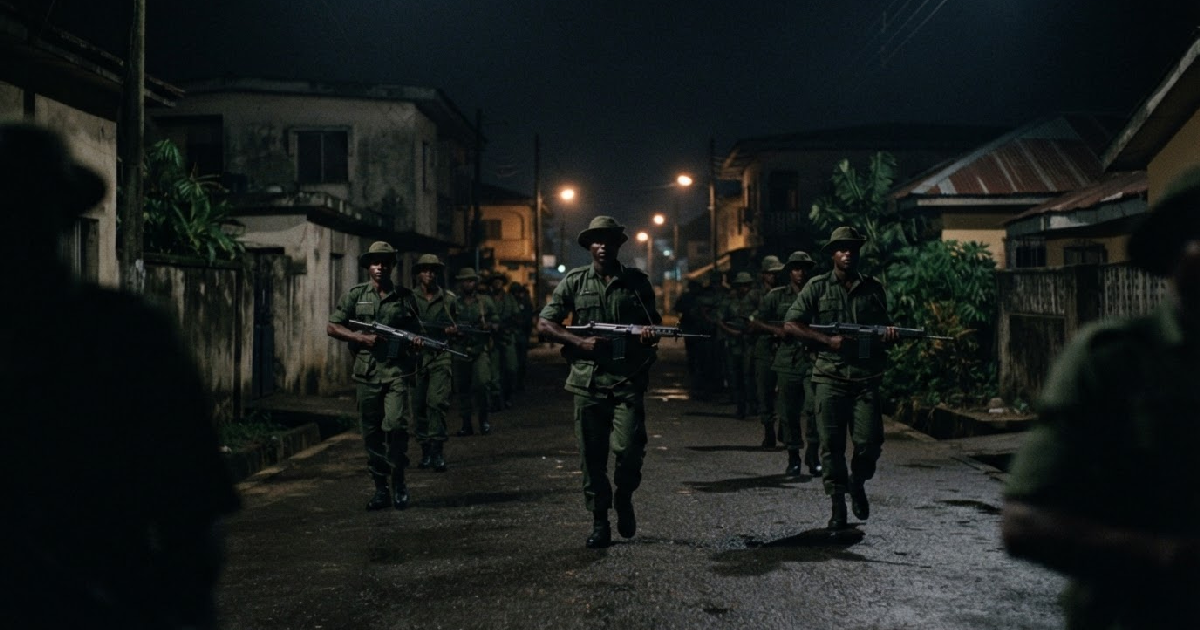
The night of January 15, 1966, didn’t just mark a date on the calendar for Nigeria; it ignited a firestorm that would reshape the nation’s destiny. Junior army officers, led by figures like Major Kaduna Nzeogwu and Major Emmanuel Arinze Ifeajuna, launched a military coup that ended the First Nigerian Republic, tearing through the nascent democracy with targeted assassinations.
This swift, brutal overthrow claimed the lives of 22 people, including the Prime Minister of Nigeria, Sir Abubakar Tafawa Balewa, and senior military officers. Their actions shattered the fragile peace and laid bare the deep ethnic and regional fault lines festering beneath the surface of the young West African nation.
The night Nigeria bled: key assassinations of the 1966 coup
The plotters, driven by a desire to dismantle what they perceived as a corrupt civilian government, struck simultaneously in cities across the country. Kaduna, Ibadan, and Lagos became scenes of premeditated violence, as blockades sealed off the Niger and Benue Rivers.
This wasn’t a mere change of guard; it was a bloody reckoning that sought to decapitate the existing leadership. The coup’s reach extended from the highest political offices to the most secure military barracks, leaving a trail of shock and grief.
Political figures targeted in a coordinated strike
Sir Abubakar Tafawa Balewa, Nigeria’s Prime Minister, faced a horrific end. He was abducted from his home in Lagos, then subjected to beatings, mockery, and torture, reportedly forced to drink alcohol before his murder. His body was later found abandoned along the Lagos-Abeokuta road, a grim testament to the coup’s savagery.
Chief Festus Okotie-Eboh, the Minister of Finance, suffered a similar fate. He was brutalized and abducted from his Lagos residence. Major Chris Anuforo, assisted by Ademoyega, shot him in Lagos, and his body was subsequently dumped in a bush.
Away from Lagos, the coup’s ruthlessness continued. Sir Ahmadu Bello, the powerful Sardauna of Sokoto and Premier of the Northern Region, was assassinated in his official residence in Kaduna during the early hours of January 15. Major Nzeogwu himself led this attack, which also killed Bello’s senior wife, Hafsatu Bello, and his personal security assistant, Zarumi.
In the Western Region, Chief Samuel Ladoke Akintola, the Premier, was gunned down in Ibadan. His family witnessed his murder, an act that sent shivers through the region and highlighted the coup’s indiscriminate violence against political leadership.
Military officers face a brutal end
The military leadership wasn’t spared from the coup’s bloody sweep. Brigadier Zakariya Maimalari, Commander of the 2nd Brigade, Nigerian Army, was murdered in Lagos. Just hours before, he had hosted a cocktail party, ironically attended by some of the junior officers who would later hunt him down.
Maimalari initially managed to evade his pursuers, but he ultimately ran into Major Ifeajuna’s group, who carried out his killing. His death served as a stark warning to any who might have resisted the coup plotters.
Another high-ranking casualty was Brigadier Samuel Ademulegun, Commander of the 1st Brigade, Nigerian Army. He was shot to death in his matrimonial bed in the presence of his eight-month pregnant wife, Lateefat. This particular act of violence resonated deeply, exposing the cold brutality at the heart of the coup.
Other senior officers were also killed, marking a tragic chapter for the Nigerian Army. Colonel Kur Mohammed was shot in Lagos by Major Chris Anuforo, with assistance from Ademoyega. Lieutenant-Colonel Arthur Unegbe, the only Igbo officer among the plotters’ victims, was also shot in Lagos by Anuforo, assisted by Ademoyega.
Lieutenant-Colonel James Pam was abducted from his home and murdered in a bush. Colonel Ralph Shodeinde was murdered in Ikoyi Hotel, with Major Nzeogwu participating in his execution. Lieutenant-Colonel Abogi Largema was also among those who lost their lives in the coup.
A fractured republic: ethnic dimensions of the january 1966 coup
The coup plotters proclaimed their motivation as a necessary purge of a corrupt and ineffective civilian government. Yet, the actions of January 15, 1966, quickly deepened existing ethnic and regional divisions, creating wounds that would prove difficult to heal.
A critical detail often cited from that night is the ethnic composition of the plotters. A staggering 98 percent of the officers who planned and led the coup were Igbo. This demographic reality, combined with the selective targeting of non-Igbo political and military leaders, fostered deep suspicion and resentment, particularly in the Northern Region.
The coup, though ultimately failing to achieve its immediate political aims, still managed to dismantle the First Nigerian Republic. It brought an abrupt end to civilian rule and ushered in a period of military governance, changing the trajectory of the young nation forever.
The immediate outcome was the assumption of power by Major General Johnson Aguiyi-Ironsi, Commander in Chief of the Army, who became Head of the National Military Government on January 16, 1966. He stepped into a country already reeling from the violence and deeply uncertain of its future.
The long shadow: from coup to civil war
The January 1966 coup was not an isolated incident; it was the first domino in a chain reaction that would lead to one of Nigeria’s darkest periods. The violence and the perceived ethnic bias of the assassinations left an indelible mark on the national psyche, fueling a climate of mistrust and reprisal.
The initial upheaval gave way to a counter-coup in July 1966, driven by a desire for vengeance, particularly among Northern military officers. This subsequent coup saw the brutal killing of General Ironsi and many other Igbo officers, further entrenching the ethnic fault lines that the first coup had so violently exposed.
It was a painful moment that shattered the hope of a truly unified country, leaving behind a deep sense of injustice.
These successive military interventions, born from the raw wounds of ethnic suspicion and political ambition, directly paved the way for the Nigerian Civil War. The devastating conflict, which raged from 1967 to 1970, cost millions of lives and tore the nation apart.
It was a war born from the failures of political leadership and the unchecked aggression of military factions, all set in motion by the events of January 1966. The impact of the coup, therefore, stretched far beyond the initial assassinations, dictating Nigeria’s destiny for decades to come.
History’s echo: lessons from Nigeria’s first military coup
The events of January 1966 continue to reverberate in Nigeria today. They introduced a culture of military interference in politics and established a precedent for political violence that profoundly shaped the nation’s development. The dream of a stable, democratic Nigeria, born from independence just six years earlier, was brutally interrupted.
The targeting of regional and national leaders, including the Prime Minister Sir Abubakar Tafawa Balewa, sent a chilling message about the fragility of power and the ruthlessness of those seeking it. This history underscores the constant need for vigilance in upholding democratic institutions and promoting national unity and dialogue.
Understanding this pivotal moment isn’t just about remembering a tragic past; it’s about recognizing the historical patterns that inform Nigeria’s present. Debates over federal character, equitable resource distribution, and the delicate balance of power between diverse groups often find their roots in the divisions exacerbated by that bloody night.
The shadow of the First Nigerian Republic’s collapse reminds us that national stability is a fragile construct, constantly under threat from unchecked ambition and historical grievances. Nigeria’s future, just like its past, will be written by how it confronts these enduring legacies.
