



Across Nigeria, the promise of development enshrined in annual budgets continues to crumble under the weight of systemic failures, with reports revealing massive budget padding, opaque project insertions, and dismal implementation rates.
As the proposed N58.47 trillion budget for 2026 looms, watchdog organisations like BudgIT point to a cycle of fiscal mismanagement that has plagued the nation from as far back as 2000, leaving critical infrastructure abandoned and public services in tatters.
The anatomy of budget padding
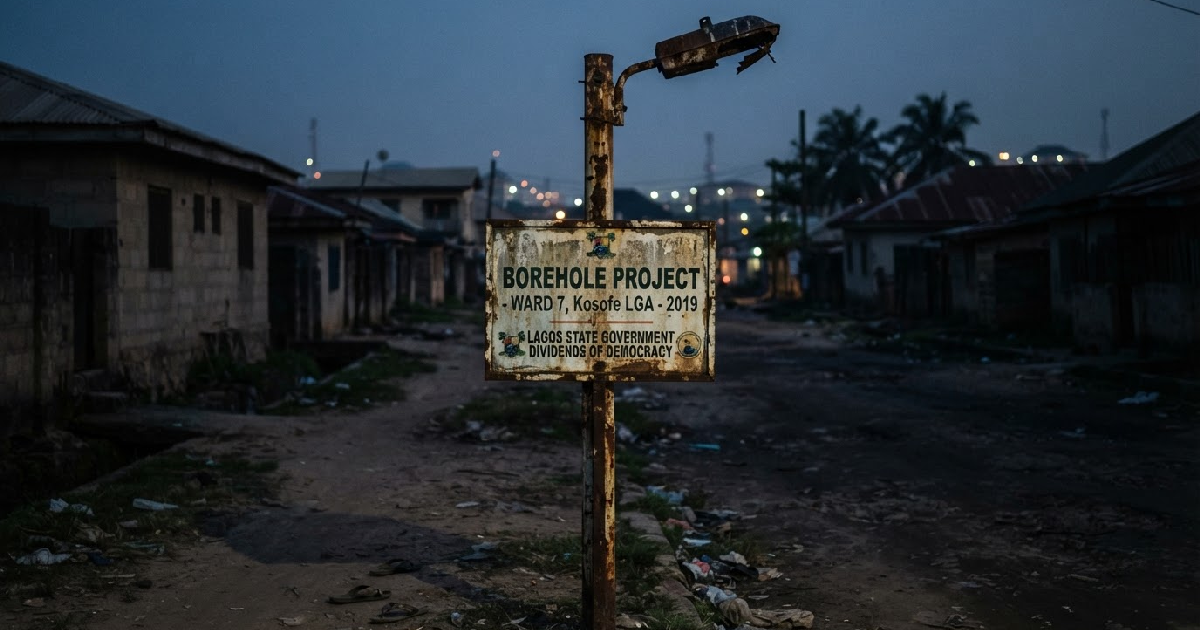
It’s a story told in the quiet despair of communities awaiting promised boreholes that never materialise, and in the dark streets where budgeted streetlights remain unlit. This isn’t merely an administrative hiccup; it’s a deep-seated pathology within Nigeria’s financial framework, impacting everything from healthcare to education and driving a growing national debt.
But to understand the depth of this crisis, it’s not enough to just look at today’s headlines. You have to rewind, sometimes decades, to see the echoes of past legislative skirmishes and presidential frustrations that set the stage for the recurring drama we witness with every budget cycle.
The numbers behind Nigeria’s budget failure are staggering, painting a clear picture of how public funds are diverted and mismanaged before they even begin to serve citizens. For instance, BudgIT reported that lawmakers inserted a remarkable 11,122 projects into the 2025 Appropriation Act, collectively worth N6.93 trillion.
That figure alone represents 12.5% of the national budget. These insertions included 238 projects each valued above N5 billion, an eyebrow-raising amount for single line items. And the details get more specific, and perhaps more troubling.
Think about 1,477 streetlight projects, collectively costing N393.29 billion. Or the 538 boreholes valued at N114.53 billion. There were even 2,122 ICT projects inserted, costing N505.79 billion, along with N6.74 billion allocated for the empowerment of traditional rulers.
It’s not a new phenomenon. The proposed 2026 budget allocated about N1.3 billion to the Presidential Foreign Investment Promotion Council (PFIPC), an agency the Presidency later disowned as fictitious. This kind of phantom allocation suggests a system ripe for exploitation.
In 2024, Senator Abdul Ningi alleged that N3.7 trillion had been inserted into the budget, though the Senate later rejected his claim. Allegations also surfaced during the administration of President Muhammadu Buhari, ranging from N90 billion in 2019 to N770.72 billion in questionable insertions between 2020 and 2023.
President Buhari himself reportedly called the 2016 budget “embarrassing” due to errors, including N46.5 billion in duplicate purchases for vehicles, computers, and furniture registered 24 times over. It’s a pattern that clearly transcends administrations.
A legacy of failed promises: implementation woes
Even when funds are legitimately allocated, getting them to where they need to go remains another battle entirely. Budget implementation rates in Nigeria consistently fall short, particularly for capital projects essential for development.
Between 2018 and 2022, capital budget implementation averaged less than 65%. The 2024 national budget implementation rate also stood at less than 50%, a dismal performance that speaks volumes about project delivery.
Prince Igho Sadjere, an economic analyst, noted that from January to July 2024, budget implementation was “dismal, falling below 50%.” The World Bank, in its April 2026 assessment, found that only 24% of the prorated 2025 capital budget for Ministries, Departments, and Agencies (MDAs) was actually implemented.
This means approved capital spending has exceeded actual releases by more than N15 trillion over the past three fiscal years. For context, out of the N13 trillion allocated for capital projects in 2024, only N6 trillion was cash-released to MDAs.
These figures aren’t just statistics; they represent hospitals left unfinished, schools without proper facilities, and roads that remain impassable. The disconnect between budgeted funds and actual development continues to widen, leaving everyday Nigerians to bear the brunt.
Echoes from the past: Nigeria’s long fiscal struggle
Nigeria’s budget woes are not a recent anomaly; they are a persistent feature in the nation’s economic history, deeply rooted in its governance structures. The fiscal journey has been marked by a recurring cycle of ambitious plans and disheartening shortfalls, a pattern that has proven difficult to break.
For years, the “envelope budgeting system” has allowed for a lack of transparency. Agencies often submit inflated requests, knowing they will be cut, which then opens the door for negotiations and, inevitably, manipulations during the legislative process. This opaque system, coupled with a governance culture where selective transparency is the norm, has fostered an environment ripe for economic manipulation.
Consider the Fiscal Responsibility Act (FRA) of 2007. It was enacted with the explicit goal of ensuring prudent resource management and greater accountability. Yet, budget deficits have persisted, averaging -2.67% of GDP from 1981 to 2025.
The projected deficit of 3.87% of GDP for 2025 further highlights this ongoing challenge. Between 2016 and 2025 alone, Nigeria accumulated over N60 trillion in fiscal deficit, with more than 82% of that burden arising in the last five years.
The International Monetary Fund (IMF) reported in July 2026 that Nigeria failed to record public spending equivalent to approximately 2% of its GDP in recent official budgets, amounting to roughly N8.8 trillion.
This history isn’t just about numbers; it’s about the repeated erosion of public trust and the delayed dreams of a developing nation. Each budget cycle becomes a battleground, not for national progress, but for personal gains.
Legislative oversight and institutional foundations
A significant part of the problem lies in the erosion of institutional foundations and a failed system of legislative oversight. The National Assembly is constitutionally mandated to scrutinise and approve the budget, but critics argue this function is often compromised.
The current state of affairs suggests a critical gap between the intention of fiscal laws and their practical application. The Fiscal Responsibility Commission (FRC), established to promote good governance and accountability, often finds its efforts hampered by the very political will it seeks to regulate.
Auditor-General for the Federation reports routinely detail discrepancies and mismanagement, yet decisive action following these audits often remains elusive. This perpetuates a cycle where consequences for fiscal irresponsibility are rare, emboldening further malpractices.
When the very bodies designed to enforce fiscal prudence lack the power or the inclination to act, the system spirals. It creates a vacuum where self-centered leadership can thrive, prioritising personal enrichment over the collective welfare of millions of citizens.
What comes next for Nigeria’s economy
The stakes couldn’t be higher for Nigeria. A failure to reform its budgetary system will only exacerbate the nation’s economic hardship, deepen poverty, and widen the infrastructure gap. With annual budgets growing from below N10 trillion a decade ago to N54.99 trillion in 2025 and a proposed N58.47 trillion for 2026, the potential for misdirection of funds also grows exponentially.
The rising debt-service obligations, foreign exchange pressures, and pervasive legislative alterations will continue to stifle economic growth and deter foreign investment. The international community, through bodies like the World Bank and IMF, continues to flag these issues, indicating that the world is watching, and expecting change.
For Nigeria to break free from this cycle, there must be a fundamental shift. It requires not just legislative amendments to strengthen bodies like the Fiscal Responsibility Commission, but a cultural change within the political class.
It demands a renewed commitment to transparency, accountability, and genuine public service. Without this, every new budget will simply become another chapter in the long, disappointing story of unfulfilled promises and squandered potential.
And so, the budget crisis today is not just about numbers on a spreadsheet. It’s a direct inheritance of decades of choices, a living echo of past battles for fiscal integrity that still rage, determining whether the dreams of a nation can ever truly be funded.
