



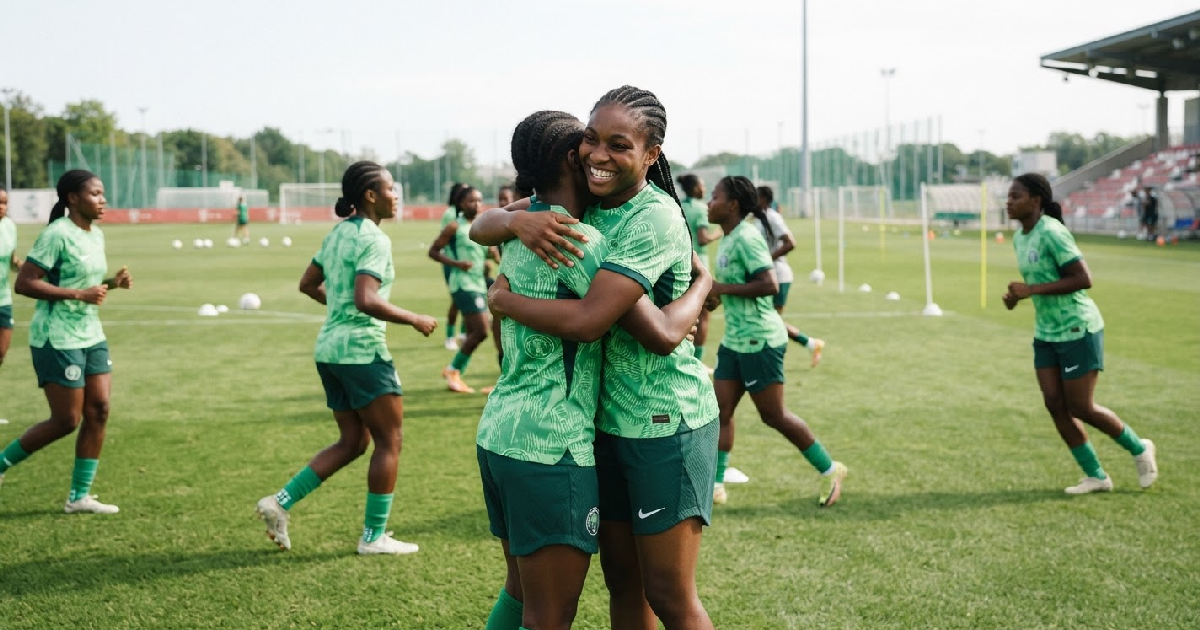
The Polish winds of September 2026 will carry more than just the scent of autumn; for Nigeria’s U20 women’s national team, the Falconets, they’ll carry the weight of a nation’s hopes. And now, adding to that formidable ambition, is a new face whose journey mirrors the dreams of many young Nigerians abroad.
Chidubem Arinze, the dynamic 18-year-old midfielder from West Bromwich Albion Women, has answered the call, joining the Falconets’ training camp this July 26, 2026, as they gear up for the FIFA U-20 Women’s World Cup.
The call that echoes across continents
Her invitation isn’t just another roster move; it signals a clear intent from head coach Moses Aduku to inject fresh talent into a squad aiming for glory on the global stage.
Arinze’s inclusion brings a blend of English academy discipline and an undeniable hunger to represent the land of her parents, making her a compelling figure in Nigeria’s pursuit of their first U20 World Cup title.
For young footballers of Nigerian heritage raised in the diaspora, the choice of national allegiance often presents a poignant dilemma. Chidubem Arinze, born and bred in England, found herself at this crossroads. But her decision to don the green and white jersey for Nigeria speaks volumes about a deeper connection to her roots, choosing to represent the Falconets despite also being eligible for England.
Her call-up on July 26, 2026, wasn’t just a notification; it was an affirmation of that choice. It means she’ll now join her teammates in a crucial training camp, a final crucible before the global tournament kicks off in Poland from September 5 to September 27.
This move reflects a growing trend of Nigerian youth development, drawing talent from across the globe to bolster national teams.
Arinze’s ascent: A new Falcon’s flight
At just 18 years old, Chidubem Arinze boasts a resume that belies her age. She’s a right-footed central midfielder, a position often seen as the engine room of any successful football team. Her development path through the rigorous West Bromwich Albion Academy has evidently forged a player with tactical awareness and technical skill.
Last season, the 2025/26 campaign saw her gain valuable senior experience during a loan spell at Boldmere St Michaels. There, she made 11 appearances and scored one goal, proving her capabilities in competitive matches. Her impressive performances led to her recall by West Brom in March 2026, and she has since secured a place in their senior squad for the upcoming 2026/27 season.
Her recent friendly match against Swindon Town served as another testament to her form and readiness. Arinze’s journey isn’t just about individual success; it’s about bringing that club-level consistency and tactical understanding to the national setup. The Falconets will need her energy and vision as they face formidable opposition.
Chasing history: The Falconets’ enduring quest
Nigeria’s U20 women’s national team holds a storied, if at times heartbreaking, history on the world stage. They’ve come agonizingly close to the ultimate prize twice, reaching the finals of the FIFA U-20 Women’s World Cup in both 2010 and 2014. On both occasions, they faced Germany, falling short of clinching the coveted title.
These near misses, while painful, have solidified the Falconets’ reputation as a consistent force in youth women’s football. Their qualification for the 2026 tournament, secured by defeating Malawi 3-2 on aggregate in a tense final qualifying round, continues this tradition. It sets the stage for yet another shot at glory, a chance to etch their names into the history books.
Head Coach Moses Aduku isn’t a stranger to this ambition. He was part of the setup that saw the Falconets reach the quarter-finals of the 2022 FIFA U20 Women’s World Cup in Costa Rica, serving as an assistant coach. His experience with the team’s past successes and challenges will be invaluable as he now leads them from the top.
Poland’s demanding stage: Group F’s formidable foes
The 2026 FIFA U-20 Women’s World Cup in Poland presents a new format and fresh challenges, with the tournament expanding to include 24 teams. The Falconets find themselves in Group F, a truly demanding lineup alongside Spain, China PR, and debutants New Caledonia. This is no easy draw, and every match will demand absolute focus and tactical precision.
Their campaign kicks off on Monday, September 7, 2026, against Spain at Arena Sosnowiec. Spain enters the tournament as a recognized dominant force in women’s youth football, renowned for their possession-based and technically astute style of play. This opening fixture will be an immediate test of Nigeria’s mettle.
Three days later, on Thursday, September 10, the Falconets will again take to the pitch at Arena Sosnowiec to face China PR. China boasts a rich history in women’s football, consistently making appearances in major tournaments. Their organized play and resilience will pose a different kind of challenge.
The group stage concludes for Nigeria on Sunday, September 13, at Stadion Miejski ŁKS Łódź, where they’ll meet New Caledonia, who are making their debut at this level.
Aduku’s blueprint: Forging a winning squad
Coach Moses Aduku’s appointment in July 2025, succeeding Chris Danjuma, marked a new chapter for the Falconets. He inherits a team with a strong competitive spirit and a legacy of performing on the international stage. His task now is to integrate talents like Chidubem Arinze, fine-tune strategies, and build a cohesive unit capable of navigating the expanded tournament format.
The inclusion of players like Arinze, who bring experience from European club systems, is a strategic move. It suggests Aduku is looking for a blend of local talent and diaspora-based players to create a truly formidable squad. This hybrid approach has often been a recipe for success in Nigerian national teams across various age grades.
While Germany, a frequent contender and Nigeria’s past adversary in two finals, will be notably absent from this tournament for the first time, the competition remains fierce. Other African nations, including Ghana (Group C), Tanzania (Group B), and Benin Republic (Group A), are also participating, highlighting the growing strength of women’s football on the continent.
The path to the trophy is never easy, but with a blend of seasoned campaigners and promising newcomers, the Falconets are ready to contend.
Just as the legendary Green Eagles of the 1980s integrated players from diverse leagues to build a national identity, today’s Falconets, with talents like Chidubem Arinze, are piecing together a future.
It’s a future where the lessons of past glory and hard-fought battles converge, shaping a team ready to seize the moment on the global stage. This is a chance for Nigeria to redefine its legacy, not just in youth football, but in the broader narrative of African sporting excellence.
History isn’t just in the rearview mirror; it’s waiting to be made in Poland.
