



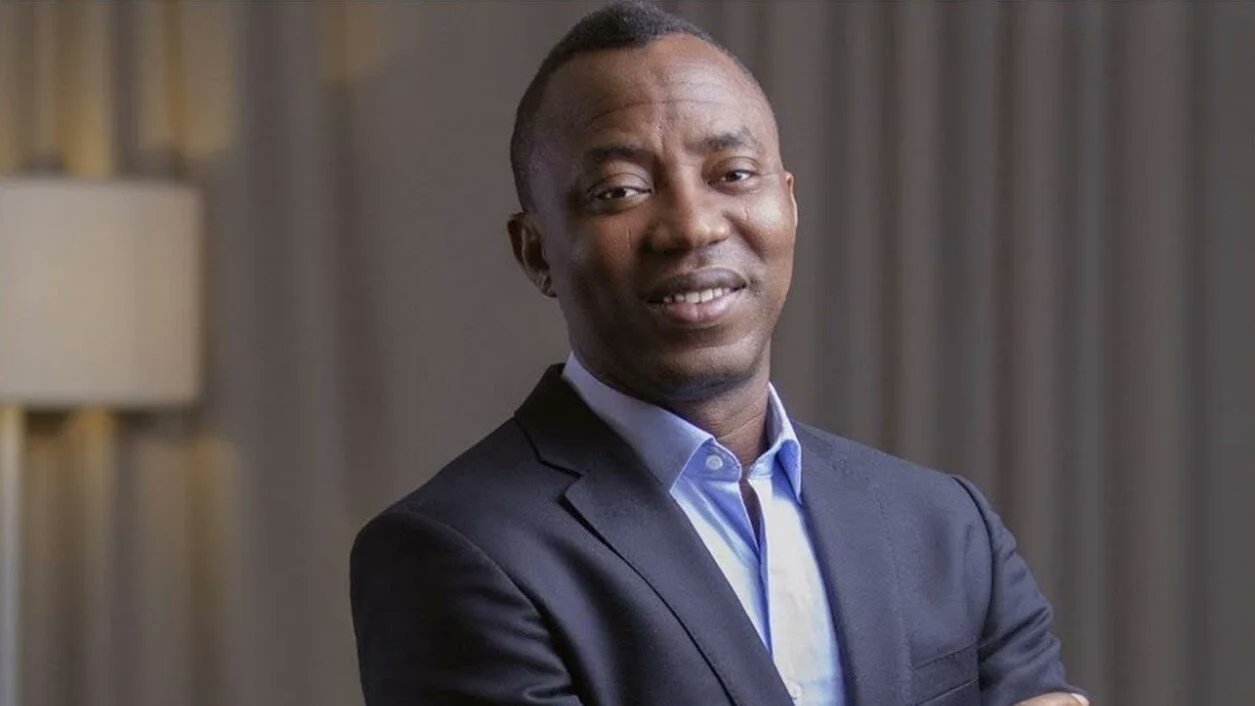
Omoyele Sowore’s 2027 manifesto proposes an AI minister and blockchain technology to fight corruption in Nigeria’s highest office.
It’s a vision that positions technology not merely as an aide, but as a central pillar of governance, a stark contrast to traditional political promises. Sowore’s third consecutive presidential bid promises to tackle deep-seated issues like corruption, unemployment, and insecurity, framing his party as the country’s only genuine opposition.
Omoyele Sowore’s digital vision for governance
At the heart of Omoyele Sowore’s 2027 manifesto lies a radical reimagining of how government functions, particularly in its perennial battle against corruption. He isn’t just talking about digital solutions; he’s proposing a transformation that sounds straight out of a science fiction novel, yet he insists it’s the only way forward for Nigeria.
Appointing artificial intelligence and drones to key roles
Sowore, through posts on his verified X handle, declared his intention to appoint Artificial Intelligence as “Minister of Finance” should he secure the presidency. This AI, he explained, would operate with unbiased logic, designed to “eliminate human manipulation, waste, and corruption in public finance by making data-driven, transparent decisions.” It’s a direct challenge to the human element often blamed for financial mismanagement.
Beyond finance, Sowore also envisions a “Drone” serving as the “Minister of Defence.” This innovative approach, he argued, would “redefine national security with modern surveillance, rapid response, precision, and accountability.” It suggests a future where Nigeria’s defense isn’t just about firepower, but about smart, technological oversight.
Blockchain’s immutable ledger against corruption
To buttress his anti-corruption drive, Omoyele Sowore highlighted blockchain technology as a powerful weapon. He believes blockchain can create an “immutable public ledger where every government transaction, contract, budget allocation, and expenditure is permanently recorded, time-stamped, and open to public scrutiny.” This means records couldn’t be secretly altered or erased, a critical safeguard against financial malfeasance.
He plans for AI to continuously audit government operations in real-time. This perpetual oversight would quickly detect fraud and procurement irregularities, creating an environment where illicit activities are nearly impossible to conceal. Sowore’s philosophy is clear: “The future of governance is technology, not patronage,” a direct jab at the old ways of doing business in Nigeria.
A persistent voice for change in Nigerian politics
Omoyele Sowore’s journey to the forefront of Nigerian political discourse is a story of persistent activism and an unwavering belief in systemic change. His proposals for 2027 aren’t an overnight development; they reflect decades of commitment to transparency and accountability.
From student activism to presidential bids
Born on February 16, 1971, in Ondo State, Omoyele Sowore first made his mark as a student activist. During his time at the University of Lagos from 1989 to 1995, he served as the President of the University of Lagos Student Union Government.
His activism extended to participating in protests against an International Monetary Fund (IMF) loan in 1989 and leading a 1992 protest where police fire tragically killed seven students. This early exposure to the consequences of governmental decisions shaped his future.
In 2006, Sowore founded Sahara Reporters in New York City, an online news agency that quickly became known for its aggressive exposés of corruption and abuse of power within Nigeria. The platform cemented his reputation as a fearless critic of the establishment.
He first announced his intention to run for president on February 25, 2018, leading to his initial presidential bid in 2019, where he finished fifth with 33,953 votes.
He contested again in the 2023 presidential election, securing 14,608 votes. Now, making his third consecutive run, Sowore formally declared his 2027 presidential ambition on July 1, 2026, following his release from Kuje Correctional Centre, and confirmed it on Channels Television’s “Politics Today” on May 22, 2026. He secured the AAC presidential nomination unopposed in Abuja, solidifying his place as the party’s standard-bearer.
The African Action Congress and its socialist roots
The African Action Congress (AAC) itself is a product of Omoyele Sowore’s political aspirations, founded in August 2018. The party proudly identifies as “the only registered socialist party in Nigeria” and positions itself as “the only genuine opposition” against the country’s dominant political forces. Its slogan, “Take it back,” resonates with many who feel disenfranchised by the current political climate.
Following his adoption as the AAC’s 2027 presidential candidate, Sowore stepped down as the party’s National Chairman, handing the reins to Samuel Ajeyigbe. This move, according to Kayode Babayemi, Chairman of the AAC Primary Election Committee, underscores the party’s confidence in Sowore’s dedication to democratic values and reform.
Beyond corruption: Sowore’s education reform blueprint
While his tech-centric anti-corruption plans grab headlines, Omoyele Sowore’s manifesto extends to other critical sectors, notably education. He unveiled elements of his education agenda on July 4, 2026, and further pledges regarding public examination fees on July 13, 2026, demonstrating a comprehensive vision for national development.
Free education and student support
A cornerstone of Sowore’s education policy is the commitment to free public education, spanning from early childhood right through to university level. This ambitious pledge aims to ensure that financial barriers never prevent any Nigerian from accessing quality education. Such a policy directly addresses a major pain point for countless families struggling with tuition fees.
To further support students, he has promised semester grants for those enrolled in public tertiary institutions. These grants would cover both academic and living expenses, offering a lifeline to many. The commitment also includes allocating a substantial 30% of Nigeria’s annual budget to education, a figure that far exceeds current allocations and signals a serious intent to invest in human capital.
Modernizing education with technology
Sowore’s tech philosophy isn’t confined to fighting corruption; it permeates his education plans too. He envisions “artificial intelligence and digital technology will become central components of learning,” pushing Nigeria’s educational system into the 21st century. This means moving beyond traditional chalkboards to integrate advanced tools into everyday teaching and learning.
He proposes a “National education & innovation cloud” designed to be a vast repository for digital libraries, AI learning assistants, virtual laboratories, and comprehensive research databases. This digital infrastructure would democratize access to knowledge. And for students on campus, Sowore promises “AI-powered smart hostels,” suggesting a fusion of technology with daily student life.
Adding to his reform agenda, Sowore has pledged to abolish all public examination fees, including those for the West African Examinations Council (WAEC) and the National Examination Council (NECO). This follows a recent Federal Ministry of Education approval of a uniform registration fee of ₦50,000 for these exams, set to begin in the 2027 cycle, making his promise even more impactful for struggling families.
He also plans a structural overhaul of the schooling system, proposing a new 5-5-4 model: five years primary, five years secondary, and a four-year university degree, moving away from the current 6-3-3-4 structure. This demonstrates a deep-seated desire to reshape the very foundations of Nigeria’s educational landscape.
Echoes of past struggles, hopes for future reform
Sowore’s high-tech proposals, while forward-looking, resonate against a historical backdrop of Nigeria’s enduring struggle with corruption and the often-unfulfilled promises of political reform. His vision for AI and blockchain as guardians of public trust is bold, but it also prompts reflection on why previous anti-corruption drives have faltered.
Nigeria has seen countless initiatives aimed at curbing corruption, from military decrees in the 1980s to various anti-graft agencies established in democratic eras. Many began with public fanfare, only to be bogged down by political interference, institutional weaknesses, or a simple lack of consistent will.
The challenge has always been less about identifying the problem and more about creating an ecosystem where accountability can thrive against powerful vested interests.
This is where Sowore’s tech-driven approach seeks to carve a new path. By proposing systems that are immutable and operate with data-driven impartiality, he aims to circumvent the human frailties and political pressures that have historically undermined such efforts.
But implementing such advanced technology on a national scale, in a country as diverse and complex as Nigeria, would present its own unique set of logistical and societal hurdles.
His critique of “copy-and-paste neo-colonial policies” dictated by the IMF and World Bank also taps into a long-standing debate within Nigeria about economic sovereignty and the impact of external influence.
The “cruel decision” of fuel subsidy removal, which he links to a “decree handed down from Washington, D.C.,” mirrors historical grievances over structural adjustment programs that have often led to public hardship. These aren’t just political talking points; they are deeply felt echoes of Nigeria’s economic past.
The call for “revolutionary change” isn’t new to Nigerian politics, but Sowore attempts to give it a modern, technological edge. His promise to reverse the naming of national assets after officials of the Asiwaju Bola Ahmed Tinubu regime speaks to a desire to break with recent political legacies and perhaps redefine national heroes and symbols.
The road to 2027: high-tech promises and political realities
As the Independent National Electoral Commission (INEC) sets the stage for the 2027 Nigerian presidential and National Assembly elections on January 16, 2027, Omoyele Sowore’s proposals inject a distinct flavor into the political discourse. His tech-forward manifesto challenges the traditional campaign rhetoric and raises questions about the future of governance.
While the incumbent President Bola Ahmed Tinubu has indicated his intention to seek a second term, and other prominent figures like Peter Obi and Atiku Abubakar are likely contenders, Sowore presents a dramatically different vision.
His emphasis on AI and blockchain for accountability offers a tantalizing prospect for a populace weary of corruption, but it also begs the question of feasibility and public readiness for such drastic shifts.
Translating these ambitious technological plans into tangible voter support will be Omoyele Sowore’s biggest challenge. His previous electoral performances, finishing fifth in 2019 and with fewer votes in 2023, suggest that while his message resonates with some, converting that into widespread electoral success requires more than just innovative policy ideas.
It demands robust political machinery, broad public buy-in, and the ability to articulate complex technical solutions in an accessible way to a diverse electorate.
The campaign leading up to 2027 will undoubtedly see debates on how realistic such technologically advanced governance models are for Nigeria. Will voters prioritize revolutionary tech solutions over more conventional promises, or will the familiarity of established political figures continue to hold sway? The very idea of an AI minister of finance forces a conversation that Nigerian politics has perhaps never fully had.
Ultimately, Omoyele Sowore’s 2027 manifesto isn’t just a set of policy proposals; it’s a bold statement about what he believes Nigeria can be, powered by innovation.
His unwavering push for a new kind of governance, however utopian it may seem to some, demands that the nation grapple with fundamental questions of accountability, progress, and the role of technology in shaping its destiny.
The struggle for a truly transparent and equitable Nigeria, much like his persistent activism, continues to echo through its history and into its future.
