



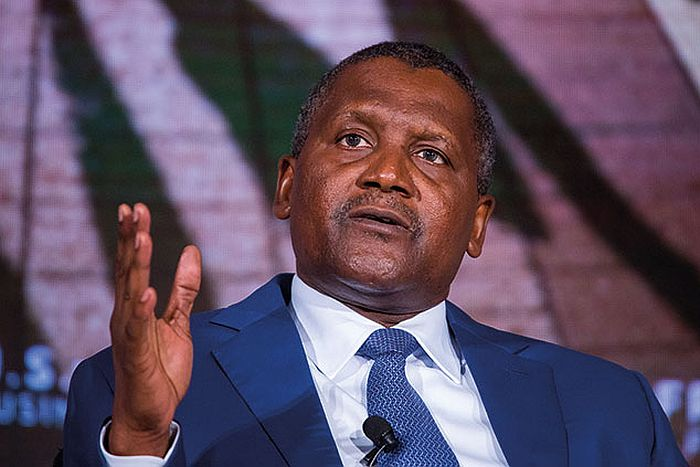
Aliko Dangote’s industrial empire, the Dangote Group, is moving to construct a sprawling petroleum products storage facility and an accompanying pipeline network in Cameroon. This ambitious initiative aims to significantly expand the reach of its massive Lekki refinery, pushing Nigerian refined fuels deep into Central Africa and securing new markets.
The strategic blueprint took shape during a high-level meeting on Tuesday, July 21, 2026, in Yaounde, Cameroon, where Devakumar Edwin, Dangote Group’s Vice President for Oil, Gas and Fertilisers, met with Cameroon Prime Minister Joseph Dion Ngute. Their discussions centered on how this infrastructure would bolster fuel supply security and lower distribution costs across the region.
yaounde meeting charts new regional energy course
This isn’t just another business deal; it’s a tangible step in a long-standing vision for African self-sufficiency, echoing calls for regional economic integration that stretch back decades. It represents a pivot from reliance on external supply chains to leveraging indigenous industrial might for collective prosperity.
The meeting in Yaounde wasn’t a mere formality; it solidified the intent behind the Dangote Group’s latest push into a critical African market. The proposed facility and pipeline are designed to serve Cameroon and, crucially, to open up corridors to landlocked neighbours like Chad and the Central African Republic.
For Cameroon, this project offers a lifeline against the recurring fuel shortages that have plagued the nation, particularly since the 2019 fire crippled the state-owned Sonara refinery. It promises to buffer the country from volatile international oil markets and unpredictable supply chain disruptions.
Beyond security, the project aims for efficiency. A pipeline distribution system would drastically cut transportation costs and minimise the environmental impact associated with road freight. These are practical benefits that will resonate directly with Cameroonian consumers and industries.
dangote refinery: africa’s industrial heartland
At the heart of this regional expansion sits the Dangote Petroleum Refinery in Lekki, near Lagos, Nigeria. It’s an colossal achievement, boasting a capacity of 650,000 barrels per day (bpd) and widely recognised as Africa’s largest oil refinery and the world’s largest single-train facility.
The refinery, sprawling across a 6,180-acre site within the Lekki Free Zone, didn’t just come online; it redefined Africa’s energy potential. It began operations in January 2024, processing crude into essential products like diesel and aviation fuel, then started Premium Motor Spirit (PMS) production by September 2024.
This Nigerian powerhouse has already proven its export capabilities, having dispatched its first petrol to Cameroon in December 2024, a transaction confirmed by Cameroon’s Neptune Oil. This prior success paved the way for the discussions now underway, laying the groundwork for a more permanent distribution artery.
The Dangote Group has even grander visions. Aliko Dangote announced in October 2025 plans to more than double the refinery’s capacity to 1.4 million bpd, solidifying its position as a global giant. The refinery also includes an impressive 435MW power plant and an 1,100km pipeline infrastructure capable of handling three billion standard cubic feet of gas daily.
cameroon’s quest for energy independence
Cameroon has grappled with significant energy challenges for years, particularly after the Sonara refinery fire left it heavily reliant on imported fuel. The state-owned Société Camerounaise des Dépôts Pétroliers (SCDP) has been the sole entity managing storage and distribution, operating a network of 13 depots.
The country is actively working to rebuild its energy infrastructure. SCDP is set to begin construction of a new oil terminal, THK, in the Kribi industrial and port zone in 2026. This facility promises a substantial boost to storage, with capacity for 230,000 cubic meters of refined products and 40,000 metric tons of liquefied petroleum gas (LPG).
Another crucial project in Kribi, led by the CSTAR Refinery company, involves a new modular refinery targeting 30,000 bpd. Partial operations are expected by the second half of 2026, aiming to meet approximately 22% of national diesel and gasoline demand, signalling Cameroon’s determined push for self-reliance.
Dangote’s proposal slots perfectly into this national ambition. It doesn’t just offer products; it provides a direct, integrated pathway from Africa’s largest refinery, reducing dependence on distant and often unstable international suppliers. This alignment of Nigerian industrial power with Cameroonian strategic needs creates a powerful synergy.
dangote’s pan-african vision takes shape
This move into Cameroon isn’t an isolated event; it’s a calculated expansion within Dangote Group’s broader pan-African strategy. Aliko Dangote has publicly committed to diversifying investments in Cameroon beyond cement, following a 2021 meeting with President Paul Biya. The group already operates a 1.5 million-ton cement grinding facility there, opened in March 2015.
The company aims to hit a staggering $100 billion earnings target by 2030, a goal supported by a $2.5 billion investment from private sources. This capital is fueling ambitious plans, including exploring new oil pipeline projects in nations like South Africa and the Democratic Republic of Congo.
Dangote also plans to develop a 700,000 bpd East African oil refinery in Lamu, Kenya, further cementing its continental footprint. These projects, alongside a recent $1 billion investment deal in Zimbabwe for a fertilizer plant and a pipeline, paint a clear picture of an integrated African energy and industrial giant.
The group’s efforts to deepen its presence across the continent through supply partnerships and new logistics networks are transforming regional trade. It’s a strategic play that envisions an Africa connected by African-built infrastructure, moving African-produced goods.
beyond borders: infrastructure and independence
For decades, African nations have grappled with colonial-era infrastructure designed to extract resources for export, not to facilitate intra-continental trade or foster regional self-sufficiency. This meant economic dependency and vulnerability to global market shifts.
Projects like the Dangote Cameroon pipeline represent a conscious departure from that legacy. They embody a shift towards creating robust, interconnected African economies. This isn’t just about moving fuel; it’s about building supply chains that strengthen regional ties and reduce reliance on external powers.
It’s a story of economic liberation, where African capital and vision drive the continent’s development agenda. This echoes the broader effort seen in initiatives to boost Nigeria’s capital market and other regional economic partnerships, fostering a sense of shared destiny and progress.
This bold infrastructure push by the Dangote Group is more than just a commercial venture. It’s a powerful statement about Africa’s capacity to chart its own course, to build the foundations for its future, and to lead the charge in regional integration.
The meeting in Yaounde wasn’t just about a pipeline; it was about laying another brick in the edifice of a truly independent and interconnected African economy.
