



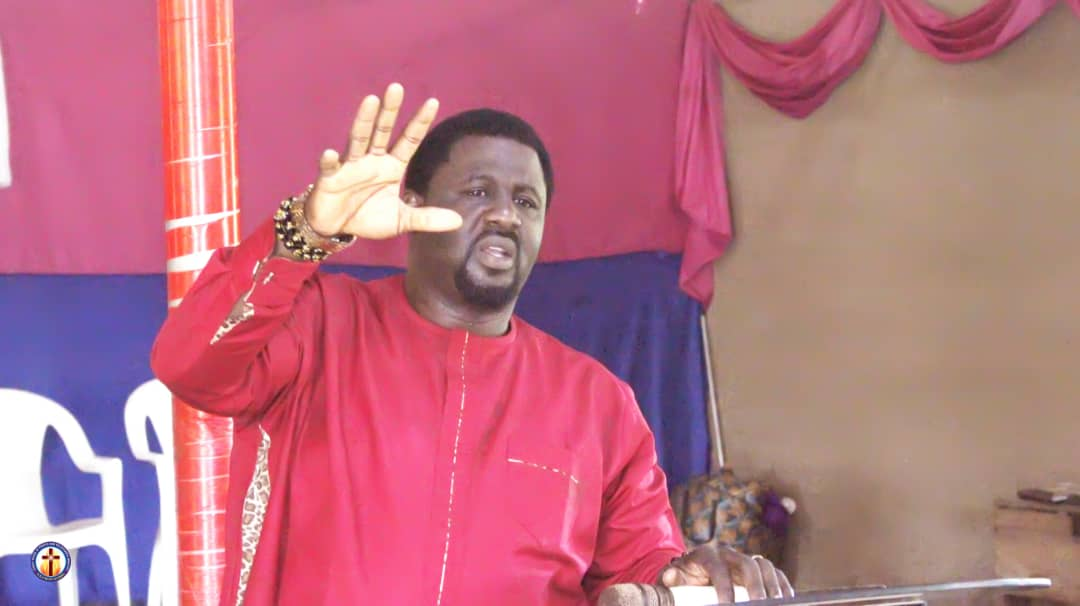
Prophet Elijah Bamidele of the Christ House of Prayer and Deliverance Ministry in Lagos delivered a fresh set of prophecies this week, thickening the spiritual air surrounding Nigeria’s 2027 presidential election.
His stark predictions name President Bola Tinubu as the unwavering victor, while strongly advising Peter Obi, a key opposition figure, to abandon his 2027 ambitions and wait until 2031. It’s a bold intervention that’s set the political class and a captivated public talking about the unique intersection of faith and governance.
Prophet Bamidele’s 2027 Prophecy Unpacked
Prophet Elijah Bamidele didn’t mince words about the political futures of the three main figures expected to dominate the 2027 presidential race. For President Bola Tinubu, the message was unequivocally clear: his victory is divinely ordained. This spiritual backing could galvanize his supporters, or alienate those who believe elections should be decided by voters, not prophets.
“Whether you like it or not, Bola Tinubu is the president of Nigeria,” Prophet Bamidele stated. “If it pleases God for him to do eight years, there is nothing you can do about it.” He went further, suggesting that Tinubu has “already won the election for 2027” in the spiritual realm.
The message for Peter Obi, who was the Labour Party (LP) candidate in the 2023 election and has now joined the Nigeria Democratic Congress (NDC), was less encouraging for his immediate aspirations. Prophet Bamidele advised him to postpone his presidential bid. “I do not hate Peter Obi. But Peter Obi cannot rule Nigeria now.
2027, write it down. I am a prophet, take it or you leave it.”
The Edo-born preacher continued, “Bring out any prophecy that I have given that have not come to pass in Nigeria. I am a prophet. Peter Obi, 2027, no way for you. If he will rule Nigeria, it will be after 2027, no be now (sic).”
This direct challenge places Obi in a precarious position, forcing his supporters to reconcile their political ambitions with a spiritual declaration.
Beyond the top contenders, Prophet Bamidele also reportedly foresees a significant internal crisis brewing within the All Progressives Congress (APC). He spoke of “APC fighting APC” and “APC destroying APC.” This internal strife, he warned, would be driven by disaffected youth who feel their contributions have been overlooked.
He urged President Tinubu to address the unfulfilled promises made to the younger generation within the ruling party. These specific warnings add a layer of complexity to the seemingly clear-cut presidential prediction, hinting at potential fault lines within the incumbent’s camp.
A History of Prophecies in Nigerian Politics
The current wave of electoral prophecies is hardly a new phenomenon in Nigeria’s political scene. For decades, religious leaders have offered spiritual insights into the nation’s leadership, often gaining considerable followings and influencing public opinion. It’s a tradition deeply embedded in the national consciousness, where many citizens look to spiritual guidance for clarity in uncertain times.
Prophet Elijah Bamidele isn’t alone in offering his vision for 2027. Other prominent clerics have also weighed in, adding to the spiritual mosaic of predictions. This public outpouring of spiritual foresight often becomes as much a part of the political discourse as rallies and manifestos.
- Prophet Baba Confirm J, a dreadlocked cleric, believes “God said Peter Obi owns the votes,” but with a crucial caveat: “if Tinubu rigs it, he (Tinubu) will emerge victorious.” He also dismissed Atiku Abubakar’s chances entirely, stating, “Atiku is going nowhere. He should go and sit somewhere.”
- Apostle Victor Oku, Senior Pastor at Divine, has also prophesied a second term for President Bola Tinubu. “God is still with President Tinubu and this government. Tinubu will be re-elected in 2027, no matter the gang up against him,” Apostle Oku proclaimed.
- Primate Babatunde Elijah Ayodele, leader of INRI Evangelical Spiritual Church, Lagos, predicted a 2027 presidential contest primarily between President Bola Tinubu of the All Progressives Congress (APC) and Atiku Abubakar, who is now the presidential candidate of the African Democratic Congress (ADC). Primate Ayodele also foresaw challenges for Peter Obi, noting he “will be struggling in the North, but it is doubtful if he can make it there,” and would face “possible robbery in key regions.”
The divergence in these prophecies often mirrors the real-world political divisions, leaving the public to interpret which spiritual voice, if any, will ultimately align with the electoral outcome. Each prophecy, regardless of its source, contributes to the ongoing national conversation about who should lead Nigeria.
The Political Landscape Shaping Up for 2027
The road to the 2027 general elections is already being paved with strategic alliances and political shifts, set against the backdrop of the contentious 2023 presidential election. That contest, which saw President Bola Tinubu emerge victorious with nearly 37% of the votes, was clouded by allegations of misconduct and logistical failures.
The Independent National Electoral Commission (INEC)’s promise of electronic transmission of results via the Bimodal Voter Accreditation System (BVAS) largely fell short, leading to widespread suspicions of manipulation. Many still remember the widespread dismay over the integrity of the 2023 electoral process.
This historical context of distrust colors the perception of every new political development, including prophetic pronouncements. It creates fertile ground for disillusionment, making the public perhaps more receptive to spiritual interventions that promise a clearer path forward, or at least an explanation for past disappointments.
The key players for 2027 are now making their moves. President Bola Tinubu, of course, seeks re-election under the All Progressives Congress (APC). His administration faces the ongoing challenge of addressing insecurity and economic issues like unemployment and inflation, which will be central to his campaign strategy.
On the opposition side, Peter Obi, who garnered 25.4% of the votes in 2023, has left the Labour Party and joined the Nigeria Democratic Congress (NDC) by 2026. He’s reportedly forging a united front with veteran politician Atiku Abubakar under the banner of the African Democratic Congress (ADC).
Atiku Abubakar, who served as Vice President of Nigeria from 1999 to 2007 and was the Peoples Democratic Party (PDP) candidate in 2023, similarly left the PDP in 2025. He accused the party of abandoning its foundational principles. By May 2026, he secured the presidential ticket of the ADC, solidifying his alliance with Peter Obi.
This emerging coalition represents a significant challenge to the incumbent APC, pooling resources and popular support. It sets the stage for a potentially dramatic contest, reminiscent of past high-stakes elections where alliances shifted and new fronts emerged.
The Independent National Electoral Commission (INEC) has already released a revised timetable for these crucial elections. Presidential and National Assembly elections are set for January 16, 2027, while Governorship and State Houses of Assembly elections will follow on February 6, 2027.
Party primaries wrapped up between April 23, 2026, and May 30, 2026, and crucial campaigns for the Presidential and National Assembly elections will officially commence on August 19, 2026. The coming months will undoubtedly see intensified political maneuvering, as each candidate positions themselves for the ultimate prize.
Beyond the Pulpit: Electoral Realities and Historical Echoes
The prevalence of prophetic pronouncements in Nigerian election cycles reveals a deeper societal reliance on spiritual intervention in matters of state. It’s a reflection of a populace grappling with complex political realities, often seeking solace or certainty in divine guidance when institutional processes seem opaque or unreliable.
These prophecies aren’t just isolated spiritual acts; they become part of the political discourse, shaping voter expectations, emboldening supporters, and potentially disheartening opponents.
This pattern echoes historical instances across Nigeria, where religious leaders have often been influential figures in public life, their words capable of mobilizing communities or influencing political thought. While some dismiss such prophecies as mere reflections of political desires, others see them as genuine insights into the spiritual currents guiding the nation’s destiny.
The interplay between the spiritual and the political is a constant, enduring feature of the Nigerian experience, adding another layer to the democratic process.
What this actually means for the average Nigerian voter is a heightened sense of anticipation and, for some, a spiritual validation of their political leanings. The alliances forming, like the one between Peter Obi and Atiku Abubakar, are tangible political maneuvers.
But when a prophet like Elijah Bamidele claims spiritual insight into the outcome, it frames the election not just as a contest of policies and popularity, but as a battle unfolding on a supernatural plane. This dual narrative often intensifies the emotional stakes for the electorate, making every prediction feel more impactful.
The history of religious figures in Nigerian politics shows a consistent thread: their pronouncements, whether fulfilled or not, contribute significantly to the electoral atmosphere. This tradition suggests that future elections will continue to be influenced not just by economic policies or campaign strategies, but also by the powerful narratives emerging from pulpits and altars across the nation.
An Eye on the Future: The Road to January 2027
As Nigeria draws closer to the January 16, 2027, presidential election date, the prophecies from figures like Prophet Elijah Bamidele will continue to resonate, especially among those who place high value on spiritual guidance.
Whether these predictions ultimately come to pass is one thing; their immediate impact on political discourse and public sentiment is quite another. The nation will watch closely as politicians like President Bola Tinubu, Peter Obi, and Atiku Abubakar navigate both the earthly challenges of campaigning and the spiritual currents swirling around their ambitions.
The contest isn’t just about party manifestos or voter turnout; it’s also about a deeply ingrained belief in a higher power’s hand in shaping national affairs.
This intersection of faith and governance, where prophets openly declare electoral winners and losers, is a thread that runs through Nigeria’s history, and it’s vividly alive in the political theatre unfolding today, reminding us that the past is always present in the nation’s democratic journey.
