



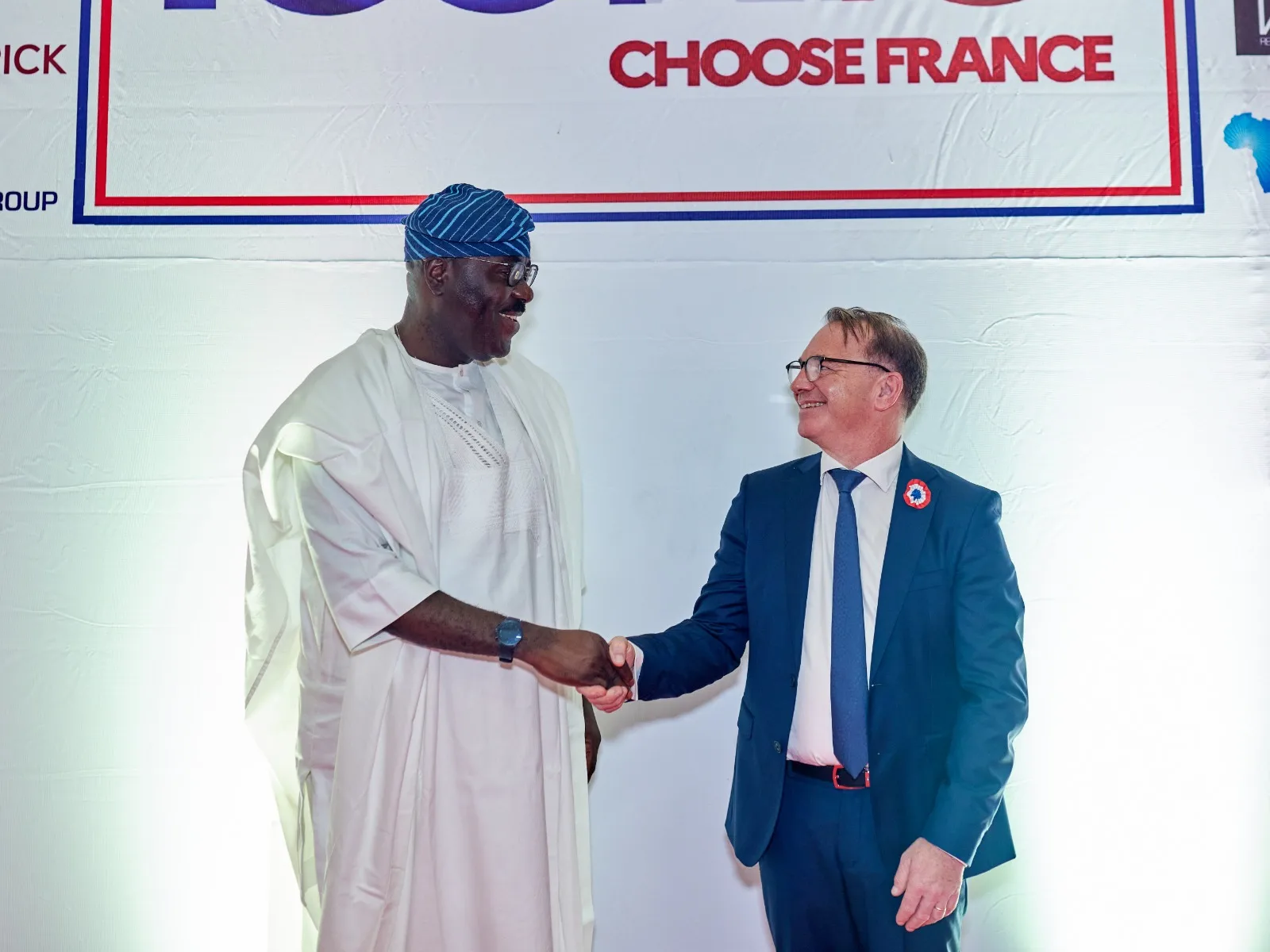
The tricolor flew high over Lagos this July, as the Consul General of France in Lagos, Laurent Favier, underscored a persistent truth: Nigeria remains the undisputed leader for French investment across West Africa.
His remarks, delivered during celebrations for France’s National Day, affirmed that approximately 60% of France’s total capital flows into the sub-region find their home in Nigeria. It’s a figure that speaks volumes about a relationship often shadowed by other narratives, yet undeniably robust.
Nigeria’s enduring appeal for French investment
This isn’t just a statistic; it’s the heartbeat of a commercial partnership that has consistently defied easy categorization. For decades, the economic ties between Paris and Abuja have grown, sometimes despite political headwinds, creating a unique dynamic that shapes regional development and employs thousands of Nigerians. This enduring commitment shows how deeply intertwined the economic fortunes of these two nations have become.
More than 100 French companies currently operate within Nigeria’s borders, a significant footprint that illustrates the scale of this economic engagement. These businesses aren’t just setting up shop; they’re employing over 16,000 Nigerians directly, contributing substantially to the local economy and workforce. It’s a testament to Nigeria’s market potential, a magnet for foreign capital even amidst global uncertainties.
The energy sector stands as the undeniable bedrock of French investment here, a long-term strategic interest that continues to drive significant capital. But the scope of French financial commitment stretches far beyond oil and gas. Investments now span critical areas like infrastructure, cutting-edge technology, and educational initiatives.
Diverse sectors, deep impact
France’s investment portfolio in Nigeria is remarkably diverse, reflecting a nuanced understanding of the nation’s needs and opportunities. Beyond energy, French capital is flowing into crucial sectors such as pharmaceuticals, insurance, and the rapidly growing agrifood industry. The commitment extends to shipping and hospitality, broadening the economic impact across various segments of Nigerian life.
This isn’t merely about financial injections; it’s about fostering growth in areas vital for a modernizing economy. Vocational training, digital innovation, and support for creative industries like e-sports and higher education are also seeing significant French backing. These initiatives aim to build local capacity and tap into Nigeria’s youthful demographic.
The French Development Agency’s critical role
A major driver of France’s long-term commitment to Nigeria comes through the extensive work of the French Development Agency (AFD). Over the past 17 years, AFD has channeled more than €3.3 billion into 57 distinct projects across 23 Nigerian states. This represents a monumental effort to bolster Nigeria’s foundational infrastructure and social services.
Crucially, more than €1.1 billion of this total was mobilized through Proparco, AFD’s private-sector financing arm, indicating a blend of public and private capital. These interventions now span all 36 states and the Federal Capital Territory, demonstrating a comprehensive approach to national development. The reach of these projects touches millions of lives across the country.
Transforming lives through infrastructure
AFD’s investments have yielded tangible improvements for Nigerian citizens, particularly in basic services. Over one million Nigerians have gained improved access to safe drinking water, a fundamental human right often taken for granted in more developed nations. Significant funds have also been directed towards upgrading electricity grids, improving rural infrastructure, and enhancing agricultural markets.
One notable project is Omi Eko, Africa’s first electric inland waterway transport system, being funded in Lagos. This innovative initiative promises to transform urban mobility and reduce the carbon footprint of transport in the bustling metropolis.
Other critical projects include substantial support for Nigeria’s electric power industry and the upgrade of its national electricity distribution network, essential steps towards stable power. For instance, Nigeria’s capital market will benefit from such improvements, attracting more diverse investments.
Bilateral trade and its historical patterns
Nigeria isn’t just an investment hub; it’s also France’s largest trading partner in sub-Saharan Africa, a significant economic relationship by any measure. In 2025, trade between the two nations reached an impressive $4.7 billion, a figure that solidifies this critical partnership. This robust trade relationship forms another pillar of the enduring ties.
In 2021 alone, Nigeria accounted for 20% of France’s trade with sub-Saharan Africa, totaling €3.53 billion. While France recorded a bilateral trade deficit of €2.3 billion with Nigeria in the same year, reflecting Nigeria’s crucial role as an energy supplier, the balance of goods traded reveals deeper trends. This imbalance highlights the commodity-driven nature of a large part of their trade.
Exports and imports: A closer look
French exports to Nigeria experienced a notable rise of 16% in 2021, climbing from €528 million to €611 million. This marked the first increase in nine years, signaling renewed French commercial interest. Manufactured products constitute almost all of France’s exports to Nigeria, with agrifood products leading the charge at around 30% of that total. This indicates a focus on consumer goods and industrial inputs.
Conversely, petroleum products dominate France’s imports from Nigeria, accounting for a staggering 95% of the total. This dependence on Nigerian oil underscores the strategic importance of the West African nation to France’s energy security. It also reflects Nigeria’s position as a major global oil producer, shaping international economic relationships.
Shifting regional dynamics and France’s strategic focus
The broader West African landscape has seen significant geopolitical shifts recently, including rising anti-French sentiment in some Francophone countries. These developments have led French firms to increasingly explore growth opportunities in more stable and commercially vibrant Anglophone markets across Africa. Nigeria, with its large economy and relatively stable environment, naturally stands out.
The withdrawal of Burkina Faso, Mali, and Niger from the Economic Community of West African States (ECOWAS) in January, though with a one-year notice period, is expected to impact investor confidence in those nations. This regional instability further positions Nigeria as a crucial anchor for French investment strategy. It’s a calculated realignment in a changing geopolitical map.
“Team France” strengthens partnerships
To navigate this evolving environment, “Team France” in Nigeria comprises a coordinated network of institutions dedicated to deepening bilateral ties. This includes Business France, the Economic Department, the AFD Group, French Foreign Trade Advisors, and the Franco-Nigerian Chamber of Commerce. These entities work in concert to facilitate investment and trade.
The France–Nigeria Business Council, launched in 2018, acts as a vital platform bringing together major French and Nigerian companies. It aims to foster direct investment partnerships, showcasing successful collaborations like the Mike Adenuga Centre, which houses the Alliance Française in Lagos. The 10th meeting of the council, held in Kenya in May 2026, reinforced its ongoing mission to expand African creative talent and business opportunities.
What lies ahead: Macron’s rumored visit and future engagements
The bond between France and Nigeria is set to deepen further with a much-anticipated visit from French President Emmanuel Macron. Reportedly scheduled for October 29 and 30, this trip would see Macron lay the foundation stone for a new French institute in Abuja. Such cultural and educational investments mirror France’s commitment to soft power alongside economic might.
His team is reportedly in talks with Nigerian businessman and billionaire Mike Adenuga, seeking funding for this new institute. Adenuga’s prior support for the Alliance Française in Lagos illustrates a powerful model of private philanthropy driving cultural exchange. The visit also includes planned talks with President Bola Ahmed Tinubu, aimed at strengthening diplomatic ties and enhancing cooperation across various sectors.
Ongoing commercial missions and strategic minerals
Beyond high-level visits, commercial engagement continues unabated. Business France organized an Oil and Gas mission to Nigeria in June 2026, bringing together a dozen French companies to explore fresh investment opportunities. This proactive approach ensures a continuous pipeline of potential projects, particularly in a sector that remains central to Nigeria’s economy.
The French Treasury is also directly involved, funding a pilot project for small hydroelectric power stations in Katsina State, a crucial step towards sustainable energy development. Furthermore, a Memorandum of Understanding signed in late 2024 underlines France’s commitment to developing Nigeria’s solid minerals sector.
This focus on critical minerals points to a strategic long-term vision, acknowledging Nigeria’s vast untapped resources. It marks a shift towards diversifying economic cooperation beyond traditional energy sources.
From the complex dynamics of diplomatic history to the bustling energy of current trade, the French-Nigerian relationship shows us that enduring partnerships are built not just on shared interests, but on a relentless pursuit of mutual opportunity.
The continued flow of French capital into Nigeria isn’t merely a financial report; it’s a historical echo, reminding us that Nigeria’s economic gravity has always pulled power towards it, shaping continental destinies then, just as it does today.
