



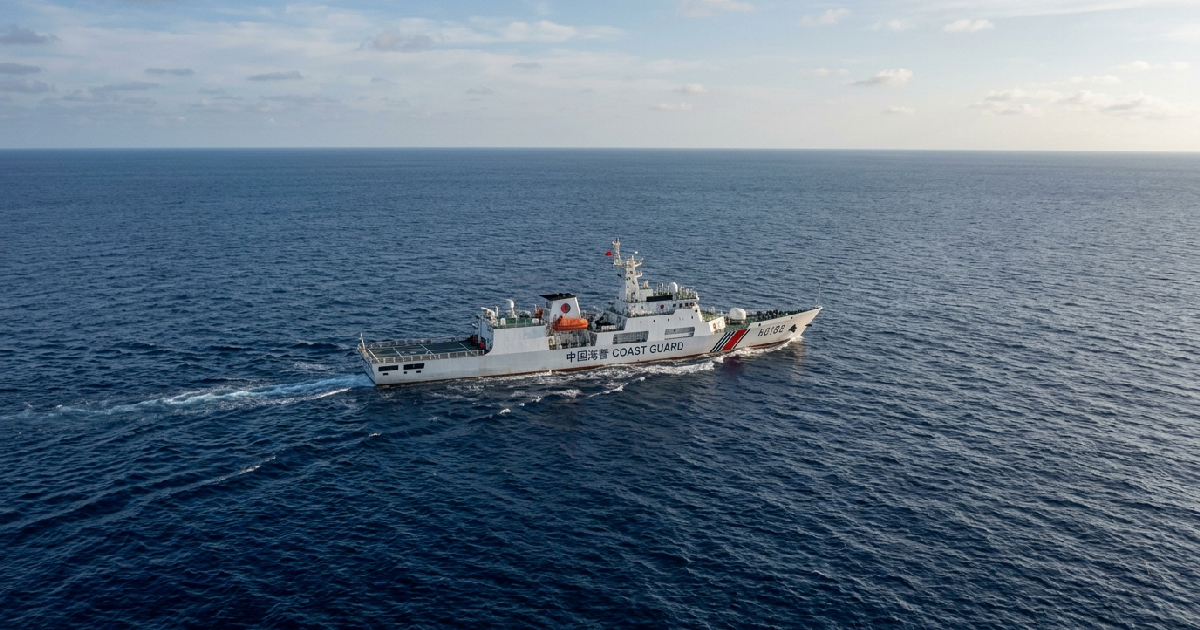
China has recently intensified its territorial claims over the sea east of Taiwan, a move that immediately heightens geopolitical tensions in the already contested Indo-Pacific region. This escalation by Beijing reflects a deepening assertion of its sovereignty narratives, particularly concerning areas adjacent to Taiwan.
The latest development underscores China’s persistent strategy to reinforce its claims over Taiwan and the surrounding maritime space. It challenges the existing status quo, raising concerns among international powers about regional stability and freedom of navigation.
Beijing’s deepening territorial assertions
Beijing’s actions east of Taiwan represent a significant step in a long-standing pattern of territorial assertiveness. This area holds immense strategic importance, not only as a crucial maritime gateway but also as a direct buffer for Taiwan’s eastern coast.
The intensification of these claims directly threatens Taiwan’s perceived sovereignty. It also complicates the operational environment for naval forces from other nations and could impact vital shipping lanes that crisscross the region.
Historical basis of China’s maritime claims
China’s maritime claims in the broader region, including the South China Sea and East China Sea, are historically complex and often disputed. Beijing refers to historical maps and records to justify its expansive territorial and maritime boundaries.
These historical arguments underpin a consistent foreign policy that views Taiwan as an integral part of its territory. The sea east of Taiwan forms a critical part of this larger strategic framework, linking various points of contention.
International reactions to China’s escalated posture
The international community is closely watching Beijing’s heightened assertiveness. Many nations, particularly the United States and its allies, advocate for a free and open Indo-Pacific and uphold the principle of freedom of navigation.
Washington has repeatedly expressed concerns over China’s expanding military presence and territorial claims, viewing them as destabilizing. Any move to extend control east of Taiwan will likely draw strong diplomatic condemnations.
Such actions also have economic implications beyond the immediate military standoff. Escalating tensions in critical shipping routes often leads to higher insurance premiums and longer transit times for commercial vessels.
Taiwan’s firm stance and calls for support
Taiwan has consistently rejected Beijing’s territorial claims, asserting its sovereignty as an independent, democratic entity. Taipei views any encroachment into its claimed maritime zones as a direct threat to its security and national integrity.
The Taiwanese government and military are likely to monitor the situation closely, potentially increasing their own naval and air patrols in response. They’ll be looking to gather intelligence on Chinese activities and maintain a visible presence.
United States’ unofficial yet steadfast commitment
The United States maintains a robust, though unofficial, relationship with Taiwan. Washington provides defensive capabilities under the Taiwan Relations Act, repeatedly signaling its commitment to Taiwan’s self-defense.
The increased Chinese claims will likely trigger stronger condemnations from the US and its allies. Naval deployments, such as freedom of navigation operations, could become more frequent in response to Beijing’s latest actions.
This places the US in a delicate position, requiring a balance between deterring aggression and avoiding direct confrontation. Any miscalculation could have severe consequences for global stability.
Beijing’s geopolitical calculus behind sea expansion
China’s decision to press harder on its claims east of Taiwan stems from a multifaceted geopolitical calculus. It’s a clear message about Beijing’s unwavering stance on Taiwan’s status and its growing naval power.
By asserting control in these waters, China aims to diminish Taiwan’s strategic depth and deter any potential foreign intervention in a cross-strait conflict. This strategic maneuvering is deeply entwined with national pride and long-term security goals.
Economic and military factors driving expansion
Economically, the seas around Taiwan are rich in fishing grounds and potential hydrocarbon reserves, though direct exploration in the contested areas is limited. Militarily, controlling these waters provides a crucial defensive and offensive advantage.
It allows the People’s Liberation Army Navy (PLAN) greater operational flexibility, creating a wider buffer zone for its mainland and enhancing its ability to project power further into the Pacific. This drive for national capability is also seen in other sectors, such as China’s advancements in robotic cargo spacecraft.
This expansion eastward also enables China to better secure its submarine fleet, offering more space for operations and concealment from adversaries. It’s a calculated move to push its defense perimeter further from its mainland shores.
Broader Indo-Pacific implications of China’s move
The stepping up of China’s claims east of Taiwan has ripple effects far beyond the immediate vicinity. It contributes to a broader sense of instability throughout the Indo-Pacific, a region already grappling with numerous territorial disputes and escalating military buildups.
Other nations with their own claims in the South China Sea or East China Sea, such as Vietnam, the Philippines, and Japan, will view this as a precedent. It suggests that Beijing is prepared to unilaterally alter maritime boundaries, regardless of international opposition.
Potential disruption to global shipping and trade
The East Taiwan Sea lies on a critical pathway for global maritime commerce. Disruptions or increased militarization in this area could force commercial shipping to seek alternative, longer, and more expensive routes. This would impact supply chains worldwide.
The uncertainty could also deter investment and lead to higher insurance premiums for vessels operating in the region. Global logistics face significant challenges when key maritime areas become contested.
Future diplomatic and strategic considerations
Looking ahead, diplomatic efforts will likely intensify, with calls for de-escalation from various international bodies and nations. However, Beijing’s historical pattern suggests it’s unlikely to back down easily from such declarations, contributing to a global climate where anti-war protests intensify in various parts of the world.
The coming months will be crucial in determining whether these stepped-up claims lead to a new normal of heightened tension or a more pronounced standoff. The international community will need a concerted approach to uphold maritime law and ensure regional stability.
