



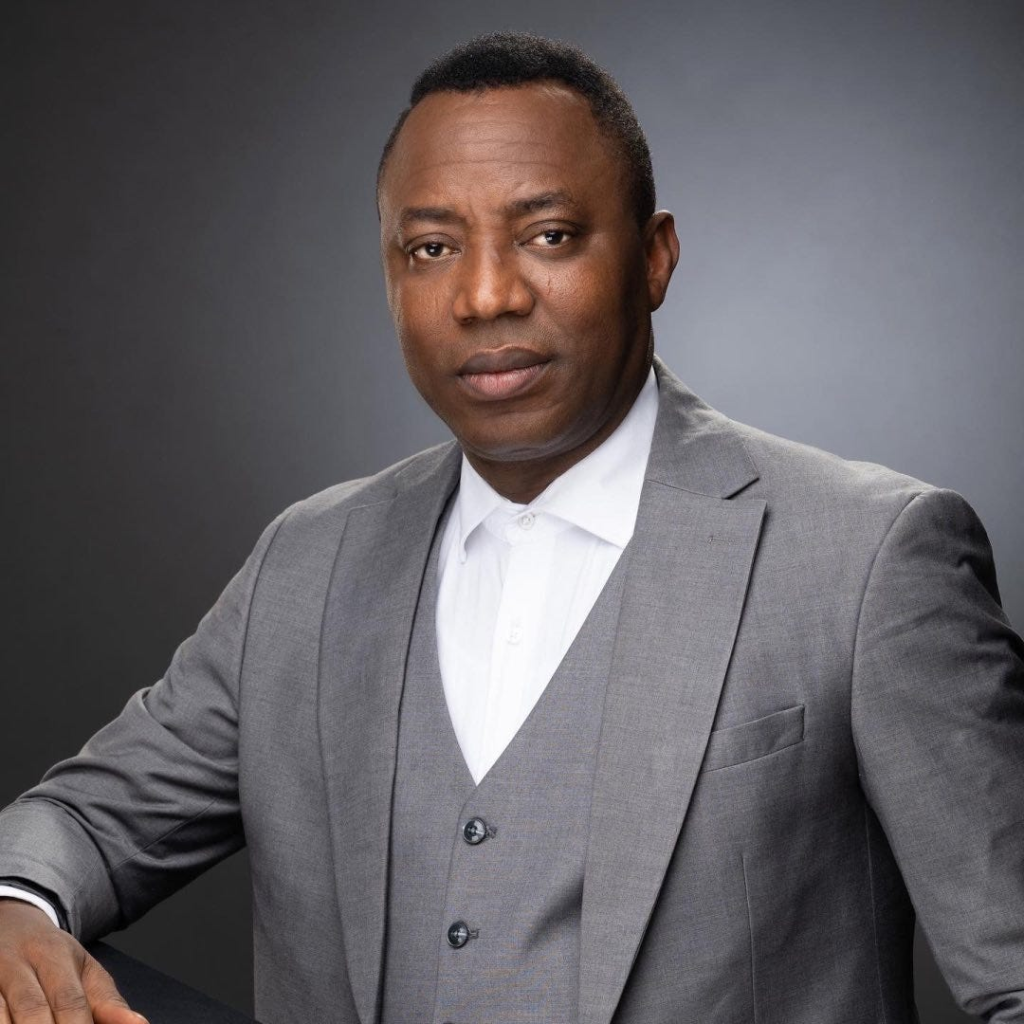
Omoyele Sowore, the African Action Congress (AAC) presidential candidate, laid out an ambitious education blueprint on Monday, July 13, 2026, promising free schooling at all levels ahead of Nigeria’s 2027 general election.
Sowore shared the comprehensive policy document on his verified X handle, framing it not just as a political promise but as a “revolutionary commitment.” This proposal cuts to the heart of a long-standing national debate about access to quality education, echoing decades of similar aspirations and frustrations across the nation.
Sowore’s bold vision for educational access
At the core of Omoyele Sowore’s declaration is a promise that “knowledge is a right, not a privilege.” He insists no child in Nigeria would be forced to pay for WAEC, NECO, or any other public examination under his administration.
This commitment extends beyond exam fees, guaranteeing free, high-quality education from early childhood right through university. The plan envisions modern classrooms, virtual learning environments, and better-paid teachers as cornerstones of this accessible system.
Student grants would also support those in public tertiary institutions, covering academic and living expenses. This would significantly ease the burden on Nigerian families struggling with the rising cost of living.
Sowore’s blueprint is a 20-point manifesto, meticulously detailing reforms across access, infrastructure, funding, curriculum, technology, research, and student welfare. Its overarching goal is to build a “modern, free, inclusive, and future-ready education system” for the nation.
Restructuring Nigeria’s learning pathway
The AAC candidate proposes a radical overhaul of Nigeria’s current educational structure. His plan introduces a new system comprising five years of primary education, five years of secondary schooling, and a four-year university degree track.
Perhaps even more significantly, the manifesto calls for the establishment of community colleges in every Local Government Area (LGA). These institutions would offer two-year associate degree programs, bringing higher education closer to communities.
This decentralized approach aims to widen tertiary access and provide vocational and technical skills directly relevant to local economies. It’s a departure from a system often criticized for being too centralized and academically focused.
The vision also includes universal early childhood education, delivered through well-equipped nursery and pre-primary schools. This focus on foundational learning is crucial, considering Nigeria’s persistent challenge with out-of-school children.
Past attempts at universal primary education, while well-intentioned, often faltered due to funding and infrastructure gaps. Sowore’s plan suggests a deeper, more integrated approach from the earliest years, acknowledging education as a continuum.
Teachers, technology, and university autonomy
Sowore’s plan places a significant emphasis on the welfare and development of educators, encapsulated in the motto “Teachers first.” It promises better salaries, housing, and research opportunities, alongside increased recognition for their work.
The blueprint also proposes two-year teachers’ institutes to train educators in modern pedagogy, AI, digital learning, and classroom leadership. This acknowledges the urgent need to equip teachers for a rapidly evolving educational landscape.
Technology integration is another central pillar, with promises of high-speed internet and digital classrooms in every school. The plan outlines the introduction of coding from primary school, digital literacy for all, robotics, automation, AI tools, data science, and cybersecurity.
Historically, Nigerian universities have struggled with funding shortfalls and political interference, often leading to protracted strikes and a decline in academic standards. Sowore addresses this directly by pledging greater institutional independence.
His manifesto calls for academic, financial, and administrative autonomy for universities, coupled with robust accountability and transparent governance. This commitment seeks to free higher education from the shackles of political manipulation and restore academic integrity.
The plan also specifically defends academic freedom and the protection of independent student unions. This echoes long-standing demands from student bodies and academic staff for spaces of free thought and intellectual debate on campuses, often suppressed during various political eras.
Beyond the classroom: Student welfare and future-ready skills
The education blueprint extends its reach to student welfare, promising healthy daily meals for pupils, alongside comprehensive health services, counseling, and mental health support. This holistic approach recognizes that learning thrives when basic needs are met.
Special attention is also paid to inclusive and special education, with provisions for accessible infrastructure, assistive technologies, Braille, sign language, and individual support. The pledge is clear: “No child will be left behind.”
Research and innovation are slated for a boost through merit-based grants for impact-driven studies in fields like medicine, AI, renewable energy, biotechnology, and climate science. This aims to position Nigeria at the forefront of global scientific advancements.
Sowore’s plan also envisions a “National education & innovation cloud,” a digital platform offering online libraries, academic journals, virtual laboratories, and AI learning assistants. This would democratize access to educational resources for every student and teacher.
The final pillar ensures full funding for sports, arts, and culture, recognizing their crucial role in “total development.” This investment aims to nurture talent alongside academics, providing a more balanced and enriching educational experience.
This comprehensive approach to education reflects a broader understanding of human potential, moving beyond rote learning to foster creativity, critical thinking, and well-being. It seeks to break cycles where talent is stifled by a lack of resources or opportunity.
The enduring quest for accessible education
Omoyele Sowore’s education plan enters a political arena where education has always been a fiercely debated subject. The promise of free education, while popular, comes with significant questions about funding and implementation in a nation with immense budgetary pressures.
Nigeria’s history is dotted with ambitious educational initiatives, from early post-independence drives for universal primary education to various reforms aimed at improving quality and access. Many of these have faced hurdles, often related to financial sustainability and political will.
The concept of education as a right, however, has deep roots in Nigerian civil society and political discourse. Activists, including Sowore himself, have consistently championed this ideal, often clashing with authorities over issues like tuition fees and academic freedom.
His previous presidential campaigns, including the 2023 election, featured similar pledges on free education, demonstrating a consistent focus on this issue. But translating such a sweeping vision into reality demands more than just good intentions; it requires a pragmatic roadmap for financing and execution.
For ordinary Nigerians, the burden of examination fees like WAEC and NECO represents a tangible barrier to progression. Their abolition would directly impact thousands of households, potentially unlocking opportunities for countless young people.
The debate surrounding Sowore’s AAC education plan will undoubtedly intensify as the 2027 general election draws closer. Political rivals will scrutinize its feasibility, while citizens will weigh its potential to address the deep-seated challenges plaguing the nation’s schools and universities.
This plan, ambitious as it is, forces a crucial national conversation: can Nigeria truly build an education system where no child’s future is dictated by the depth of their parents’ pockets? That question, far from new, remains as vital today as it was in the earliest days of Nigerian independence, shaping the destiny of generations.
