



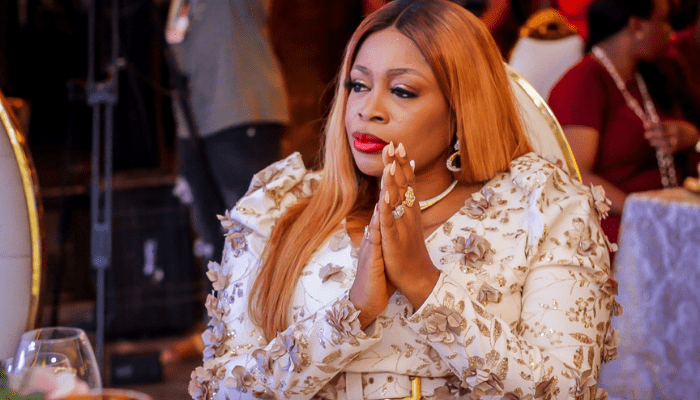
The gavel came down in Lagos, silencing a battle that had simmered for years in Nigeria’s vibrant gospel music scene over the hit song ‘Way Maker’ and its copyright.
The protracted legal challenge, brought by music producer Michael Oluwole, professionally known as Maye, centered on Sinach’s globally celebrated anthem, “Way Maker.” Hon. Justice A. Lewis-Allagoa delivered the judgment, confirming Sinach’s sole authorship and dismissing Oluwole’s claims of co-ownership and demands for damages.
The battle over ‘Way Maker’ authorship
Michael Oluwole had initiated the suit (FHC/L/CS/402/2024) in March 2024, contending that his significant contributions as a studio engineer amounted to co-authorship of “Way Maker.” He sought an equitable share of all fees from licenses and assignments, alleging infringement of his performer’s rights, and demanded the staggering ₦5 billion in general damages.
Oluwole asserted he had meticulously worked on the song, contributing to its recording, mixing, mastering, and crafting instrumental accompaniments like piano, strings, and synthesizers. He argued that he performed these creative functions without ever transferring his performer’s rights, making Sinach’s commercial release and subsequent licensing without his consent or compensation “deliberate and oppressive.”
But Sinach, through her counsel Emeka Etiaba (SAN) of Etiaba Chambers, staunchly denied these allegations. She maintained sole authorship, stating Oluwole’s role was strictly limited to mixing the master recording, a service for which he had been duly paid ₦150,000, roughly $300.
The court proceedings, initially set to begin in November 2024, faced adjournments into January 2025 for further arguments. This legal wrangling highlights a fundamental tension often present in the creative sector: where does technical contribution end and artistic co-creation begin?
The court’s decisive ruling on creative ownership
Hon. Justice A. Lewis-Allagoa’s ruling clarified this crucial distinction, affirming that authorship under copyright law vests in the natural person who creates the original expressive content. This includes elements like melody, harmony, lyrics, or arrangement, rather than simply providing technical or instrumental support.
The court specifically found that Maye failed to prove authorship or co-ownership of the musical work. Evidence presented during the trial showed Sinach had composed, arranged, and even performed “Way Maker” in South Africa with collaborators like Nwabude Chude Arinze well before Oluwole’s engagement.
Oluwole’s own admissions confirmed that Sinach brought an existing song to him. His role, therefore, was to develop it into a recorded musical work for a fee, not to originate the core artistic expression. This judgment sends a clear message about the legal interpretation of creative contributions in the digital age.
‘Way Maker’ global anthem and its commercial journey
Long before this court battle, “Way Maker” had already etched its place in global music history. Released commercially in December 2015 (though some sources suggest 2016), the song quickly transcended its gospel roots to become a worldwide phenomenon.
By March 2019, its YouTube video had surpassed an astonishing 100 million views, making it the first Nigerian gospel song to achieve such a milestone. Its powerful message and universal appeal led to translations into over 50 languages, and it has been covered by more than 60 Christian artists across the globe.
The song’s impact wasn’t just cultural; it earned significant industry recognition. In 2020, “Way Maker” secured the coveted GMA Dove Award for Song of the Year, a testament to its widespread influence. The following year, it made history again, becoming the first African gospel song to win the BMI Song of the Year award, further solidifying its commercial and artistic weight.
Beyond awards, the song’s utility in worship spaces was profound. It ranked #1 in the Christian Copyright Licensing International Top 100 in June 2020, reflecting its frequent use in church services. During 2020, it stood among the most-played songs in U.S. churches and even served as a poignant anthem during a Minneapolis protest march honoring George Floyd, showing its resonance far beyond traditional church walls.
Protecting intellectual property in Africa’s creative economy
This court victory for Sinach isn’t just about one song; it’s a bellwether for Africa’s burgeoning creative economy. Disputes over intellectual property, whether in sports contracts or music production, have plagued Nigerian artists for decades. Often, creators find themselves at the mercy of opaque deals and a lack of clear legal precedents, leaving them vulnerable to exploitation.
The ruling underscores a maturing legal framework in Nigeria, one that is increasingly capable of dissecting the complexities of artistic creation and technical support. It highlights the critical importance of clear contractual agreements, especially in an industry where collaboration is key but ownership can be ambiguous without proper documentation.
For countless emerging artists and producers in Nigeria, this judgment serves as a powerful reminder. Defining roles, responsibilities, and, crucially, compensation and ownership rights in written contracts before any creative process begins is no longer optional; it’s essential. The creative sector, from Nollywood to Afrobeats, is a powerhouse for Nigeria, and robust legal protections are vital for its sustainable growth.
A historical mirror for Nigerian artistry
Nigeria has a rich, often turbulent, history with intellectual property rights. For generations, traditional oral narratives, indigenous music, and artistic expressions circulated freely, their value often communal rather than strictly individual. But as modern commercial structures took root, especially after colonial influences introduced formal copyright laws, the adaptation has been slow and challenging.
Many Nigerian artists, particularly during the boom of early recording industries and later the video film era, found their works copied, pirated, or their contributions undervalued without legal recourse. This created a culture where the lines of ownership were perpetually blurred, often to the detriment of the original creators. The legacy of these struggles continues to shape today’s industry.
What this case against Sinach ultimately does is provide a modern precedent, a clear stake in the ground. It offers a legal framework for distinguishing between technical services and original artistic contribution.
This isn’t just about Sinach; it’s about every Nigerian artist who pours their soul into creation, ensuring their legacy isn’t diluted by ambiguous claims. This landmark decision helps build a stronger foundation for the next generation of creative talent.
It echoes the long-held desire for artists to truly own and benefit from their extraordinary gifts, shifting the narrative from exploitation to empowerment.
The outcome also reflects the broader global trend of valuing intellectual assets, a critical component for any nation looking to thrive in the modern economy. Just as much as the capital market seeks confidence, so too must the creative market instill trust and clarity for investors and creators alike. This judgment provides that confidence.
What this means for the creative sector’s future
The Federal High Court’s definitive stance will undoubtedly ripple through Nigeria’s entertainment industry. It sends a potent message to producers, engineers, and session musicians: your valuable technical skills are remunerated through agreed-upon fees, not automatic co-authorship of a musical composition, unless explicitly contracted as such.
For Sinach, this victory reaffirms her status not just as a global gospel icon but also as a champion of artistic integrity. It’s a testament to the fact that hard work, coupled with verifiable creative input, is what stands firm in the face of legal challenges. Her legal team successfully demonstrated the clear distinction between creative ideation and technical execution.
This ruling is a powerful affirmation for all creators that their original work is protected under Nigerian law. It’s a step towards legitimising the often-underappreciated business side of artistry, encouraging clear agreements, and ultimately fostering a more transparent and equitable ecosystem for music, film, and all creative endeavors in Nigeria.
And so, as the melodies of “Way Maker” continue to resonate across continents, its legal battle now serves as a foundational chord in the ongoing symphony of intellectual property rights in Africa. It reminds us that while art may be timeless, the struggle for its recognition and protection is very much alive in our present moment.
