



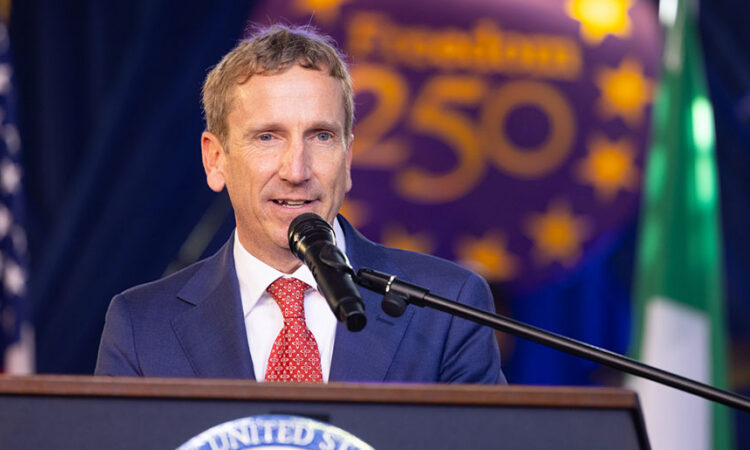
In the vibrant heart of Abuja, a new chapter unfolded for Nigeria’s invaluable historical treasures on Tuesday, July 21, 2026. Keith Heffern, Charge d’Affaires of the U.S. Embassy in Nigeria, announced a substantial commitment: $1.2 million invested over the past five years to safeguard the nation’s cultural heritage preservation.
This strategic investment, channeled primarily through the Ambassadors Fund for Cultural Preservation (AFCP), signals a deeper partnership between the two countries. Unveiled at a cultural heritage preservation project by the Wheyham Foundation, the initiative underscores how history and diplomacy intertwine to shape Nigeria’s future.
American investment in Nigeria’s past
The United States has actively supported cultural heritage preservation across 21 Nigerian states through the AFCP. This $1.2 million commitment isn’t merely aid; it’s a strategic move designed to advance American interests alongside Nigeria’s own.
Its core purpose is clear: to preserve Nigeria’s rich cultural legacy, strengthen bilateral cooperation, and aggressively combat the illicit trafficking of cultural artifacts. Ultimately, these efforts aim to disrupt criminal networks and secure prosperity for both nations.
Digital tools protect ancient art
One of the most compelling aspects of this collaboration involves leveraging technology to safeguard history. Over 250 Nok artifacts have now been digitally preserved, creating an invaluable record of these ancient works.
The initiative also facilitated a full museum upgrade and trained 50 Nigerian youths in advanced digital skills, ensuring local capacity for future preservation. These programs have collectively reached over 50,000 people nationwide, raising awareness and engagement.
The battle against illicit trafficking
A key innovation in this fight is the deployment of Non-Fungible Token (NFT)-based artifact tracking technology. This modern solution offers a verifiable digital footprint for each piece, making it significantly harder for stolen cultural property to enter legitimate art markets.
Keith Heffern articulated the broader impact, stating that protecting Nigeria’s heritage directly thwarts criminal enterprises. He framed the investment as a strategic commitment, recognizing that cultural preservation fosters stability and prosperity for both countries. Such partnerships extend beyond cultural exchange, mirroring broader US investment in technology sectors that promise long-term benefits.
Heritage as a national security asset
General Christopher Musa (retd.), Nigeria’s Minister of Defence, offered a powerful perspective, connecting cultural preservation directly to national security. He argued that true national security extends beyond military strength, encompassing a nation’s unity and identity.
For a nation like Nigeria, with its deep historical roots and diverse cultural expressions, safeguarding its heritage reinforces collective identity. This, in turn, builds resilience against internal divisions and external pressures, solidifying the social cohesion that underpins any secure state.
The enduring legacy of Nok civilization
The focus on Nok artifacts holds profound significance. Nigeria’s Minister of Art, Culture, Tourism and the Creative Economy, Hannatu Musawa, emphasized the Nok civilization as one of Africa’s earliest centers of artistic excellence.
Their distinctive terracotta works, with forms predating the Common Era by centuries, offer a window into an ancient world of sophisticated artistry and societal structures. Preserving these artifacts is critical not just for aesthetic appreciation but for understanding a foundational piece of human history.
In February of what was likely 2025, Minister Musawa signed a grant agreement with the U.S. Embassy under the AFCP specifically to document and protect these Nok terracotta artifacts in Kaduna State. This highlights the long-standing efforts to safeguard these particular treasures.
Decades of partnership in preservation
The Ambassadors Fund for Cultural Preservation (AFCP), established by the U.S. Congress in 2001, has consistently supported cultural heritage globally. Nigeria is notably one of only two countries in Sub-Saharan Africa to have a similar cultural property agreement with the United States.
Over time, Nigeria has received more than $1.3 million for 15 projects through the AFCP, demonstrating a sustained commitment. These grants, typically ranging from $25,000 to $500,000, support projects with durations of one to five years.
The National Commission for Museums and Monuments’ role
Central to these efforts is the National Commission for Museums and Monuments (NCMM), established in 1979. This federal body is responsible for the collection, documentation, conservation, and presentation of Nigeria’s extensive cultural properties.
The NCMM oversees 52 National Museum outlets and 65 monuments, forming the institutional backbone of Nigeria’s heritage protection. Its role as Nigeria’s representative in international cultural bodies like UNESCO also strengthens the nation’s broader push to reclaim its global standing in cultural affairs.
What’s next for cultural custodians
The collaboration between the United States and Nigeria in cultural heritage preservation continues to evolve. The deadline for fiscal year 2025 proposals for AFCP funding was January 10, 2025, indicating an ongoing cycle of opportunities for future projects.
Organizations like the Wheyham Foundation, which hosted the recent unveiling in Abuja, are crucial partners in translating these investments into tangible results on the ground. These sustained efforts reflect a growing global understanding of culture’s role in national development.
As we observe the painstaking work to digitize and protect Nigeria’s ancient treasures, we’re reminded that the past isn’t merely behind us. It lives, breathes, and continues to shape the decisions made today, defining the essence of who we are and guiding the path we forge into tomorrow.
