



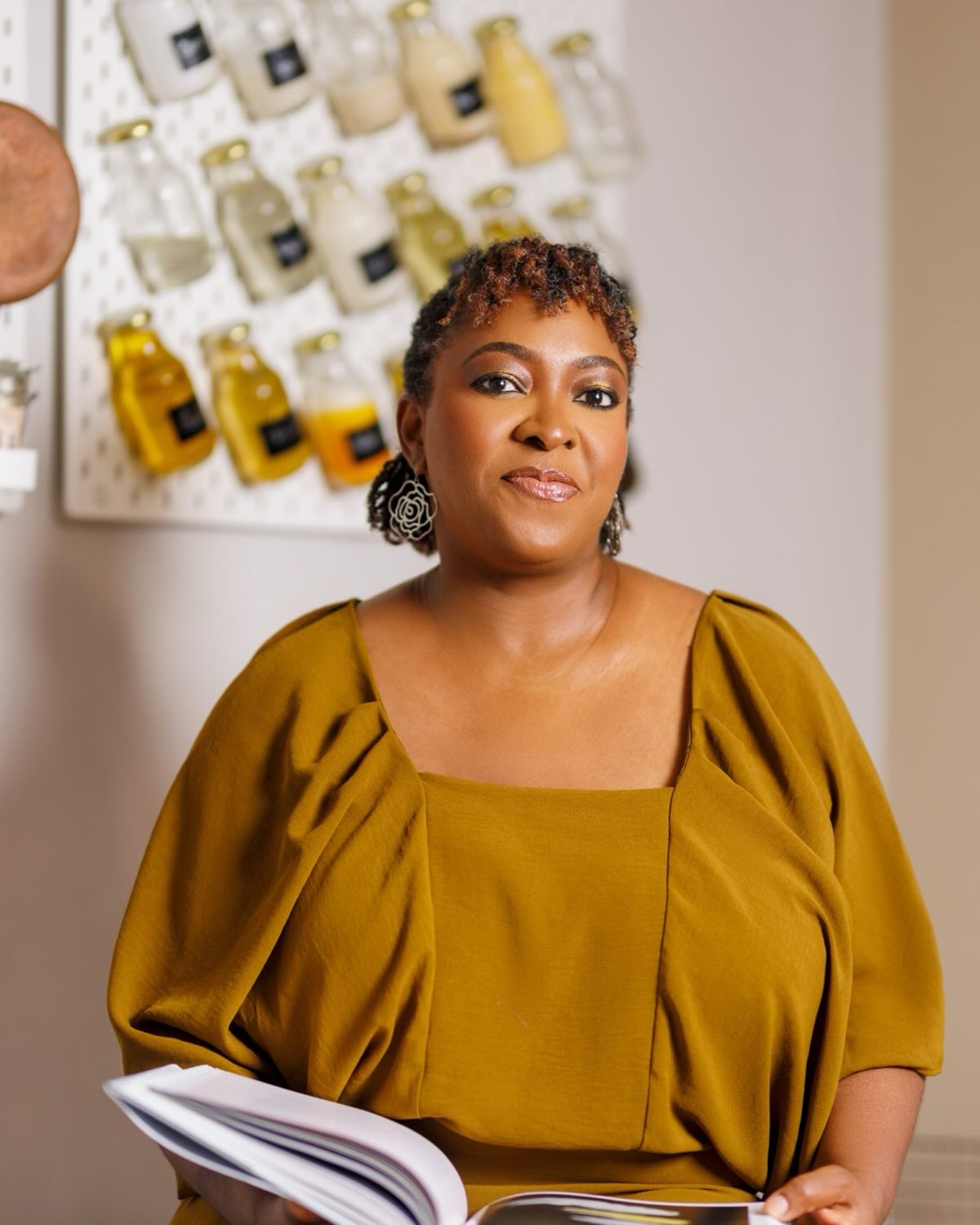
The air in Chicago crackled with anticipation as names echoed through the hall, culminating in a historic moment for Nigerian cuisine.
Her triumph in the “Emerging Voice in Books” category isn’t just an accolade; it’s a declaration. This monumental win not only honours Sokoh’s meticulous research and storytelling but firmly positions Nigerian cuisine as a central, indispensable narrative in the evolving story of global food literature.
A turning point for Nigerian cuisine
Often dubbed the “Oscars of the food world,” the James Beard Awards carry immense weight within culinary circles. This victory for Ozoz Sokoh and Chop Chop immediately elevates Nigerian food from a regional curiosity to a subject of serious international study and appreciation. It’s a powerful validation for a culinary tradition long overlooked by mainstream Western institutions.
The award signifies a broader, welcome shift towards recognising the depth and complexity of African cuisines, moving beyond simplistic narratives. Just two years prior, Nigerian-American food writer Yewande Komolafe had received a nomination in the International category for her cookbook, My Everyday Lagos Kitchen. Sokoh’s win now solidifies that trajectory.
Redefining culinary scholarship
For decades, scholarly attention and prestigious awards largely centred on European and Asian culinary traditions. This left vast areas of the world’s food heritage undocumented and uncelebrated. Sokoh’s methodical approach, which fuses anthropology, history, and vibrant storytelling, challenges this imbalance head-on.
She isn’t just sharing recipes; she’s reconstructing a historical record. This award acknowledges that food is a living archive, capable of conveying profound historical truths, cultural resilience, and global connections. It encourages future generations of Nigerian and African culinary historians to pursue their work with renewed vigour.
From geology to exploring food history
Ozoz Sokoh’s path to becoming a pioneering culinary anthropologist was anything but direct. It’s a testament to her persistent curiosity and an unexpected journey. Born in Warri, Nigeria, in 1976, her early academic pursuits included Urban and Regional Planning at Obafemi Awolowo University in Ile-Ife. She later travelled to the United Kingdom, earning a degree in Geology from the University of Liverpool.
Her scientific background, surprisingly, became a cornerstone of her culinary exploration. It instilled in her a rigorous, investigative approach. It was during her studies in the UK, beginning in 1997, that a gnawing homesickness ignited a passion for cooking Nigerian dishes. Her journey started with a simple tomato salsa recipe in 1998.
The spark of Kitchen Butterfly
The true pivot arrived around 2009-2010. Sokoh discovered a profound connection between the Brazilian Acarajé and the Nigerian Àkàrà, a revelation that sparked her fascination with the transcontinental migration of foodways. This moment shifted her career from geology to a dedicated exploration of food history and culture. She launched her groundbreaking food blog, “Kitchen Butterfly,” in 2009.
This digital space became the crucible for her philosophy that “Food Is More Than Eating,” transforming her into a “Traveler By Plate.” She unpacked the social, cultural, and economic practices embedded in every dish, meticulously documenting Nigerian food traditions.
Feast Afrique’s historical mission
Building on the success of Kitchen Butterfly, Sokoh launched Feast Afrique in 2020. This platform evolved into an online repository and a curated collection of over 250 West African and diasporic culinary and literary resources, functioning as a vital digital library.
Feast Afrique serves as an essential tool for anyone seeking to understand the vast and intricate culinary landscape of West Africa. Her dedication to education is further exemplified by her recent graduation with honours from the Museum and Cultural Management Program at Centennial College in 2021, where she now serves as a Professor of Food and Tourism Studies.
Chop Chop: a culinary and cultural archive
Sokoh’s debut cookbook, Chop Chop: Cooking the Food of Nigeria, published by Artisan Books, is far more than a collection of recipes. It’s a living cultural archive. The book meticulously presents 100 classic Nigerian recipes, thoughtfully curated to represent all six geopolitical regions of the country. Its ambition stretches well beyond the kitchen.
Chop Chop delves deep into the historical context and cultural significance behind each dish. It traces the intricate journeys of ingredients and cooking methods. It explores the social tapestry woven by food, revealing how Nigerian cuisine has both shaped and been shaped by global culinary exchanges.
The work covers culinary vocabulary from over fifty recognized languages and more than 250 ethnicities, offering unparalleled linguistic and ethnographic depth. This dedication to preserving cultural heritage resonates with broader efforts to ensure traditional knowledge is respected and celebrated.
Acclaim before the Beard award
Even before its historic James Beard win, Chop Chop had already garnered significant acclaim. It was named a New York Times Best Cookbook of 2025, a rare feat for a debut author focusing on a specific national cuisine. Following this, it earned the Gold Award in the Food, Cooking, and Healthy Eating category at the 2026 Nautilus Book Awards in May.
The book’s availability reflects its global appeal. Signed copies are found at independent bookstores like BEM Brooklyn, Good Egg Toronto, and Bold Fork Books in DC. It’s also widely accessible across the United States through major retailers such as Barnes & Noble and Books-a-Million, and in Canada via Indigo and Amazon.ca, among others.
The echo of history in every dish
The “Emerging Voice in Books” award specifically honours “work of immediate impact and lasting significance by a first-time published author whose unique perspective expands the reach of the subject matter.” This description perfectly encapsulates Ozoz Sokoh’s mission to document, preserve, and promote Nigeria’s diverse food traditions, moving beyond superficial portrayals.
Her #NewNigerianKitchen project, coined in 2013, was an early call to action, urging a deeper understanding of Nigerian food’s inherent complexity. This wasn’t just about cooking; it was about countering reductionist views and asserting the richness of a cuisine too often pigeonholed. This effort to redefine perceptions echoes political struggles for accurate representation.
A global culinary dialogue
Sokoh’s work extends beyond Nigeria, exploring the historical impact of West African intellectual contributions to global food development. Her research traces these profound influences across the American South, the Caribbean, Europe, and Latin America. She shows how enslaved Africans brought their culinary knowledge and ingredients, shaping entire food cultures. Efforts to connect disparate communities often face logistical hurdles.
She organized the first World Jollof Day in 2017, transforming a popular dish into a symbol of West African culinary pride and global influence. Her presentations, like “Journey by Plate” at TEDx Port Harcourt in 2014, further cemented her role as a vital voice in this ongoing global culinary dialogue.
The power of historical precedent
Sokoh’s achievement isn’t just a personal triumph; it marks a significant stride in the ongoing effort to decolonise global food systems and narratives. For too long, the history of African food has been sidelined or presented through an exoticised lens, disconnected from its profound intellectual and cultural roots.
She is changing that one carefully researched dish at a time. Her approach insists that West African foodways be treated with the same academic rigour and respect historically reserved for European or East Asian cuisines.
A future spiced with pride
Ozoz Sokoh’s James Beard Award is more than just a medal. It’s a powerful validation of Nigeria’s rich and complex culinary heritage. It sends an unmistakable message to young Nigerians and Africans worldwide: your history, your food, your stories are not just valid, they are globally significant.
Her work teaches us that the fight for recognition of African intellectual and cultural contributions is far from over, but victories like this provide vital momentum. In every grain of rice, every spice, every meticulously documented dish, Ozoz Sokoh reminds us that our past is not merely prologue; it is the vibrant, flavorful present, waiting to be savoured and understood.
