



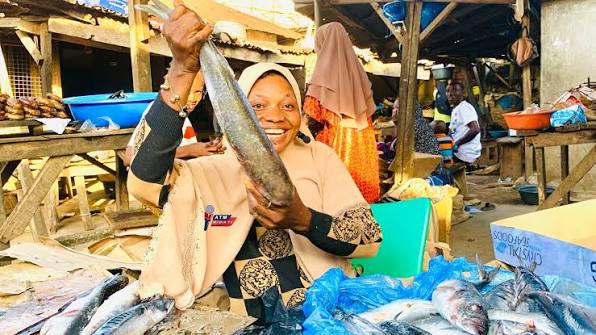
Ile-Ife’s historic commercial hubs embody the spirit of royal endorsement and central trade, reflecting the enduring pulse of commerce found in ancient Yoruba markets for centuries. While the “Oja Oba,” or King’s Market, is a concept common across Yorubaland, its essence is deeply embedded in Ile-Ife’s vibrant trade.
It’s here, in bustling places like Oja Titun and the folkloric Èjìgbòmẹkùn Market, that you see the living legacy of a civilization built on exchange, demonstrating how deeply rooted economic activity is within Yoruba culture and history.
Ile-Ife: Cradle of Yoruba Trade and Enduring Power
Ile-Ife isn’t just any city; it’s the ancestral and spiritual home of the Yoruba people, a place where myths of creation intertwine with the very foundations of trade. Legend says the Supreme God Olodumare ordered Obatala to create the earth here, a task eventually taken over by Oduduwa, who then became the father of the Yoruba race and the first king.
This deep mythological connection established Ile-Ife not just as a spiritual center, but as a nexus of early political and economic power. By the early 11th century CE, it was already a well-established kingdom, its streets later paved with terracotta tiles, its workshops producing intricate beads, iron, and pottery.
The Mythical Origins of a Commercial Hub
Yoruba oral tradition places the beginning of creation in Ile-Ife, with Oduduwa descending from the heavens to shape the land. He planted a palm nut that blossomed into a tree with sixteen branches, symbolising the early Ife clans.
This narrative isn’t merely a bedtime story; it underscores the idea that order and structure, including economic systems, were part of Ile-Ife’s divine blueprint from the start. The city’s early development saw it become a significant hub for gathering and trading goods, from cocoa beans to the gold mined in surrounding areas.
Early Economic Life and Global Reach
Long before modern supply chains, Ile-Ife was already a critical player in regional and even trans-Saharan trade. Its artisans mastered intricate crafts like glass bead making, with these highly sought-after items travelling far and wide.
Archaeological findings show iron smelting and forging at Ife as early as 900 AD, pointing to advanced industrial capabilities that fuelled its economy. These activities didn’t just make its people wealthy; they positioned Ife as one of West Africa’s oldest trading empires, connecting it to distant cultures.
The Ooni’s Enduring Influence
The Ooni of Ife, the spiritual and cultural custodian of the Yoruba race, plays a central role in preserving this heritage. The current Ooni, His Imperial Majesty Oba Adeyeye Enitan Babatunde Ogunwusi, Ojaja II, continues to champion initiatives that bridge the ancient past with modern aspirations.
Ascending the throne on December 7, 2015, at just 41, he became the youngest Ooni in over 600 years. His vision for Ile-Ife includes modern developments like the OjajaMore retail outlet, the Ife Grand Resort and Industrial Park, and the OJAJA Arena, all aiming to invigorate the city’s economy while honouring its roots.
Marketplaces: The Enduring Heartbeat of Yoruba Society
Yoruba markets have never been just places to buy and sell. They are vibrant theatres of daily life, where economic, social, and spiritual threads intertwine. The concept of a central market, often near the traditional ruler’s palace, known as an “Oja Oba,” is a testament to this integrated worldview.
These markets historically provided outlets for farm produce, disseminated information from the palace, and served as critical sites for communal rituals. They operated on periodic schedules, often every four or eight days, setting a rhythm for community life that still resonates.
Beyond Commerce: Social and Spiritual Hubs
Ancient markets like Èjìgbòmẹkùn, located at the northern end of Ìlàré street in Ilé-Ifè, are etched into Yoruba folklore, Ifá verses, and proverbs. They were more than just points of transaction; they were gathering grounds where palace officials announced decrees and collected sacrificial items for festivals like Edi, Aje, and Olojo.
This shows a profound connection between commerce, governance, and spiritual life. Even today, the spiritual significance of markets is reflected in the traditional rituals and sacrifices performed to ensure peace and prosperity, often invoking deities like Èṣù and Ọya.
Oja Titun: A Modern Link to Ancient Commerce
Oja Titun, also known as Odo-gbe Market, stands today as one of Ile-Ife’s largest and busiest open markets, home to approximately 1,500 shops. It’s a direct descendant of the city’s long trading tradition, constantly adapting to the demands of a growing population.
But this vitality comes with its challenges. Studies have highlighted serious environmental concerns, particularly regarding water supply due to government negligence, with the only borehole not functioning. Meat sellers often rely on personal wells, and poor conditions can create breeding grounds for pests, a stark reminder that modern realities can overshadow historical continuity.
Èjìgbòmẹkùn’s Enduring Echoes
While Oja Titun serves the immediate needs of Ile-Ife, Èjìgbòmẹkùn carries a different weight, rooted deeply in primordial times. Though often misidentified with Èjìgbò town, its true significance lies in its historical role as a nerve centre for information and cultural practice.
The narratives surrounding Èjìgbòmẹkùn, embedded in ancient Ifá literary corpus, offer a glimpse into a time when markets were not only economic engines but also crucial venues for cultural expression and community bonding. This tradition of public gathering for cultural exchange is also explored in contemporary efforts to keep cultural initiatives alive.
The Pan-Yoruba “Oja Oba” Tradition
The term “Oja Oba” itself is a powerful cultural identifier, signifying the king’s presence and the market’s central role in civic life. In many Yoruba towns, the main market was strategically located directly in front of the Aafin, the traditional ruler’s palace.
This placement wasn’t accidental; it symbolised the ruler’s oversight, the market’s importance to the kingdom’s prosperity, and its function as a public forum under royal authority. The concept extends far beyond Ile-Ife, demonstrating a shared architectural and social principle across Yoruba societies.
Ogbomoso’s Thriving 24-Hour Giant
Look to Ogbomoso in Oyo State, and you’ll find a remarkable example in the Oja Oba, also known as Odo Oba or Oja Obada. Established in 1938 by Oba Oyinkansola Adedoyin, the then Onpetu of Ijeru, on land donated by Oba Atobatele, this market operates 24 hours a day, every day, including Sundays and festivals.
It’s widely regarded as the largest foodstuff market in Yorubaland and the biggest 24-hour foodstuff market in Southwest Nigeria. This market attracts patrons from all six geopolitical zones in Nigeria and even from neighbouring countries like Togo, Cameroon, and Niger Republic.
The sheer volume and variety of goods, from yams and maize to groundnut and cassava flour, testify to its critical role in regional food security. Leaders like Olayiwola Oyewo, chairman of the Otitoju Association of Foodstuff Dealers, and Simeon Adegboye, its secretary, manage this sprawling commercial ecosystem, ensuring its continuous operation.
Ilorin’s Bustling Core
Another significant “Oja Oba” exists in Ilorin, Kwara State, located along Ipata road, close to the Emir’s palace and the Ilorin Central Mosque. This market is said to be the largest in Ilorin, offering an extensive range of goods.
It provides everything from foodstuffs like rice, beans, and garri to provisions, household materials, clothes, and shoes. Its accessibility by bike or taxi from anywhere in Ilorin further cements its status as a central pillar of the city’s commercial life, linking modern convenience with ancient market functions.
Women’s Enduring Role in Yoruba Markets
A crucial, often underappreciated aspect of Yoruba markets is the dominant role women have historically played. From time immemorial, Yoruba women have been the driving force behind the sale of food, textiles, pottery, and household items, forming associations to regulate prices and resolve disputes.
The figure of the Ìyálójà, or market mother, stands as a powerful symbol of female leadership and economic agency. These women managed market rules, solved community problems, and fostered cooperation, preventing monopolies and ensuring fairness. This mirrors broader discussions around the role of women in economic parity, highlighting that in Yoruba culture, their influence has been foundational for centuries.
Their entrepreneurial spirit and organisational prowess laid the groundwork for the thriving market systems we see today. The markets are not just places of commerce but also spaces where generations of women have built wealth, community, and influence, shaping the economic landscape from the ground up.
History’s Enduring Rhythm in Today’s Markets
The ancient markets of Ile-Ife and the broader Yoruba landscape are more than just archaeological sites or bustling commercial zones. They are living museums, tangible links to a past where trade was intertwined with governance, spirituality, and social cohesion.
From the mythical origins of Ile-Ife as a divine creation point for both humanity and commerce, to the contemporary challenges faced by Oja Titun, these markets tell a story of resilience and adaptation. They remind us that Nigeria’s economic vitality is not a new phenomenon, but a deep-seated inheritance from civilizations that mastered complex trade routes and sophisticated social structures.
Understanding the historical fabric of these markets helps us appreciate that today’s economic decisions, from urban planning to trade policies, are always building on foundations laid centuries ago, proving that our history is not just alive, but actively shaping our present and future.
