



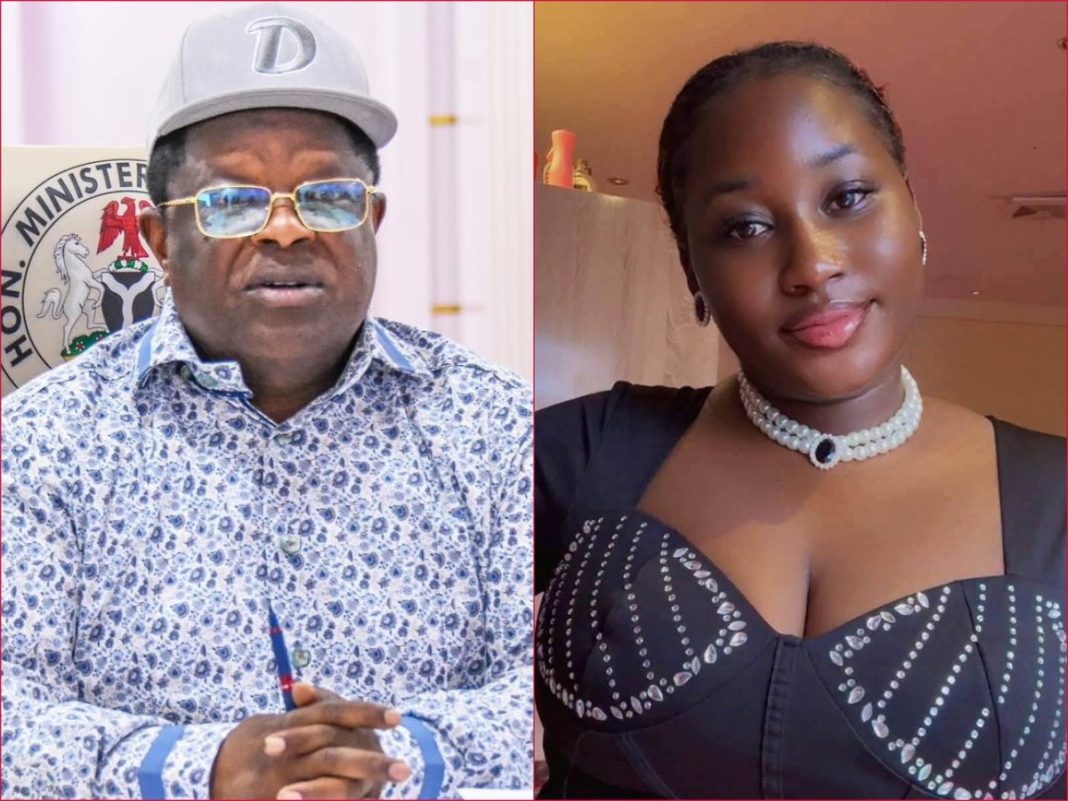
The quiet of Senator David Nweze Umahi’s country home in Uburu, Ebonyi State, shattered on June 27, 2026, when 26-year-old Mary Habila was found dead within the residential compound. Her sudden demise has ignited a fierce public outcry, with human rights activists and political groups now demanding a thorough, independent investigation and a forensic autopsy to uncover the truth surrounding the Mary Habila death.
Mary Habila, a young Nigerian healthcare professional, met her end under circumstances that have left many questioning the official narrative. The incident, kept largely under wraps for nearly two weeks, burst into public consciousness around July 11. This fueled a sense of unease that only intensified as calls for transparency began to mount.
Mysterious circumstances surrounding Mary Habila’s death
Details emerging from Umahi’s compound paint a troubling picture. Mary Habila, born September 18, 2000, and from Kaduna State, was discovered unconscious in a room within a staff chalet. She worked for the David Umahi Federal University of Medical Sciences and was seconded to the Federal Ministry of Works.
Minister Umahi, Nigeria’s Minister of Works since August 2023, described Habila as a nurse and “like a daughter” who had lived in his home for years. However, her family and some initial reports identified her as a physiotherapist. This discrepancy in her professional title is one of many unanswered questions.
The night before: Anita Baaki’s sworn statement
Anita Baaki, a close friend and colleague of Habila from Benue State, provided a sworn statement detailing Habila’s final hours. Baaki last saw Habila alive on the evening of June 26, after Habila returned from getting her hair done. Habila reportedly told Baaki she felt tired and planned to shower before sleeping.
The next day, after Baaki repeatedly knocked on Habila’s door without a response, she alerted domestic staff. They forced open the room and found Habila unconscious on the floor near the entrance. She was rushed to the David Umahi Federal University Teaching Hospital, where medical personnel pronounced her dead on arrival.
Conflicting accounts and disturbing allegations
Initial reports about Habila’s discovery suggest troubling aspects. Allegations surfaced that she was found unclothed, with blood flowing from her mouth. These details, coupled with the delayed public disclosure until mid-July, have heightened suspicions among rights groups.
Minister Umahi has publicly acknowledged Habila’s death occurred at his Uburu residence. He maintains the incident was immediately reported to the police and her family was promptly informed. He also clarified that the guest house where she died was separate from his personal residence.
Umahi’s narrative: illness and a N2.2 million medical bill
Senator David Nweze Umahi has offered his own explanation for Mary Habila’s sudden death, focusing on her medical history. He claims Habila had been receiving treatment for an undisclosed illness. He stated he personally covered a medical bill of N2.2 million for her in April, just two months before her passing.
Umahi further suggested Habila complained of nosebleeds during a phone call with her boyfriend shortly before her death. This narrative aims to portray her death as health-related, rather than due to external factors. However, it has done little to quell the growing demands for a thorough, external review of Mary Habila’s death.
The fight for an independent probe: a recurring Nigerian saga
Initially, Mary Habila’s father, Mr. Tanko Habila Wisdom, reportedly expressed reservations about an autopsy. However, the Ebonyi State Police Command has made it clear that a post-mortem examination is essential to determine the scientific cause of death.
This push for an autopsy highlights the seriousness of the situation. It also shows the police’s determination to address public concern. The Ebonyi State Police Command considers this examination essential to scientifically establish the true cause of death. They aim to ensure a transparent inquiry, despite the family’s initial reservations.
For many Nigerians, the demand for an independent probe in such a high-profile case isn’t just about one incident. It echoes a deeper, historical distrust in official narratives when powerful figures are involved. Public memory often retains instances where investigations seemed to lose steam, leaving more questions than answers.
Activists and political parties join the chorus for justice
The delayed public announcement and the unresolved questions surrounding Mary Habila’s death have galvanized several prominent human rights organizations and political figures. They argue that only an independent probe can ensure impartiality and restore public confidence.
Omoyele Sowore, a well-known human rights activist and former Presidential Candidate, has been at the forefront of these calls. He, alongside organizations like the International Human Rights Network and the Northern Youth Assembly of Nigeria (NYAN), insists that the unusual circumstances demand scrutiny far beyond standard police procedures.
The African Democratic Congress (ADC) has also weighed in, with its National Publicity Secretary, Bolaji Abdullahi, demanding immediate and decisive action. Such interventions by political parties highlight the national significance of the incident, elevating it from a local tragedy to a matter of national concern regarding governance and the protection of citizens.
Shadows of the past: questions of accountability
This incident isn’t occurring in a vacuum. There are underlying public anxieties that fuel the intensity of the current demands. Allegations of previous mysterious deaths surrounding high-ranking officials often linger in the public consciousness, creating a climate where trust in official narratives can be fragile.
The research notes claims of past mysterious deaths linked to Umahi, including five NELAN Engineers. While specific details on these cases aren’t provided, their mention underscores a historical pattern that contributes to the current skepticism.
This cycle, where the sudden death of an individual connected to power figures raises more questions than answers, is a familiar one in Nigeria’s political story, and even the most thrilling new summer 2026 anime can’t distract from the demand for justice.
Legal imperatives and a family’s plea for remains
Legal practitioners like Liborous Oshoma have emphasized the legal imperative for an autopsy, especially given the contested nature of Habila’s death. This legal backing provides a crucial framework for the demands being made, transforming them from mere calls to a rightful insistence on due process. The continuous struggle for human rights and fair processes remains a constant battle for many.
Mary Habila’s family has also formally petitioned the Inspector-General of Police (IGP), Olatunji Disu, requesting the release of her remains. This step indicates their desire for closure and their active participation in guiding the investigation, ensuring their voice is heard in this critical process.
Accountability in public office: a recurring test for Nigeria
The tragic death of Mary Habila at a minister’s home serves as a stark reminder of the immense scrutiny public office holders face in Nigeria. Every incident, especially one involving a loss of life, becomes a test of the nation’s commitment to justice, transparency, and accountability.
The demand for an independent probe isn’t just about Mary Habila; it’s about upholding the principle that no one is above the law, regardless of their status or connection. It echoes a long-standing call for governance that is truly responsive and responsible to its citizens, especially those in vulnerable positions.
As the investigation unfolds, the eyes of many Nigerians will be on the Ebonyi State Police Command and the wider justice system. This isn’t just another news story; it’s a chapter in an ongoing national conversation about how power intersects with justice.
The outcome of this probe will inevitably shape public perception of accountability for those in high places, a narrative that has shaped Nigeria’s political landscape for decades, and continues to do so today.
