



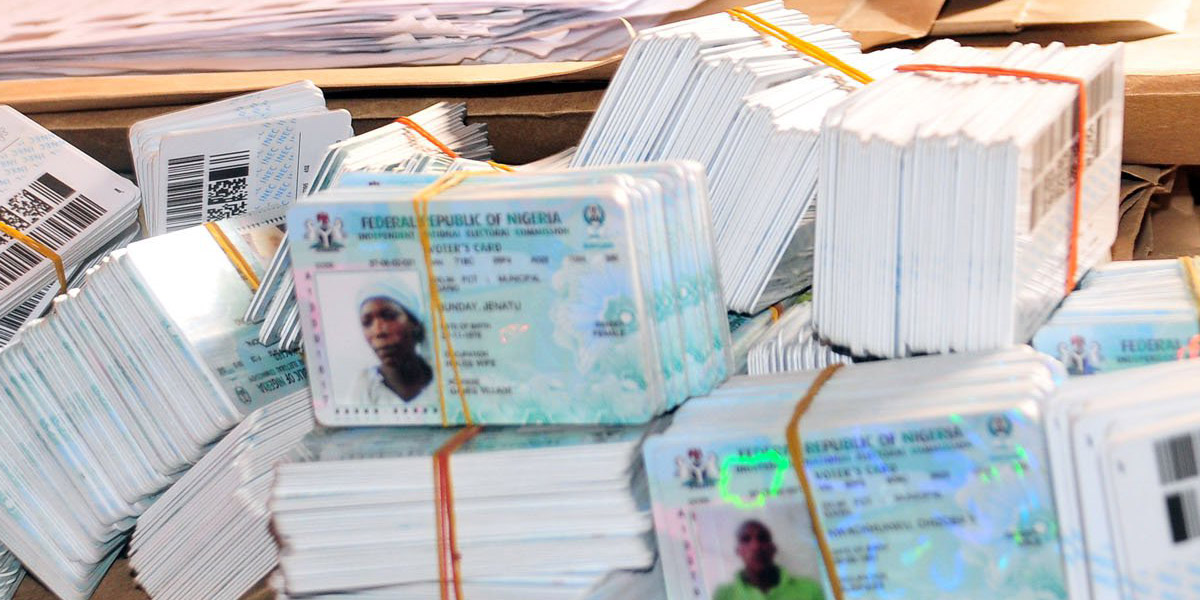
Permanent Voter Cards (PVCs) for the August 15, 2026 governorship election in Osun State are now ready for collection, the Independent National Electoral Commission (INEC) announced.
Mrs. Oluwatoyin Babalola, the Resident Electoral Commissioner (REC) for Osun State, confirmed on Monday, July 20, 2026, that the crucial voter cards will be distributed in a phased exercise beginning on Wednesday, July 22, 2026. This move marks a critical step towards ensuring every eligible citizen can cast their ballot in a contest already drawing national attention.
Immediate distribution for Osun voters
For many Nigerians, the act of collecting a PVC isn’t just administrative; it’s a symbolic assertion of their democratic rights, a ritual that connects them to decades of struggle for electoral integrity. This latest exercise in Osun State carries the weight of that history, even as it addresses immediate logistical needs.
The PVC collection exercise will roll out in two distinct phases, designed to maximise accessibility for all eligible voters across Osun State. This systematic approach aims to minimise queues and ensure a smooth process for the state’s electorate.
The first phase kicks off on Wednesday, July 22, 2026, and runs until Tuesday, July 28, 2026. During this period, collection will take place daily, including weekends, from 9:00 a.m. to 3:00 p.m. at the 332 Registration Areas (RAs) spread throughout Osun State.
Following this, the process transitions to Local Government Area (LGA) offices for the second phase, from Wednesday, July 29, 2026, to Friday, August 7, 2026. These offices will also be open daily, including weekends, between 9:00 a.m. and 3:00 p.m.
INEC has stressed that the PVCs are specifically for those who registered during the recently concluded Continuous Voter Registration (CVR) exercise. This also includes individuals who applied for a transfer of their voter registration or requested replacements for lost or damaged cards.
Voters who updated their records during the CVR exercise will also find their cards ready. Significantly, uncollected PVCs from all previous voter registration drives will also be made available, offering a fresh chance for citizens to claim their electoral power.
Crucially, INEC has reinforced that PVC collection must be done in person, with collection by proxy strictly prohibited under the Electoral Act. This measure is a cornerstone of maintaining the integrity of the voting process and preventing potential manipulation.
Electoral integrity and historical challenges
INEC’s push for timely Osun PVC collection is a testament to its stated commitment to delivering a free, fair, credible, inclusive, and transparent governorship election. But this commitment always plays out against a backdrop of Nigeria’s complex electoral history, where the road to credible polls has often been fraught.
The issue of uncollected PVCs has long plagued Nigerian elections, creating a significant hurdle to full voter participation. As recently as July 2025, Osun State alone had a staggering 360,794 uncollected PVCs out of 1,954,800 registered voters, representing a substantial portion of the electorate unable to vote.
Such figures are not mere statistics; they represent hundreds of thousands of voices silenced, often through logistical bottlenecks or voter apathy. Addressing this backlog is critical for strengthening the democratic process.
The very leadership of electoral bodies has, at times, become a flashpoint. In April 2026, Dr. Mutiu Agboke, a former Resident Electoral Commissioner for Osun State, was redeployed following petitions alleging partisanship. This wasn’t an isolated incident.
Years earlier, in July 2014, Ambassador Rufus Akeju, another Osun State REC, was compelled to go on a leave of absence. This move was explicitly made for his safety and to safeguard the credibility of the then-upcoming election, highlighting the intense pressures faced by electoral officials.
These historical instances underscore the perpetual tension between the ideal of a neutral electoral umpire and the fierce political realities on the ground. Every PVC collection exercise, every announcement from INEC, is measured against this long and winding journey towards electoral maturity.
The permanent voter card: a democratic gatekeeper
The Permanent Voter Card is more than just a piece of plastic; it’s the sole acceptable means of identification for eligible citizens to cast their votes in Nigerian elections. Without it, participation is impossible, making its collection a non-negotiable step for any aspiring voter.
Section 47 of the Electoral Act, 2022, legally mandates the PVC for voting, cementing its role as the gatekeeper of democratic participation. This legal backing underscores the importance of the current collection drive in Osun State.
These smart identity cards are designed to contain a voter’s bio-data and biometric information, making them difficult to duplicate or manipulate. This technological aspect is a direct response to past electoral malpractices that plagued earlier voting systems.
The introduction of the PVC was a significant reform aimed at curbing voter impersonation and enhancing the credibility of election results. It represented a technological leap in Nigeria’s quest for more transparent polls.
For young Nigerians, many of whom came of age under successive civilian governments, the PVC is simply how elections are run. But for older generations, it represents the fruits of hard-won reforms, a tangible symbol of progress away from eras when electoral outcomes were often decided long before a single vote was cast.
Osun state’s political landscape heats up
The approaching governorship election on August 15, 2026, casts a long shadow over the PVC collection efforts. Osun State, with its vibrant political history, is once again poised for a closely watched contest that could reverberate beyond its borders.
The incumbent governor, Ademola Adeleke of the Accord party, is eligible for re-election and will be looking to consolidate his hold on power. His bid will undoubtedly energise his supporters and draw sharp scrutiny from rivals.
Standing against him is Munirudeen Bola Oyebamiji of the All Progressives Congress (APC), a formidable challenger representing Nigeria’s ruling party. This matchup guarantees a competitive campaign, where every vote, and thus every PVC, will count.
Osun State has often served as a bellwether for national political trends. The dynamics of its elections frequently offer insights into the broader political currents shaping Nigeria. The stakes, then, are considerably high, not just for the candidates, but for the entire democratic project.
The political maneuvering in Osun State is a microcosm of the larger Nigerian struggle for power and representation. How the electoral process unfolds here will be watched closely by political analysts and citizens nationwide.
What this collection means for nigeria’s electoral future
The successful and transparent distribution of PVCs in Osun State isn’t merely a local administrative achievement; it sets a vital precedent for future elections across Nigeria. Every challenge overcome here offers lessons for the broader electoral system.
INEC’s efficiency in this exercise can help restore public confidence, a commodity often in short supply in Nigerian politics. When citizens believe their votes count, participation tends to increase, reinforcing democratic foundations.
Conversely, any significant hitches or perceived irregularities during this collection period could fuel scepticism and distrust. This underlines the critical importance of a meticulously executed process by Mrs. Oluwatoyin Babalola and her team.
The ongoing commitment to free and fair elections, though often tested, remains a guiding principle for INEC. This Osun PVC collection is a practical manifestation of that ideal, requiring the active participation of both the electoral body and the citizenry.
Ultimately, the saga of the PVC, from its initial registration to its final collection, is a chapter in Nigeria’s continuing democratic story. It reminds us that the power of the people isn’t just an abstract concept; it’s physically held in that small, yet mighty, card.
The struggle to make every vote count, to ensure that the ballot box truly reflects the will of the people, is an old one in Nigeria. Today, in Osun State, that struggle continues, linking the efforts of Mrs. Oluwatoyin Babalola and the thousands of citizens queuing for their cards to generations past who fought for the very right to choose.
