



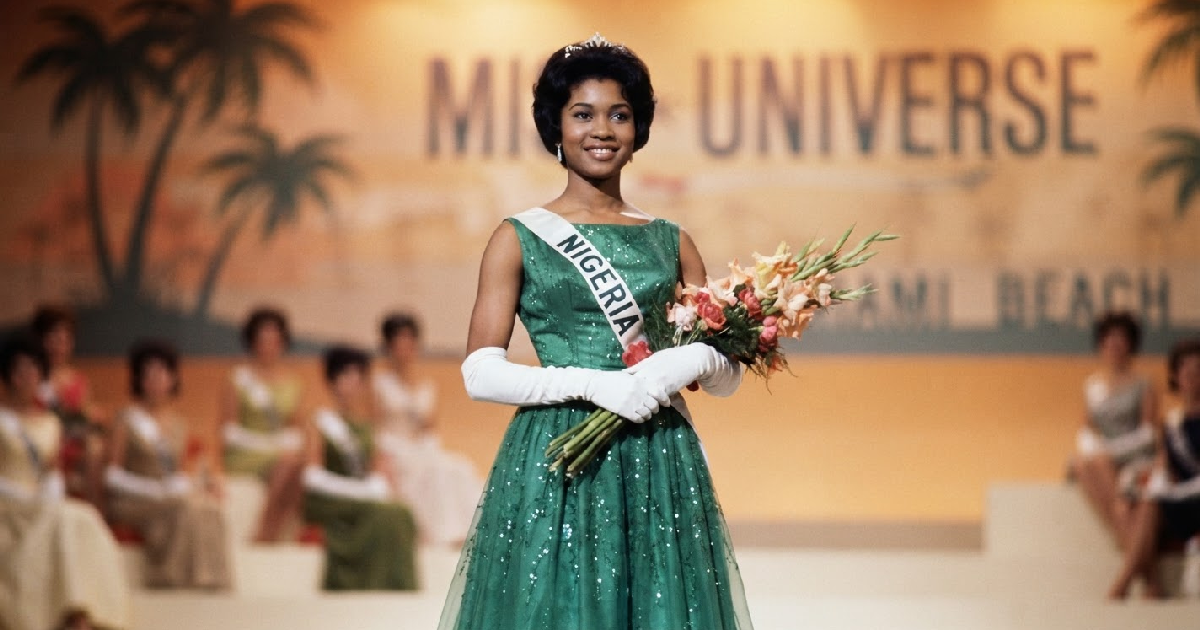
Edna Park was crowned Miss Universe 1964 on August 1, 1964, in Miami Beach, Florida, marking a significant moment for Nigeria. Edna Park stepped onto the Miss Universe stage, a singular moment for Nigeria and a powerful statement of burgeoning national identity on the global scene.
This moment, fraught with hope and immense pressure, resonates anew today. Edna Park, later known as Edna Ibru, passed away in London on January 15, 2025, in her 80s, after a brief illness. Her life, much like Nigeria’s nascent nationhood at the time, was a testament to bold aspirations and the often-harsh realities of forging a path on the world stage.
Edna Park’s Miss Universe 1964 Journey
In 1964, Nigeria was a country barely four years into its independence from British colonial rule. It was a time of immense national pride, a search for identity, and an eager desire to project its image to the wider world. Edna Park, then a sales girl, embodied this spirit.
Becoming the 8th Miss Nigeria wasn’t merely a beauty title; it was a diplomatic appointment. Her journey to Miss Universe became a symbol of Nigeria’s emergence, placing her in a global spotlight that few could have anticipated.
Miss Nigeria 1964: A defining moment
Edna Park’s victory as Miss Nigeria of 1964 catapulted her from relative obscurity into national prominence. The expectations resting on her shoulders were enormous, reflecting a young nation’s ambition to be seen, recognised, and celebrated.
Her role transcended the traditional confines of a beauty queen. She was, in many ways, an unofficial ambassador, tasked with representing the elegance and promise of Nigeria to an international audience.
Miss Universe 1964: A groundbreaking debut
The 13th edition of the Miss Universe pageant took place on August 1, 1964, at the Miami Beach Convention Hall. It was a grand spectacle, drawing participants from 60 countries and territories around the globe.
Nigeria was among the debuting nations that year, joining Aruba, Grenada, and Saint Vincent. Edna Park’s presence was particularly significant, marking a crucial step for African representation in such high-profile international competitions.
The weight of being first and Black African
Of the three African representatives competing that year, Edna Park stood out. She was the sole Black woman from the continent to grace the Miss Universe stage, an immense responsibility for a 19-year-old.
The competition itself was a rigorous affair, involving swimsuit and evening gown segments. Contestants were evaluated not just on their physical appearance but also on their poise and ability to articulate, delivering short speeches in their native languages.
The infamous incident on stage
The tension in the hall must have been palpable as the finalists were announced. As the names were called, Edna Park waited, hoping to hear Nigeria among the chosen few.
But her name never came. In a moment that would become etched in the pageant’s history, she reportedly fainted on stage, causing an “onstage ruckus” that drew immediate attention.
A controversial reaction and its aftermath
The incident wasn’t just a personal ordeal for Park; it sparked immediate controversy. Nneka Onyegbula, the wife of a former Nigerian ambassador, was reportedly among those who comforted Edna in the hospital.
Onyegbula did not mince words, reportedly stating, “All the judges are White, and they aren’t really competent to judge dark girls’ beauty.” It was a stark accusation, laying bare the racial biases inherent in global beauty standards of the era.
Returning home: Ridicule and resilience
The return to Nigeria was far from triumphal. Instead of being celebrated for her courage, Edna Park faced considerable ridicule in the Nigerian media. The hopes of a nation had been dashed, and the public’s disappointment turned into harsh criticism.
This public backlash speaks volumes about the pressures placed on early Nigerian representatives. It highlights how deeply intertwined national identity and international performance became in those formative years.
Life after the pageant: Edna Ibru’s enduring spirit
Despite the difficult reception, Edna Park did not fade away. She married Olorogun Felix Ibru, who would later serve as the first civilian Governor of Delta State from 1991 to 1992. Together, they had two children, Paul and Sheri Felix Ibru.
Her personal life evolved, but her connection to the world of beauty and fashion remained strong. She pursued formal training in fashion design and hairdressing, a clear sign of her continuing passion for the industry.
From entrepreneurship to caregiving
Edna Ibru’s career path demonstrated remarkable versatility and dedication. She established Sherina Hair Care, a salon in England, which she successfully operated for eight years.
After her venture in entrepreneurship, she transitioned into fashion design. Later in her life, she worked as a professional caregiver for the elderly in the UK, a testament to her nurturing spirit, before eventually retiring there.
A legacy beyond the crown
Her passing in London on January 15, 2025, brought her extraordinary journey back into public consciousness. Edna Ibru’s story isn’t just about a beauty pageant contestant; it’s a narrative about resilience, pioneering spirit, and the complexities of representation.
She challenged narrow beauty ideals and paved the way for future generations. Her life demonstrated that a crown, or the lack thereof, doesn’t define one’s worth or impact.
Nigeria’s continuous quest for global affirmation
Edna Park’s experience in 1964 offers a powerful lens through which to view Nigeria’s ongoing quest for global affirmation. Her fainting spell on stage wasn’t merely a moment of personal distress; it was a stark, public rejection of Nigeria’s emerging presence on an international platform dominated by Western aesthetics.
This early encounter with global standards, often subtly biased, set a precedent. It showed how much of Nigeria’s external image-building would involve navigating spaces not always designed to celebrate its unique beauty and culture.
The echoes of representation in modern Nigeria
Even today, discussions around national identity and global perception continue to animate public discourse. Whether it’s in politics, sports, or entertainment, Nigeria consistently grapples with how it is seen and how it wants to be seen.
The challenges Edna Park faced in 1964 resonate with contemporary Nigerian artists, entrepreneurs, and public figures who still push for authentic representation on international stages. This pursuit is a continuous journey, shaped by past experiences and future aspirations.
Redefining beauty and Nigerian presence
Edna Park’s story forces us to reconsider what “beauty” truly means in a global context. It highlights the historical biases that often overlooked the diverse aesthetics of African women. But it also shows an enduring spirit of self-definition.
Her participation, despite the personal and national humiliation, cracked open a door. It paved the way for subsequent Nigerian women to compete, and eventually succeed, on these same stages, often on their own terms. The ongoing efforts to build and project Nigeria’s capital market status globally also reflect this same underlying drive.
Lessons from 1964 for today’s Nigeria
The narrative of Edna Park in 1964 reminds us that representation is rarely a smooth ascent. It’s often a battle against preconceived notions, a struggle for recognition that extends far beyond individual talent or beauty.
Her journey underscores that every step onto a global platform, whether by an individual or an institution, carries the weight of history.
What happened to Edna Park on that Miami stage is not merely a footnote; it’s a foundational chapter in how Nigeria learned to assert itself, to find its voice, and to ultimately redefine its own standards of triumph in a world that wasn’t always ready to see it shine.
