



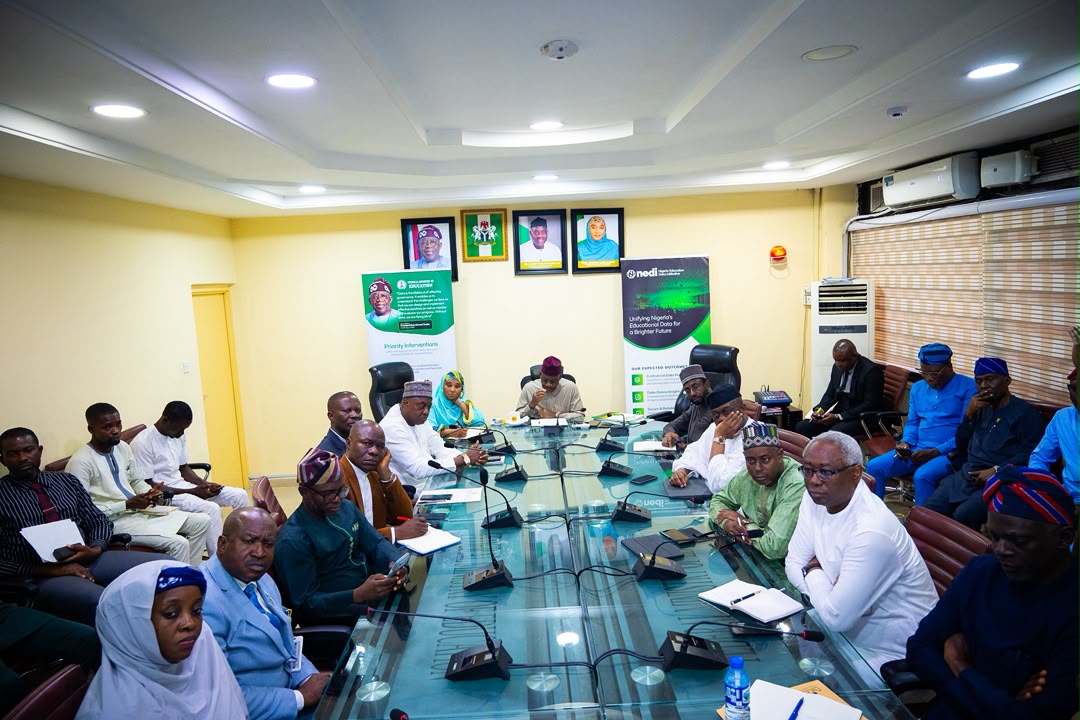
The Federal Government of Nigeria, Abuja on Thursday, July 16, 2026, announced the creation of the Nigeria Genomic City, a groundbreaking initiative poised to transform the nation’s scientific landscape.
The announcement, made during a high-level stakeholders’ meeting in the capital, signals a concerted effort to harness Nigeria’s rich genomic resources. It’s a move designed to lay a robust foundation for long-term scientific advancement and sustainable economic growth, transitioning the country from its traditional reliance on resources to an economy driven by knowledge and innovation.
A vision for scientific leadership
At the heart of this ambition sits the Nigeria Genomic City, a project conceived more than 20 months ago, notably during Dr. Tunji Alausa’s tenure as Minister of State for Health. Now, as the Honourable Minister of Education, Dr. Alausa stood at the forefront of its unveiling, describing it as an essential national investment.
He didn’t mince words about the stakes involved. “The biggest demographic dividend ever witnessed anywhere in the world could become a demographic calamity for us if we fail to act,” Dr. Alausa warned. “We do not have a choice.”
Harnessing Africa’s genetic wealth
The vision extends beyond immediate economic gains. It’s about securing Nigeria’s future and its place on the global scientific stage. Africa, as Prof. Mayowa Ojo Owolabi pointed out, possesses the world’s richest genetic diversity.
Prof. Owolabi, the pioneer Director of the Centre for Genomic and Precision Medicine at the University of Ibadan and the initiative’s initiator, presented the technical framework for the ambitious project. He sees it as a transformative investment poised to reshape multiple sectors.
“This places Nigeria in a unique position to become a global hub for genomics, precision medicine, and biotechnology,” Prof. Owolabi stated. It’s a recognition of the country’s inherent biological wealth, which has often been exploited without fair returns.
From resources to knowledge: a historical imperative
Nigeria’s journey towards economic diversification has been a long and often challenging one. For decades, the nation has grappled with the implications of an economy heavily dependent on crude oil, a reliance that has exposed it to global market volatilities and hindered the development of other critical sectors.
The push for a knowledge-based economy, now championed through the Nigeria Genomic City, echoes earlier calls for national self-sufficiency and industrialisation. It represents a pivot away from simply exporting raw materials to becoming a global player in high-value scientific innovation.
Protecting national assets
A key driver for this initiative is the historical reality of unequal international data-sharing arrangements. These setups have, for too long, allowed valuable African genomic data to generate significant value abroad, with minimal benefits flowing back to the continent or its people.
The Nigeria Genomic City explicitly addresses this by aiming to safeguard the nation’s genomic resources through robust data sovereignty and intellectual property protection. It’s a move to ensure that future scientific discoveries rooted in Nigerian genetic material benefit Nigerians first and foremost.
Implementation and strategic partnerships
The complexity of such an undertaking demands broad collaboration, and the Federal Government has structured the Nigeria Genomic City as a multi-agency, multi-ministerial project. This approach aims to ensure resources are mobilised effectively and institutional silos are broken down.
The Federal Ministry of Education will coordinate implementation, a crucial role in bringing together diverse stakeholders. Prof. Suwaiba Ahmad, Minister of State for Education, affirmed the Ministry’s commitment.
“Nigeria has the population, growing research capacity, and technical expertise required to make this initiative a success,” Prof. Ahmad declared. “The Federal Ministry of Education will provide the necessary support to mobilise partnerships and institutional commitment needed to bring the project to reality.”
The National Information Technology Development Agency (NITDA) and the National Board for Technology Incubation are also set to provide crucial technological and innovation support. These partnerships underscore the interdisciplinary nature of genomics, requiring expertise from across scientific and technological domains.
Securing the funding future
Financial backing is paramount for a project of this scale. The Federal Government is currently finalising the establishment of the National Research and Innovation Development Fund. This fund is projected to mobilise nearly $500 million annually, a substantial investment aimed at supporting research and innovation nationwide.
President Bola Ahmed Tinubu is expected to give his assent to the enabling legislation for sustainable research funding, following its consideration by the Federal Executive Council and the National Assembly. This legislative backing will provide the long-term stability essential for scientific breakthroughs.
This commitment to sustained funding is critical, particularly when juxtaposed against the challenges some developing nations face in allocating consistent resources to scientific research. Such an investment could significantly alter the country’s global economic outlook.
Paving the way for future discoveries
The Nigeria Genomic City is not an isolated endeavour. It builds upon previous foundational work in the country’s scientific landscape. The Nigerian Genome project, launched by the federal government in 2017, initiated the sequencing of Nigerian genomes.
More recently, May 2024 saw the inauguration of the National Genomics Surveillance Consortium by the Nigeria Centre for Disease Control (NCDC), positioning Nigeria as a key genomic sequencing hub in the global south. And just last May 2026, the National Genomics and Bioinformatics Data Generation, Repository and Management Infrastructure (NGBR) was unveiled, with the explicit goal of building a sovereign genomic database.
These initiatives collectively form a robust national ecosystem designed to foster scientific discovery. The University of Abuja will serve as the host institution for the Genomic City, placing it at the academic heart of this burgeoning sector.
Integrating cutting-edge technologies like artificial intelligence (AI) and bioinformatics will be crucial. These tools will allow Nigerian scientists to process vast amounts of genomic data, uncovering insights that can drive solutions for disease prevention, diagnosis, and treatment.
Transforming health and food security
The immediate impacts of the Nigeria Genomic City are expected to be far-reaching. In healthcare, it promises to accelerate the discovery, development, and commercialisation of innovative solutions for diseases prevalent in the region, leading to more effective treatments and even cures.
Beyond human health, the initiative also targets critical sectors like agriculture. By applying genomic science, Nigeria aims to improve crop and livestock production, a vital step in strengthening national food security. This addresses a foundational challenge many African nations still confront.
Attracting international investment and deepening collaboration with Nigerian researchers in the diaspora are also key objectives. This global scientific exchange is vital for developing a world-class scientific workforce and ensuring Nigeria can export its scientific discoveries and biotechnology innovations.
Looking ahead: Nigeria’s scientific destiny
The unveiling of the Nigeria Genomic City marks a pivotal moment for the nation, signalling a clear intent to move beyond simply being a consumer of global scientific advancements. It’s an assertion of Nigeria’s right to be a producer, an innovator, and a leader in fields that will define the 21st century.
As Dr. Tunji Alausa put it, the project “is not about institutional ownership or individual interests. It belongs to Nigeria and must be driven through broad national collaboration. It is about creating a sustainable national asset that will benefit generations of Nigerians.” This echoes a long-held national desire for self-reliance and the creation of indigenous solutions.
The journey towards full scientific independence and leadership will undoubtedly be complex, requiring sustained political will and consistent investment.
But the framework is now in place, and the ambition is clear: to ensure that Nigeria’s rich human and biological capital translates into tangible benefits for its people and a stronger voice on the global scientific stage.
This effort, to build a future defined by intelligence and innovation, mirrors the nation’s enduring quest to define its own destiny, just as past generations fought for political and economic sovereignty.
