



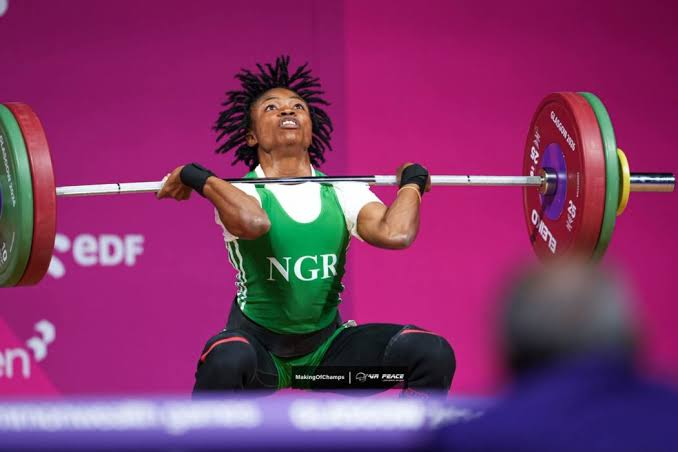
Ruth Asuquo Nyong secured a silver medal at the Glasgow Commonwealth Games, marking a triumphant moment for Nigerian weightlifting.
Nyong’s dramatic performance wasn’t just a personal win; it marked Nigeria’s seventh medal at the Games, a significant achievement unfolding in Scotland. Her resilience on the platform speaks to the unwavering spirit often found in Nigerian athletes. This achievement lights up the scoreboard for Team Nigeria, reflecting months of intense preparation.
Ruth Nyong’s dramatic Glasgow silver medal
The contest for the 48kg weightlifting title proved a nail-biting affair, pushing every competitor to their limits. Ruth Asuquo Nyong’s journey to silver culminated in a combined total lift of 168kg. This demonstrated both her immense strength and her strategic acumen under pressure.
She started strong, achieving a new personal best of 75kg in the snatch, setting a challenging pace. But the clean and jerk segment presented a dramatic turn. Nyong missed her first two attempts at 93kg, facing the very real possibility of leaving without a medal.
She didn’t give up. Nyong dug deep, summoning an inner resolve to successfully complete the 93kg lift on her final, make-or-break attempt. This incredible comeback secured her silver medal, placing her just ahead of Malaysia’s Irene Jane Henry, who claimed bronze with 167kg.
India’s Mirabai Chanu Saikhom ultimately clinched the gold, setting a new Commonwealth Games record with an astounding total of 190kg. Saikhom’s dominant performance, her third consecutive Commonwealth Games gold, underscored the elite level of competition. Still, it did little to diminish the significance of Nyong’s hard-won silver.
Intensive training forged a champion
A medal of this magnitude doesn’t just appear out of nowhere. Nyong’s success is the culmination of relentless training and unwavering focus. Her preparation began long before the Glasgow Games, involving months of intensive work.
She honed her technique and built her strength in dedicated training camps. These were held both in Nigeria’s capital, Abuja, and in Aberdeen, Scotland. This blend of local support and international exposure provided the structured environment necessary for an athlete to compete at such an elite level.
Nigeria’s growing medal tally in Glasgow 2026
Ruth Nyong’s silver medal didn’t arrive in isolation; it’s part of a broader narrative of Team Nigeria’s success. Her podium finish lifted the country’s overall medal tally to seven, comprising three gold and four silver medals. This places Nigeria in a strong position as the Glasgow 2026 Commonwealth Games continue.
A significant portion of this early success has come from Nigeria’s formidable para powerlifting team. They burst out of the gates on the opening day, securing an impressive six medals themselves: three gold and three silver. Their early dominance set a high bar, demonstrating the strength and depth within Nigeria’s adaptive sports programs.
Beyond weightlifting and para powerlifting, other Nigerian athletes are also making their presence felt. Track and field hopefuls like Kanyinsola Ajayi, Rosemary Chukwuma, and Blessing Ogundiran are competing in the women’s 100m. Favour Ashe and Adekalu Fakorede also challenge for honours in the men’s 100m.
The National Sports Commission (NSC), under Chairman Mallam Shehu Dikko and Director General Bukola Olopade, played a critical role in preparing the team. This structured support clearly yields dividends on the international stage. The Nigeria Weightlifting Federation (NWF) President, Dr. Ibrahim Abdul, quickly congratulated Nyong.
He urged other lifters to build on her inspiring success, a sentiment shared for coaches Luke Ibeh and Sefiya Onubaye. Their dedication behind the scenes is crucial for these athletic triumphs. It’s a reminder that success on the world stage requires a collective effort.
Echoes of past Commonwealth triumphs
Nigeria boasts a rich history at the Commonwealth Games, often punching above its weight on the global stage. Nyong’s performance draws parallels to previous moments of national sporting glory. The 2014 Commonwealth Games, also held in Glasgow, saw Nigeria achieve one of its best performances.
That year, Nigeria finished 8th on the overall medals table, securing a remarkable 36 medals. This haul included 11 gold, 11 silver, and 14 bronze. This performance equaled their previous best gold medal counts from Victoria, Canada, in 1994 and New Delhi, India, in 2010.
Icons like Blessing Okagbare clinched gold in both the women’s 100m and 200m in 2014. She set a Games Record of 10.85 seconds in the 100m. Ese Brume also dominated the women’s long jump, earning a gold medal.
Nigerian wrestlers contributed significantly to the 2014 tally, accounting for 14 of the 36 medals. This showcased another area of national strength and sporting pedigree. However, triumphs weren’t without their shadows during those games.
Weightlifter Chika Amalaha, who won gold in the women’s 53kg category, was suspended after failing a drug test. Such incidents remind us of the constant vigilance required in elite sports. They also highlight the immense pressures athletes face at the pinnacle of competition.
The enduring power of Nigerian sports
For countless Nigerians, a medal at an international event like the Commonwealth Games transcends mere sporting achievement. It represents national pride and a moment of powerful unity. In a nation that often grapples with internal challenges, these victories offer a shared cause for celebration.
Athletes like Ruth Nyong become instant heroes, their stories of hard work and perseverance echoing in homes across the country. Their success inspires a new generation, demonstrating that dedication can lead to global recognition. This holds true regardless of starting conditions or personal background.
This inspirational power is an intangible but invaluable return on investment in sports. It fosters a collective sense of capability and ambition across the nation. Sports offer a powerful platform for national identity and aspiration.
Sustaining the momentum for future glory
Ruth Nyong’s silver medal provides a significant boost for Nigerian weightlifting and the country’s overall presence. It highlights the potential for more medals as the Games continue. Her performance sets a strong example for her teammates and future athletes.
The question now turns to how this momentum can be sustained and built upon for the long term. Developing a consistent pipeline of world-class athletes requires continuous investment. This includes infrastructure, coaching expertise, and comprehensive athlete welfare programs.
The support provided by bodies like the Nigeria Weightlifting Federation and the National Sports Commission is vital. But long-term success hinges on broader governmental and private sector engagement. This commitment helps ensure that athletes have the resources needed to compete at the highest level.
Ruth Nyong’s dramatic silver medal is more than just a win; it’s a fresh chapter in Nigeria’s enduring sporting narrative. Her fierce fight on the weightlifting platform reminds us that the quest for greatness, even amidst challenges, is a timeless act of national self-definition, connecting today’s triumphs to the rich history of Nigerian excellence.
