



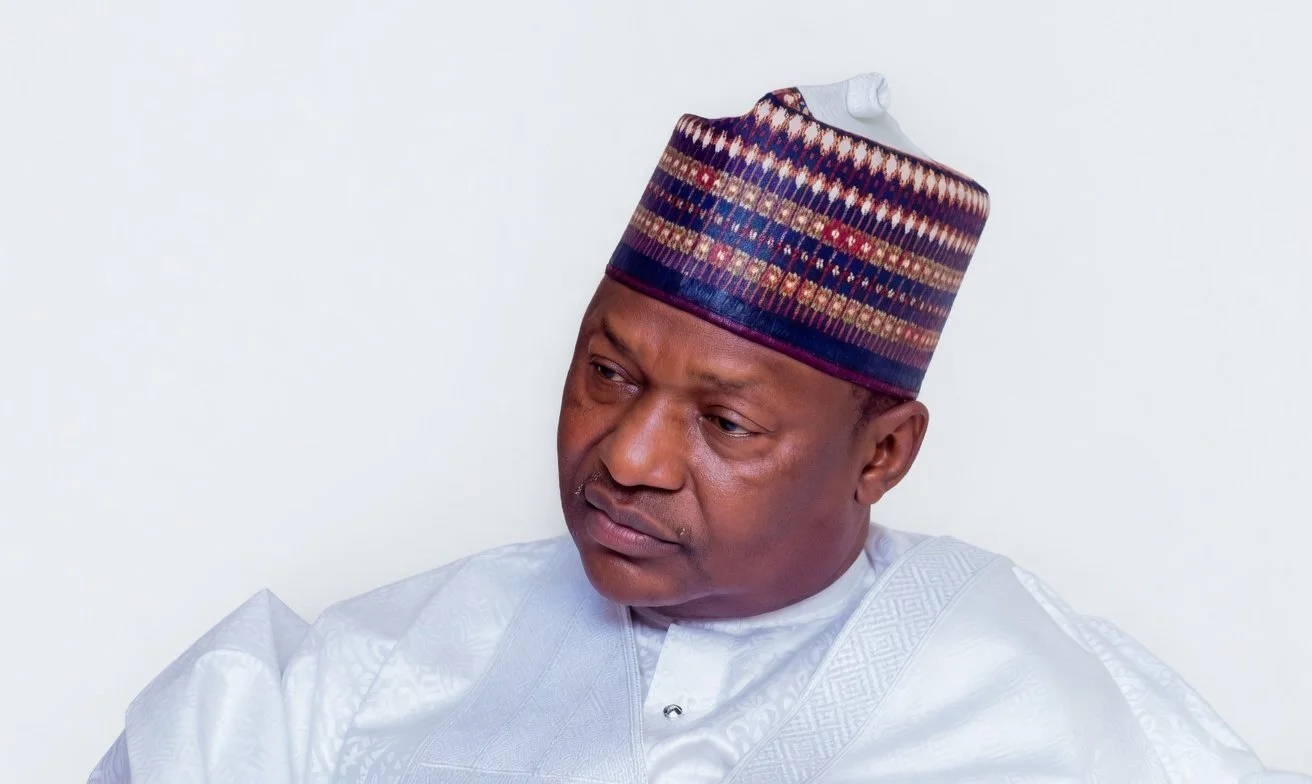
The gavel’s sharp rap echoed through the Federal High Court in Abuja this week, sealing a judgment that has once again put Nigeria’s relentless fight against corruption in the spotlight. On Wednesday, July 15, 2026, Justice Joyce Abdulmalik delivered a definitive order for the final forfeiture of 48 properties linked to former Attorney General of the Federation, Abubakar Malami (SAN), to the Federal Government.
This landmark decision, which concerns the Malami properties forfeiture, concludes civil forfeiture proceedings initiated by the Economic and Financial Crimes Commission (EFCC). It targets assets suspected to be proceeds of unlawful activities during Malami’s tenure as Attorney-General of the Federation and Minister of Justice, a role he held from November 11, 2015, to May 29, 2023, under former President Muhammadu Buhari.
The court’s verdict on Malami properties forfeiture
Justice Abdulmalik’s ruling was a firm statement on accountability, ordering 48 of the 57 properties initially targeted by the EFCC to be permanently forfeited. The court found a reasonable suspicion that these assets were acquired through illicit means, a critical finding in the ongoing legal battle.
She emphasized that the core issue before the court was “not who owns the property, but how legitimate are the funds used to acquire them.” This principle placed the burden squarely on Abubakar Malami, his wife Nana Hadiza Malami, his son Abdulaziz Abubakar Malami, and several linked companies, to demonstrate the lawful origin of their considerable wealth.
Despite a vigorous defense, Justice Abdulmalik concluded that the respondents “had not dislodged the reasonable suspicion that the property was acquired by unlawful activities.” She dismissed numerous applications and motions filed by Malami’s legal team as “wanting in merit,” paving the way for the forfeiture.
The 48 properties finally forfeited to the Federal Government include a university, located among assets spread across Abuja, Kano, Kebbi, and Kaduna states.
While initial proceedings had identified a wide array of assets – including luxury duplexes, five-storey hotels, shops, warehouses, residential buildings, and large parcels of land in areas such as Maitama, Garki, and Jabi District – the court’s final order explicitly applied to the 48 properties where illicit acquisition was established.
Nine properties among the initial 57 were excluded from this final order, as the EFCC failed to prove they were proceeds of unlawful activities. The estimated value of the 57 properties initially under scrutiny was a staggering N212.8 billion.
A battle of legal principles and persistent allegations
The EFCC’s case leaned heavily on Section 17 of the Advance Fee Fraud and Other Fraud Related Offences Act, which requires only “reasonable suspicion” of unlawful origin, rather than proof “beyond reasonable doubt,” for civil forfeiture. This legal strategy has been a powerful tool for the anti-graft agency.
Malami’s legal team consistently denied wrongdoing, insisting the disputed assets were lawfully acquired. They argued the EFCC relied on speculation and failed to identify a specific criminal offense, even contending that some properties were acquired before Malami became Attorney-General. However, the court ultimately sided with the commission.
This civil forfeiture case runs parallel to a separate, looming criminal charge against Abubakar Malami. He faces a 16-count money laundering charge, alongside his son Abdulaziz and one of his wives, Hajia Bashir Asabe, involving public funds totaling approximately N9 billion. All have pleaded not guilty to these criminal allegations.
Nigeria’s long fight against corruption and illicit wealth
The final forfeiture of assets linked to a former Attorney General forces us to confront a recurring narrative in Nigeria: the relentless, often frustrating, struggle against corruption at the highest levels. This isn’t an isolated incident; it’s another chapter in a story that spans decades, echoing calls for accountability that often meet political resistance.
Think back to the days of asset recovery under military regimes, or the probes into successive civilian administrations. The EFCC itself was born from a national and international outcry for a more effective body to tackle financial crimes. Each high-profile case, from political figures accused of financial misconduct to business moguls facing probes, adds another layer to this complex history.
These legal battles are never just about the individuals involved. They become referendums on the state’s commitment to justice, testing the resilience of institutions like the judiciary and the EFCC against powerful forces. For ordinary Nigerians, such cases are potent reminders of the vast sums allegedly siphoned from public coffers, often at the expense of basic services and infrastructure.
Implications for asset recovery and public trust
This judgment provides the Economic and Financial Crimes Commission with a significant boost in its ongoing efforts to recover assets. The EFCC has consistently argued that effective asset recovery is crucial, not only to punish offenders but also to repatriate stolen funds back into the national treasury, where they can serve the public good.
The principle of civil forfeiture aims to prevent alleged criminals from enjoying the proceeds of their crimes, even as criminal proceedings might drag on or face political hurdles. This ruling validates that approach.
When a former chief law officer faces such a judgment, it inevitably chips away at the faith citizens place in their leaders and institutions. Allegations and counter-allegations in Nigerian politics often reveal deep-seated distrust.
Yet, the fact that a court has ruled decisively against such a powerful figure could also help restore some measure of confidence. It shows that even those at the apex of power are not entirely beyond the reach of justice. For many, it’s a long-awaited signal that accountability, however slow, is possible in Nigeria.
Shaping Nigeria’s future through past lessons
The forfeiture of Abubakar Malami’s properties isn’t merely a conclusion to a single case; it underscores the enduring challenge of official corruption in Nigeria. His role as Attorney General, the nation’s chief legal adviser, amplified the scrutiny around his wealth, particularly assets acquired during his time in office.
Critics often point to the immense power concentrated in such offices, making them prime targets for those looking to enrich themselves. This case reminds us that the fight isn’t just about prosecuting individuals. It’s about dismantling the systems and networks that enable such large-scale illicit accumulation, strengthening oversight, and ensuring public office truly serves the public.
This ruling serves as a stark reminder, much like similar pronouncements decades ago, that the quest for clean governance in Nigeria is an ongoing struggle, deeply intertwined with its past. It’s a potent echo of history, showing that the fight for a Nigeria free from the burden of illicit wealth is far from over, and every step, however small, counts towards forging a different future.
