



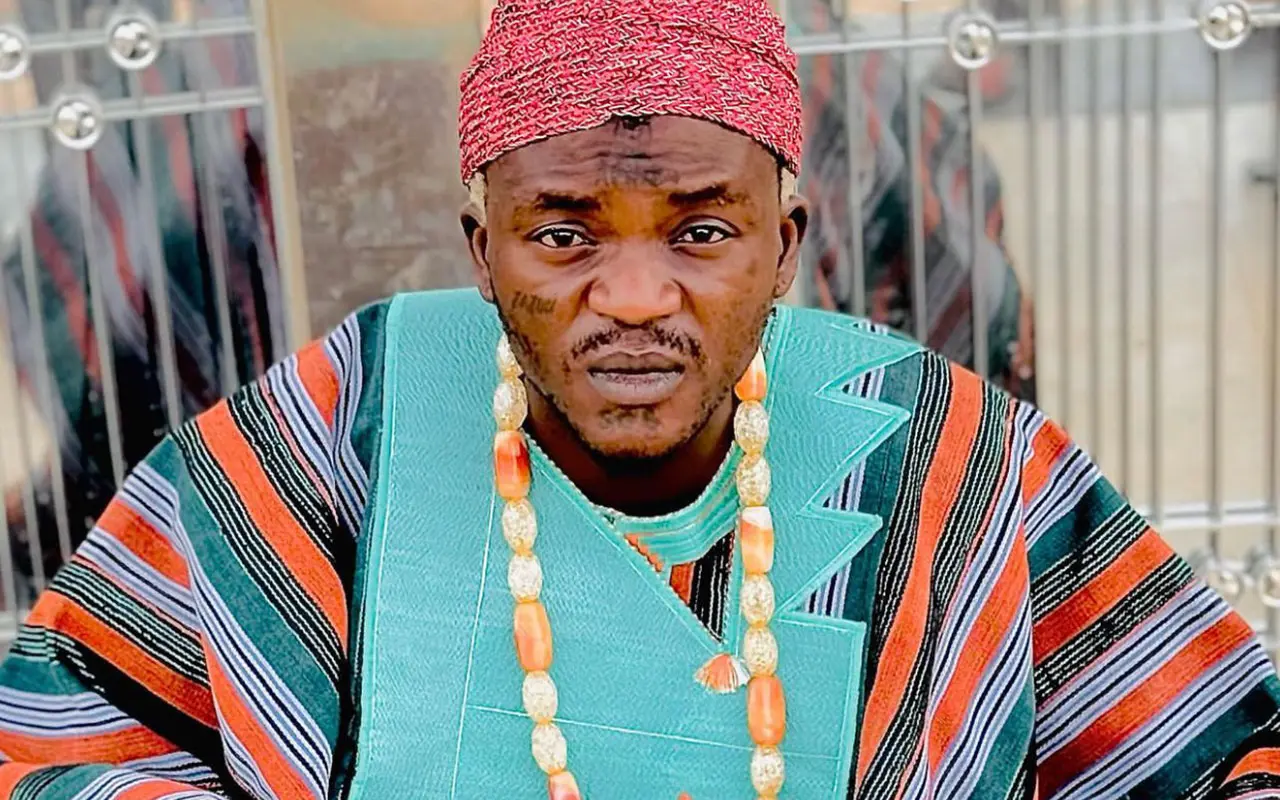
The lights were bright, the camera was rolling, and Habeeb Okikiola, better known to the world as Portable, wasn’t holding back.
On Monday, July 20, 2026, during his appearance on Channels Television’s popular program “Rubbin’ Minds” in Lagos, the controversial street-pop singer unleashed a declaration that sent ripples through Nigeria’s vibrant music scene: no Nigerian artist, he insisted, can clinch a coveted Grammy Award without his direct collaboration.
Portable’s unyielding vision for Nigerian music
His statement, delivered with characteristic bravado, positioned him as an indispensable force, a self-proclaimed “newborn Fela” whose unique energy is now essential for global recognition. This isn’t just another pronouncement from an artist known for his outspoken nature; it’s a bold challenge thrown at an industry grappling with its burgeoning international influence and the pathways to its most prestigious accolades.
Portable’s words weren’t merely a boast; they carried the weight of a conviction often seen in the Nigerian entertainment sphere. “If any artiste wants to collect Grammy in this Nigeria, if you don’t feature me, you’d not collect Grammy,” he declared, leaving no room for ambiguity.
He then followed up, “If you want to collect a Grammy nomination, come and feature me. I am the new face—the newborn Fela.”
This audacious claim speaks volumes about the artist’s self-perception and the often-unconventional dynamics that drive success in Afrobeats. For Portable, his journey from the streets of Abeokuta to national prominence is proof of his unique appeal. His journey is a testament to the raw, unfiltered talent that defines much of street-hop.
The man behind the unfiltered persona
Born Habeeb Okikiola Badmus on March 12, 1994, Portable Omolalomi, or Dr Zeh as he’s also known, embodies the rugged spirit of Nigerian street culture. His music—a pulsating blend of street-hop, Afrobeats, Afro-fusion, and traditional Fuji—resonates deeply with millions.
He found his breakthrough in December 2021 with the infectious hit “ZaZoo Zehh,” featuring Olamide and Poco Lee, a track that instantly cemented his place in the mainstream consciousness.
Since then, his career has been a whirlwind of hits and headlines. He quickly established his independent label, Zeh Nation, in 2021, fostering a community of emerging street-hop artists.
His discography, including tracks like “Am Not a Prisoner” and “Ika of Africa,” showcases his distinctive sound, often blending contemporary instrumentation with socially conscious lyrics and traditional African rhythms. But it’s his personality, as much as his music, that truly sets him apart, ensuring he remains a constant topic of discussion.
The controversial rise of a street king
Portable’s career is a compelling narrative of raw talent meeting an insatiable thirst for the spotlight, often fueled by controversy. He’s had very public feuds, including a notable disagreement with Poco Lee over earnings from “ZaZoo Zehh.” He’s also clashed with his former manager Kogbagidi and other industry heavyweights like Davido and Burna Boy.
He once accused Olamide, who helped launch his career, of “snatching” his producer, dancer, and promoter. These incidents, while often drawing criticism, have also inadvertently cemented his image as an unyielding, independent artist. Even facing an arrest in March 2023 by the Ogun State Police Command for alleged assault on police officers, Portable emerged, seemingly, more emboldened.
Echoes of Fela’s defiance in Portable’s style
To declare himself the “newborn Fela” is a statement rich with historical resonance. Fela Anikulapo Kuti, the legendary Afrobeat pioneer, was not just a musician but a revolutionary, using his art to challenge authority and speak truth to power. Fela’s uncompromised stance against corruption and injustice made him an icon of resistance.
Portable, through his own tumultuous journey and confrontational style, seems to draw parallels to this legacy. While their contexts and musical styles differ, the spirit of defiance and unapologetic self-expression is a thread that connects them. It’s a potent image in a country where public figures often face immense pressure to conform.
Grammy aspirations and global recognition
For Nigerian artists, the Grammy Award has become more than just a trophy; it’s a symbol of global validation. The past decade has seen Afrobeats transcend borders, with artists like Burna Boy, Wizkid, and Tems bringing home Grammys, opening doors for countless others. This success has intensified the hunger for international acclaim.
Portable’s declaration taps into this collective ambition, suggesting he holds a secret ingredient for that success. It implicitly questions the established paths to the Grammy, hinting that traditional industry structures might be overlooking a vital component: the raw, street-level energy he embodies.
This claim could even be seen as a critique of how newsrooms process and disseminate stories about global achievements, often focusing on conventional narratives.
The value of collaboration and conflict in music
Collaboration is the lifeblood of modern music, especially in Afrobeats, where features often define hits. Portable himself benefited immensely from collaborations with Olamide and Poco Lee. Yet, his past comments reveal a complex relationship with the idea of support and mentorship within the industry.
He once expressed frustration with Olamide, stating, “Olamide didn’t hold my hand; he gave me a verse on ‘Zazu’ and left me without management.” In contrast, he lauded British rapper Skepta, saying, “I can’t drag Skepta because he held my hand.”
This mix of appreciation and perceived betrayal shapes his views on who truly matters in an artist’s journey to the top. It highlights the often-strained relationships that can arise even after successful joint ventures.
What Portable’s challenge means for Afrobeats
Portable’s bold claim isn’t just about him; it’s a reflection of the evolving landscape of Nigerian music. It forces a conversation about authenticity, street credibility, and what it truly takes for African artists to capture the world’s highest honors. Does global appeal require a certain polish, or can the raw, unfiltered sound of the streets lead the way?
His assertion challenges the gatekeepers and the conventional wisdom. It suggests that the path to a Grammy isn’t solely paved with slick production and carefully curated images. Sometimes, it might just need the unpredictable, electrifying energy of a Portable. This kind of public statement, often controversial, is not new among influential figures making their presence felt.
Beyond the headlines: lasting impact on artistry
The discussion Portable has ignited will likely extend far beyond social media chatter. It prompts artists and executives to re-evaluate what truly defines success and influence in a rapidly expanding global market. Is it purely talent, strategic collaborations, or a blend of both with a healthy dose of memorable personality?
Portable’s rise from relative obscurity to a household name proves that unconventional paths can lead to massive platforms. His persistent self-belief, even amidst controversy, offers a blueprint for artists who feel overlooked by the mainstream. He represents a segment of the music industry that thrives on raw energy and direct connection with its audience, often outside the traditional media machinery.
Ultimately, Portable’s declaration on Channels Television is more than just a passing headline. It’s a provocative question posed to the entire Nigerian music industry: can the path to global glory truly bypass the very roots and raw energy that define much of its unique sound?
History tells us that every generation of Nigerian artists finds its own way to shake the table, asserting its worth and demanding its rightful place on the world stage, often against formidable odds. Portable is just the latest, and loudest, voice in that enduring symphony of ambition.
