



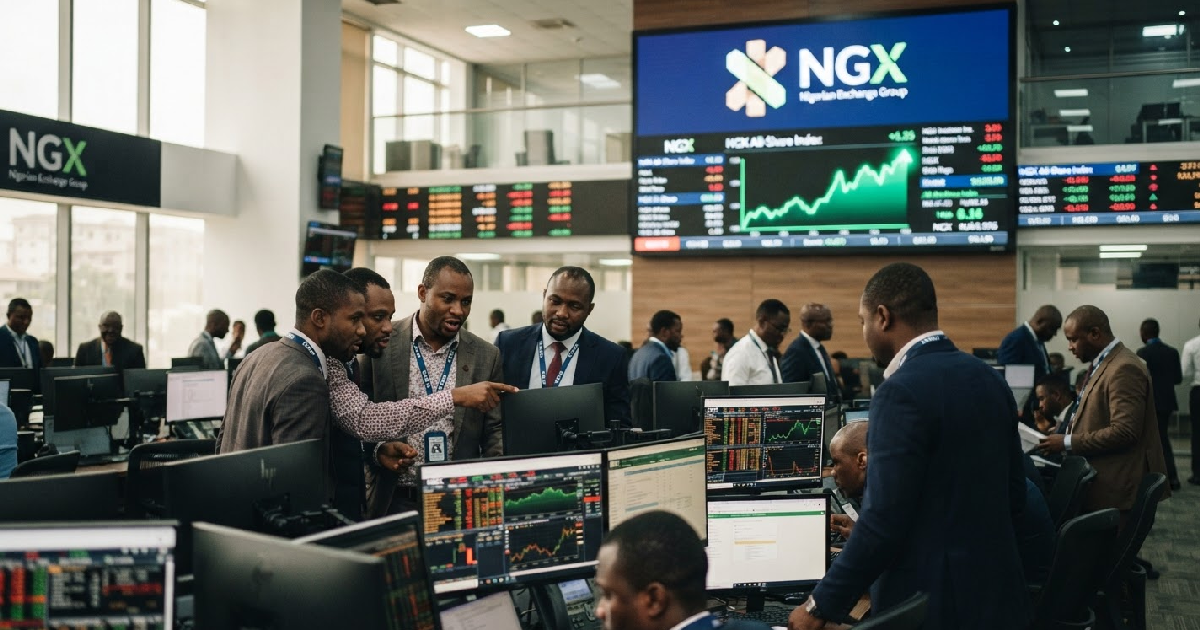
Lagos pulses with a new kind of energy these days, a palpable shift felt on the trading floors of the Nigerian Exchange.
Since the start of 2026, the Nigerian Exchange has delivered an astounding 67% gain in US dollar terms, outstripping 92 other global equity indices tracked by Bloomberg. This surge, propelling the market past South Korea’s Kospi, signals a potent blend of macroeconomic reforms and a resurgent belief in the country’s economic trajectory.
Nigeria’s unexpected market leadership
For years, emerging markets were a gamble, and Nigeria, despite its vast potential, often seemed like a high-stakes bet. But this year, the dice have rolled in its favour. The benchmark stock index has not just performed well; it has redefined what “well” means on the global stage.
That 67% climb isn’t just a number; it represents billions of dollars in new value. It reflects foreign investors pouring capital back into a market they had, for a time, largely abandoned. The gains speak to a fundamental shift in perception and a tangible improvement in market conditions.
Outperforming global giants
To put this into perspective, Nigeria’s performance isn’t just strong within Africa; it’s stronger than major economies and established markets across the globe. Surpassing indices like South Korea’s Kospi is no small feat.
It marks a significant win for a market that, not long ago, struggled with liquidity issues and investor flight. The Nigerian Exchange (NGX) All-Share Index (ASI) itself has recorded a robust +29%, showing broad-based growth across various sectors.
The naira’s resilient rebound
Hand-in-hand with the stock market’s ascent, Nigeria’s currency, the naira, has also begun to stabilise and appreciate. This is arguably an even more critical development for everyday Nigerians, whose purchasing power has been battered in recent years.
The journey towards naira stability has been fraught with challenges, marked by deep currency fluctuations. But 2026 has brought a noticeable shift, with the currency showing signs of newfound resilience. This is a direct consequence of policies aimed at improving foreign exchange liquidity.
Restoring confidence in the currency
A stable naira is the bedrock of investor confidence. When a currency is predictable, businesses can plan, import costs become manageable, and the threat of runaway inflation diminishes. For international investors, a strengthening naira sweetens the pot of stock market gains, turning local currency profits into even larger dollar returns.
The efforts to shore up the naira haven’t been easy, but the results are now starting to become evident. This stability is crucial for attracting sustained foreign direct investment beyond portfolio flows into equities.
Reform efforts fuel new optimism
None of this happens in a vacuum. The roaring stock market and the strengthening naira are direct dividends of macroeconomic reforms initiated over the past year. These aren’t quick fixes; they are often painful, structural changes designed to reset the economy.
Improved foreign exchange liquidity has been a key focus. Addressing the chronic shortage of dollars in the market has been central to restoring trust. Policies aimed at streamlining the foreign exchange window and attracting remittances have played a role.
Attracting global capital again
Investor confidence, once fragile, has clearly rebounded. International funds are once again looking at Nigeria with keen interest, seeing opportunities where they once saw only risks. This renewed interest translates directly into the capital inflows that fuel market growth.
But attracting capital isn’t just about favourable policies; it’s also about perceived stability. Political stability and clear governance signals are just as important as economic reforms. They reassure investors that their capital is safe, and that the rules of engagement won’t suddenly shift.
Echoes of past economic shifts
Nigeria has seen periods of economic boom before, often tied to oil prices or specific policy shifts. But these moments have sometimes been fleeting, undone by a lack of sustained commitment to reform or external shocks. This recent surge feels different to many observers.
In the past, economic reforms were sometimes implemented in fits and starts, making it difficult for businesses and investors to plan long-term. The current administration has, by most accounts, demonstrated a more consistent resolve.
Learning from history’s lessons
Take, for instance, the ambitious structural adjustment programmes of the 1980s. While intended to liberalise the economy, they often came with severe social costs and were not always seen through to their logical conclusion. The lessons from those times underscore the importance of careful, consistent implementation.
This time around, policymakers seem keenly aware of the need to manage expectations and ensure that the benefits of growth are broadly shared. They know that short-term gains can quickly erode if the foundations aren’t solid.
Sustaining the momentum ahead
While the current performance is cause for celebration, the real work lies in sustaining this momentum. Markets are notoriously fickle, and emerging economies are particularly sensitive to global headwinds, from commodity price shifts to interest rate hikes in developed nations.
The challenge for Nigeria now is to solidify these gains. This means continuing to improve the ease of doing business, strengthening institutions, and diversifying the economy beyond its traditional reliance on oil. A broader industrial base will help cushion against external shocks.
Challenges and the path forward
Inflation, though showing signs of easing, remains a concern for many households. The impact of subsidy removals and other policy adjustments is still working its way through the economy. Keeping a lid on prices while fostering growth is a delicate balancing act.
For the average Nigerian, the market’s stellar performance and the naira’s recovery need to translate into tangible improvements in living standards. Jobs, access to credit, and stable prices are the true measures of economic success.
The world is watching to see if Nigeria can convert this market momentum into durable prosperity. The forces that drive its economy today are the same forces that shaped its trajectory decades ago, reminding us that history isn’t just a record of the past; it’s a living blueprint for the future.
