



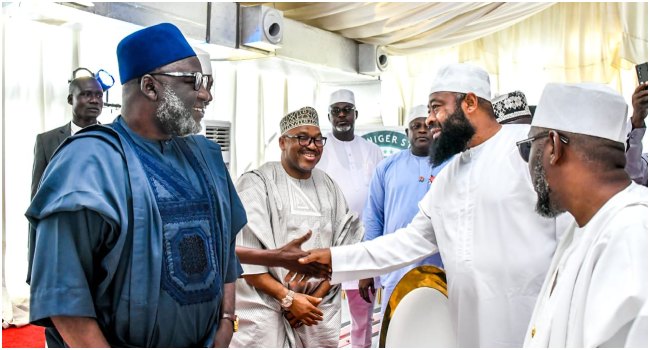
Political winds are swirling across Niger State as Governor Umaru Bago works to unify the All Progressives Congress (APC) ahead of the 2027 general elections, aiming for a strong showing in the upcoming polls.
These gatherings, held most recently on July 26, 2026, and a strategic session on July 19, 2026, aim to stitch together a unified front. The objective is clear: reconcile aggrieved members, ignite grassroots mobilization, and forge an unshakeable strategy for electoral triumph in the upcoming polls.
The Governor’s Urgent Push for Party Cohesion
Governor Bago isn’t just looking for victory; he’s striving to cement the APC’s dominance and ensure his “New Niger Agenda” aligns seamlessly with President Bola Ahmed Tinubu’s “Renewed Hope Agenda.”
Governor Umaru Bago understands the delicate dance of Nigerian politics, especially when elections draw near. He’s been at the forefront, calling for an unequivocal show of loyalty and a shared vision among party members. The goal is to sustain the APC’s electoral strength and keep delivering democratic dividends to the people of Niger State.
He pulled no punches during the recent session at the Hauwa Wali Multipurpose Hall in the Government House. Governor Bago reminded everyone that it’s their duty to be “foot soldiers” for the party and for President Bola Ahmed Tinubu. He warned that any actions undermining the APC’s fortunes would be “unacceptable.”
Healing Old Wounds: The Reconciliation Mandate
Beneath the surface of political rallies and calls for unity lies a persistent challenge: internal dissent. Governor Bago candidly acknowledged the post-primary election crises that have plagued the party. These grievances often stem from the intense jostling for positions, leaving some members feeling sidelined or betrayed.
To address this, committees are slated for establishment, tasked with the delicate work of reconciliation. This move signals an understanding that true strength comes not just from winning primaries, but from bringing everyone back into the fold, even those who lost out. It’s a recognition that internal party stability can be as vital as external campaigning.
Echoes of Consensus and the 2027 Blueprint
The conversation around party unity often circles back to how candidates are chosen. Governor Bago himself, back in April 2026, had discussed exploring consensus primaries for the 2027 elections. This approach aims to minimize the friction and financial strain of direct contests, presenting a united front from the outset.
But history in Niger State suggests consensus isn’t always a smooth path. The consensus system used in the November local government elections reportedly led to “bitter experience of internal wrangling.” This past experience casts a long shadow over current discussions, making the reconciliation efforts even more critical.
The Peril of Unsellable Candidates
Some party stakeholders worry that pushing too hard for consensus could lead to “unsellable candidates.” These are individuals chosen for unity rather than electability, risking a weaker showing against opposition parties.
The threat of mass defections looms large, as seen in July 2026 when Ibrahim Idris, a former senior aide to ex-Governor Abubakar Sani Bello, warned of members leaving the APC if internal crises weren’t resolved.
Idris claimed that former commissioners, political appointees, and grassroots leaders were considering exiting the party due to feeling ignored. This reflects a recurring pattern in Nigerian politics: the tension between party loyalty and individual ambition. The challenge for Governor Bago is to balance these forces, ensuring unity without stifling merit.
The Farmers’ Crucial Support and Economic Vision
Beyond party machinery, Governor Bago has cultivated a significant base of support among Niger State’s agricultural community. On May 5, 2026, a coalition of farmers took the extraordinary step of purchasing APC Expression of Interest and Nomination Forms for him. This act was a powerful endorsement, urging his re-election.
Muhammad Manko Abubakar, Chairman of the All Farmers Association of Nigeria, Niger State Chapter, emphasized that this gesture was a “unanimous decision.” He highlighted how farmers have directly benefited from the administration’s agricultural policies and interventions. With an estimated 2.7 million active farmers in Niger State, their collective backing represents a formidable electoral bloc.
Governor Bago himself recognizes their importance, describing farmers as “critical stakeholders in the state’s economy.” He sees them as vital not just for food security in Nigeria but also across the wider West African region. This agricultural focus is a cornerstone of his “New Niger Agenda,” aiming for economic stability through local production.
National Backing and the Path to Victory
The push for unity in Niger State isn’t isolated; it carries national implications. Mohammed Idris, the Minister of Information and National Orientation, described Governor Bago’s meetings as essential for strengthening the APC in the state. He urged members to rally behind President Bola Ahmed Tinubu’s national agenda.
Minister Idris, acknowledging that “no party [is] without internal issues,” framed these gatherings as crucial platforms for resolution. His remarks underscore the broader strategic importance of Niger State for the ruling party. A stable and successful APC in Niger strengthens the party’s base in the North-Central zone.
Mu’azu Bawa Rijau, the APC North-Central Zonal Vice Chairman, echoed these sentiments, calling for collective action for the success of all candidates in 2027. He issued a stern warning: “flagbearers and political office holders should return to the grassroots and canvas support, as the party would not tolerate laziness from any candidate or member.”
This directive signals a clear expectation from the party leadership, emphasizing hard work over complacency.
Consolidating Power: A Recurring Nigerian Political Saga
The intricate dance of unifying a political party, reconciling factions, and mobilizing for future elections is a recurring drama in Nigeria’s democratic journey. From the First Republic’s regional power struggles to the modern multi-party system, the quest for internal cohesion has often defined political success or failure. Parties rise and fall on their ability to manage dissent and present a united front to the electorate.
The current efforts by Governor Umaru Bago in Niger State reflect this enduring challenge. His attempts to bring together disparate elements of the APC, from grassroots supporters to disgruntled aspirants, are not just about winning an election; they’re about solidifying a political identity.
It’s a push to ensure that the party’s platform, its economic development plans, and its vision for the state resonate with every voter.
The path to 2027 will undoubtedly be fraught with challenges, but Governor Bago’s proactive engagement with the Niger State APC shows a clear understanding of the historical forces at play.
His actions today are a reminder that in Nigerian politics, the struggle for unity often begins long before the first ballot is cast, and its outcome shapes not just elections, but the very fabric of governance.
