



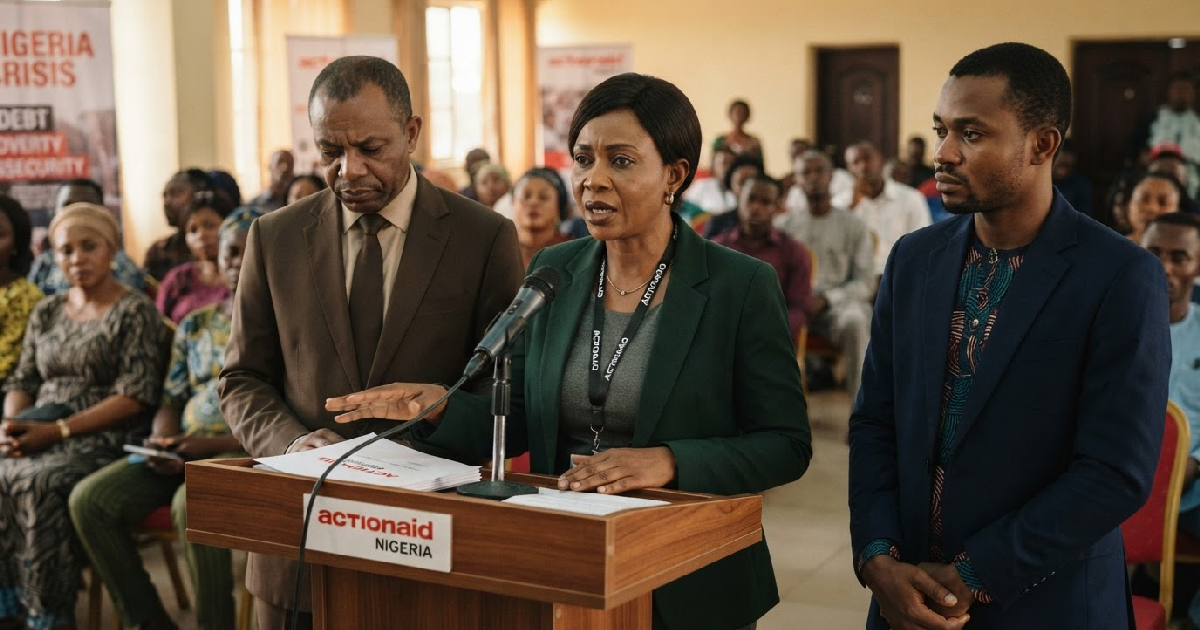
A stark warning of a deepening crisis echoed through Nigeria’s political capital this past weekend as ActionAid Nigeria highlighted the interconnected threats of poverty, debt, and insecurity.
The global humanitarian organisation didn’t mince words, painting a picture of millions of Nigerians caught in an accelerating decline, their welfare and security eroding under pressures that seem to mount with each passing day. It’s a reality far removed from the promises of prosperity often made from the very halls where these warnings were issued.
ActionAid’s stark warning on Nigeria’s crisis
The alarm from ActionAid Nigeria came after their Annual General Meeting, held between July 18 and July 21, 2026. While reports identified the Convener of the General Assembly as both Igho Akeregha and Ohio Akoudo Ifiabor, the message itself was singular and clear: the country’s most vulnerable citizens are facing unprecedented hardship.
This isn’t ActionAid’s first call to attention; they had previously warned on April 19, 2026, that Nigeria was on the precipice of a multi-dimensional crisis. The organisation argues that the government’s colossal debt servicing obligations directly undermine its capacity to invest in crucial human development sectors like education and health, trapping generations in a cycle of want.
It’s a pattern that has played out before on this continent, where economic policies designed to stabilize finances end up squeezing ordinary people hardest. The current situation demands a reckoning, not just with numbers, but with the human stories behind them.
The weight of poverty deepens across Nigeria
The numbers speak for themselves, illustrating a nation where struggle is becoming the norm for far too many. The World Bank estimates a staggering 79% of Nigerians either live in poverty or are perilously close to falling into it.
As of 2022, the National Bureau of Statistics (NBS) revealed that 63% of Nigerians, roughly 133 million people, were experiencing multidimensional poverty. This means a lack of access to basic necessities like healthcare, education, reliable jobs, and a decent living environment.
Around 87 million Nigerians, nearly 39% of the population, subsist below the international poverty line of $2.15 per day, according to the World Bank. The geographical divide is sharp; 65% of the poor live in the northern regions, while 35% are in the south.
Rural areas bear the brunt, with 72% experiencing multidimensional poverty compared to 42% in urban centers. The removal of fuel subsidies and the subsequent hyperinflation have eroded purchasing power for average citizens, making daily survival a constant negotiation.
Rising cost of living squeezes households
Everyday life has become a relentless struggle against inflation. The NBS reported a June headline inflation rate of 15.91%, a figure that feels abstract when compared to the reality of rising food prices.
Petrol now sells above ₦1,100 per litre, driving up transportation costs for everyone. Many families find the ₦70,000 minimum wage utterly inadequate to sustain even the most basic standard of living anywhere in the country.
This economic crunch impacts every aspect of life, from market stalls to school fees. The promises of growth ring hollow for those watching their meager earnings disappear with each trip to the market.
A crushing debt burden stifles future growth
Nigeria’s financial health appears increasingly precarious, with ActionAid highlighting a debt burden that threatens to suffocate national development. The country’s total public debt has ballooned to an eye-watering ₦156.28 trillion.
Despite external reserves reportedly climbing to about $51.5 billion, the sheer volume of debt servicing is crippling. An enormous $11.6 billion is set aside for debt servicing in 2026 alone.
This sum dwarfs the combined expenditures on education, health, and agriculture, sectors vital for human capital development and long-term sustainability. A June 2026 report by ActionAid International and ActionAid Nigeria revealed that 20.1% of national revenue goes to external debt payments, compared to a mere 4.06% for health and 4.40% for education.
The situation is dire: debt service-to-revenue has often exceeded 100% in recent years, meaning nearly all federal government revenue is consumed by debt obligations. The International Monetary Fund (IMF) projects Nigeria’s debt-to-GDP ratio will hit 33.1% by 2027, a trajectory that raises serious questions about fiscal prudence and future generations’ inheritance.
When the economy struggles, political maneuvering intensifies, often at the expense of sound long-term planning. This has been a recurring theme in Nigeria, where political criticism often emerges around resource allocation and accountability, further clouding the path to economic recovery.
Insecurity and climate threats compound vulnerability
Beyond economic woes, the specter of insecurity and the growing reality of climate change cast long shadows over Nigeria. For countless families, the threat of violence and displacement is as tangible as the struggle to put food on the table.
Kidnappings plague schools and communities
The sanctity of childhood and education continues to be violently disrupted. Between May and July 2026 alone, at least 124 schoolchildren and students were abducted across Oyo, Borno, and Zamfara States. This pattern of terror strikes at the very heart of community life.
While ActionAid commended the recent rescue of 39 pupils and six teachers abducted in Oyo State, many other children and teachers remain in captivity across the country. Such incidents don’t just traumatise victims; they instill pervasive fear, discouraging school attendance and destabilising entire regions.
The continuous threat of abduction has profound implications for Nigeria’s future, hindering educational attainment and exacerbating existing social inequalities. These security challenges often intertwine with broader political narratives, with the Nigerian presidency often responding to claims of threats and instability across various regions.
Looming flood disaster
As if economic and security crises weren’t enough, Nigeria faces an imminent threat from nature. The Federal Government has issued a high flood alert for 33 states and the Federal Capital Territory (FCT), signaling widespread potential devastation.
This annual threat exacerbates food insecurity. The United Nations Office for the Coordination of Humanitarian Affairs (UNOCHA) projects that nearly 35 million Nigerians will face acute food insecurity during the 2026 lean season, a figure that floods will undoubtedly inflate.
Climate change isn’t some distant threat; it’s a present danger destroying livelihoods and deepening humanitarian crises. When farms are submerged and communities displaced, the ripple effects are felt nationwide, from food markets to overcrowded shelters.
Echoes of the past in Nigeria’s current struggles
ActionAid Nigeria’s urgent message resonates deeply because these challenges aren’t new; they are persistent echoes of Nigeria’s historical struggles. From the structural adjustments of the 1980s that left millions impoverished to the recurrent battles against insecurity that have plagued different regions for decades, today’s crises feel disturbingly familiar.
Every era has faced its version of economic hardship and social unrest. Yet, the current confluence of extreme poverty, ballooning debt, pervasive insecurity, and climate vulnerability presents a formidable test for the nation. It forces a look back at what was learned, and perhaps more importantly, what was forgotten.
The cycles of boom and bust tied to oil prices, the persistent challenges of governance, and the struggle to diversify the economy have been constant themes. Efforts to bolster Nigeria’s capital market and attract foreign investment are crucial, yet they often contend with these underlying instabilities.
This isn’t just about policy decisions; it’s about the soul of a nation. Nigerians, resilient and resourceful, have repeatedly endured such trials. But each repetition leaves deeper scars, further eroding trust in institutions and the promise of a better tomorrow.
Understanding these current alarms means understanding their historical roots. For too long, the nation has grappled with the consequences of failing to build a diversified, inclusive economy that protects its most vulnerable citizens. This is the enduring lesson, one that demands a different approach today if Nigeria is to break free from these cycles.
