



Across Nigeria, women have long been the backbone of local economies, their enterprise fueling markets and households. Now, a powerful coalition is formally recognizing this enduring strength and unlocking Nigerias $229 billion economic potential.
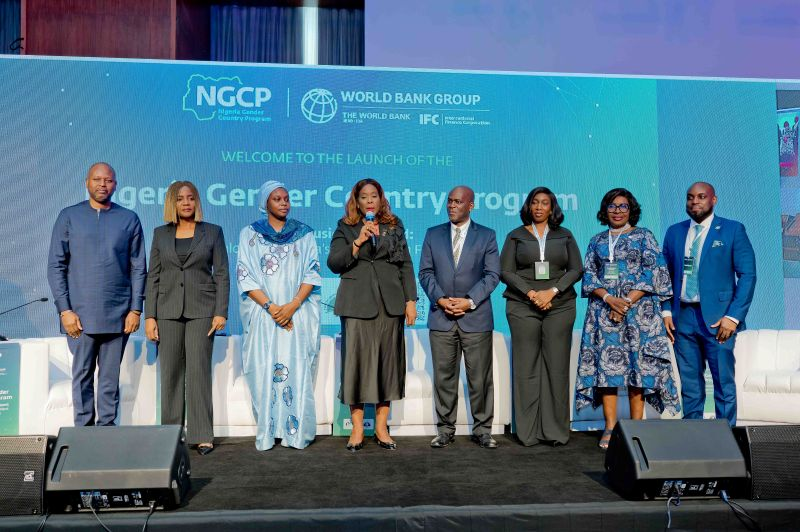
They’ve just launched the Nigeria Gender Country Program (NGCP), a coordinated push designed to position gender inclusion as a crucial driver for business competitiveness, investment, and sustained economic growth.
The economic imperative of gender inclusion
This initiative, spearheaded by the International Finance Corporation (IFC) — a key member of the World Bank Group — alongside the Nigerian Exchange Group (NGX Group) and the Lagos Chamber of Commerce and Industry (LCCI), isn’t just about policy. It’s about aligning advisory expertise, crucial funding, and strategic partnerships.
Their aim is clear: to significantly strengthen women’s representation in leadership, broaden access to quality employment, and expand financial, technological, and market access for women and women-led businesses across the country.
This isn’t merely a social aspiration; it’s an urgent economic calculation. Research underpinning the Nigeria Gender Country Program reveals a striking potential: closing existing gaps in women’s leadership, employment, and entrepreneurship could inject an estimated $22.9 billion in additional economic output into Nigeria annually. This figure underscores the compelling case for robust private sector action on gender inclusion.
The program builds directly on the momentum generated by the CEO Roundtable held in June, as well as the substantial progress achieved through Nigeria2Equal, an earlier IFC initiative. Now, the NGCP is shifting firmly into an implementation phase. Participating organisations are expected to adopt practical, measurable gender-smart business practices, translating high-level commitments into tangible results on the ground.
From dialogue to concrete action
Umaru Kwairanga, Group Chairman of NGX Group, speaking at the launch, articulated this shift from conversation to decisive action. He emphasized that women’s economic participation is an economic imperative, not just a societal ideal. Kwairanga sees advancing women’s economic involvement as a direct investment in productivity, a powerful catalyst for innovation, and a fundamental driver of sustainable economic growth for Nigeria.
“Through the Nigeria Gender Country Program, we are creating a practical framework,” Kwairanga explained. He believes this structure will empower businesses to strengthen leadership, expand opportunities for women, and truly unlock the ‘inclusion dividend’ for Nigeria’s economy. It’s about building foundational systems that ensure progress is sustained and far-reaching.
Government and industry forge new alliances
Support for the Nigeria Gender Country Program spans both state and federal levels. Representing Governor Babajide Sanwo-Olu, Folashade Ambrose-Medebem, the Commissioner for Commerce, Cooperatives, Trade and Investment for Lagos State, reiterated the state’s unwavering commitment. She highlighted the goal of fostering an enabling environment specifically for women-led enterprises and strengthening inclusive economic development across Lagos.
From the federal government, Aishatu Digili, who represented Imaan Sulaiman-Ibrahim, the Minister of Women Affairs, called for even stronger collaboration. She stressed the vital necessity of partnerships between government bodies, development institutions, and the private sector. The collective aim is to accelerate women’s economic empowerment and expand critical opportunities for women across key sectors of Nigeria’s economy.
Unlocking capital markets for women
The Securities and Exchange Commission (SEC) is also playing a significant role in this grand initiative. Speaking on behalf of Emomotimi Agama, the Director General of the SEC, Frana Chukwuogor, the Commission’s Executive Commissioner for Legal and Enforcement, highlighted the capital market’s profound importance. She noted its capacity to advance inclusive growth, enhance access to finance, and specifically support women-led businesses.
“The Commission welcomes the Nigeria Gender Country Program as an important platform,” Chukwuogor affirmed. She views it as crucial for deepening collaboration, fostering innovation, and sharing knowledge to support inclusive market development. The SEC commended the IFC’s leadership in championing inclusive private sector development globally, and their partnership with Nigeria in fortifying its financial markets.
A legacy of resilience meets formal opportunity
For generations, Nigerian women have been the informal titans of commerce, from the bustling markets of Balogun to the cocoa farms of the Southwest. Their entrepreneurial spirit and diligent labor have always been central to the nation’s economic fabric, sustaining families and communities even when their contributions went unquantified in official metrics.
This inherent economic power, however, often faced significant hurdles, particularly in formal corporate hierarchies and access to substantial capital.
The Nigeria Gender Country Program represents a formal recognition of this long-standing, often unsung, economic power. It acknowledges that societal norms and systemic barriers have historically limited the full integration of women’s economic potential within Nigeria’s formal sectors. While many women possess high levels of education, their upward mobility and access to finance for business ventures have consistently lagged.
This initiative seeks to bridge that historical divide, transforming traditional strengths into formalized economic might. By strengthening women’s representation in leadership, it empowers them to directly shape corporate strategies and policies. Improved access to quality employment means more women can participate robustly in the formal economy, moving beyond precarious informal roles and into stable, rewarding careers.
The road ahead: implementation and a broader vision
As the Nigeria Gender Country Program transitions into its critical implementation phase, private sector organisations are already stepping forward. They are signing on to the NGCP, committing to one or more of its strategic priority areas based on their specific organizational goals and readiness. This signals a proactive and growing engagement from the business community, which now clearly sees the long-term benefits of gender-smart practices.
Temi Popoola, Group Managing Director/Chief Executive Officer of NGX Group, represented by Jumoke Olaniyan, the Group Chief Strategy Officer, highlighted NGX Group’s role as a strategic partner. She noted that the program effectively builds on the existing momentum created through Nigeria2Equal, providing a powerful platform for practical action.
Popoola emphasized that NGX Group’s mandate extends beyond facilitating capital formation; it encompasses promoting the standards, practices, and partnerships essential for responsible and competitive business growth.
The launch event itself served as a powerful demonstration of the broad support the NGCP commands. The attendees included World Bank Country Director for Nigeria, Mathew Verghis; Chairman of Ecobank Nigeria, Bola Adesola; and Omobola Johnson, Senior Partner at TLcom Capital.
Other notable participants included Olufemi Shobanjo, Chief Executive Officer of NGX Regulation Limited, and Chinyere Almona, Director General of the Lagos Chamber of Commerce and Industry. Representatives from UN Women were also present, signifying strong backing from international partners.
This extensive turnout, featuring chief executive officers, board members, policymakers, investors, capital market stakeholders, members of the diplomatic corps, and the media, underscores a clear and growing consensus. There’s undeniable private sector recognition that gender inclusion directly drives resilience, enhances enterprise value, and boosts economic competitiveness. It’s a shift that could fundamentally redefine Nigeria’s economic future.
The Nigeria Gender Country Program isn’t just an economic policy; it’s a profound recognition that the nation’s past struggles for equitable opportunity must yield to a future where every Nigerian, regardless of gender, can contribute fully to its prosperity. Today, Nigeria moves closer to harnessing that full potential, reminding us that true national strength has always resided in the collective power of its people.
