



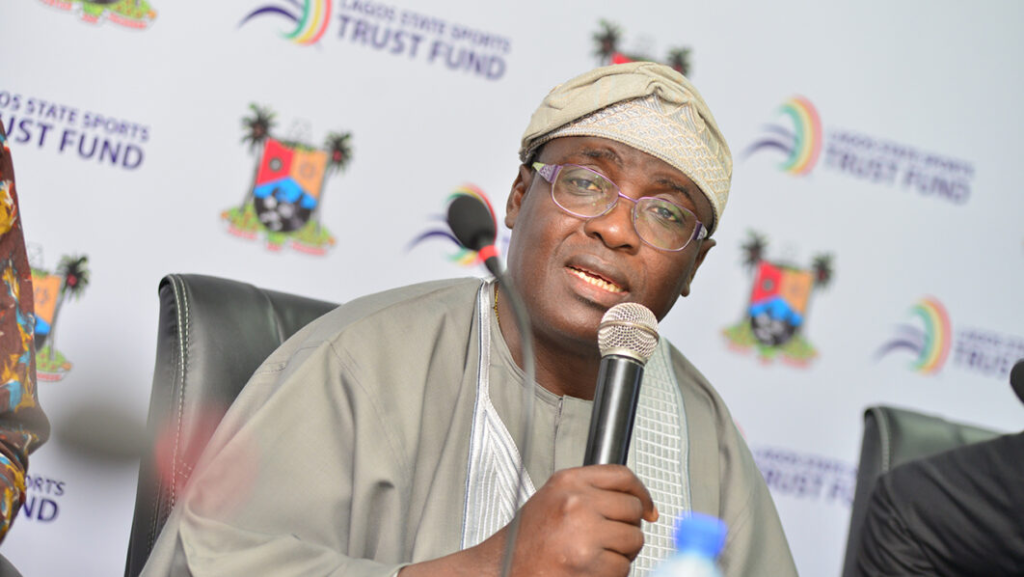
In a Nigeria where ATMs were still a novelty and the state-owned NITEL held a crumbling monopoly, Femi Pedro launched First Atlantic Bank’s cashless revolution using the humblest of tools: the GSM phone.
The story of FlashMeCash, recently revisited by host Ugo Obichukwu on the Money Brief Podcast: Corporate Stories, offers a window into the evolution of Nigeria’s digital economy. While modern giants like Moniepoint (founded in 2015) and OPay (established in 2018) now dominate the sector, FlashMeCash was operating 13 and 16 years before them, respectively.
The technological landscape that challenged FlashMeCash in 2002
It was an era where smartphones were nonexistent and internet banking was barely a concept, yet First Atlantic Bank described its creation as “Africa’s first GSM-based money transfer service.”
This early innovation arrived three years before the launch of Facebook and five years before the first iPhone reached the market. Femi Pedro, who would later serve as Deputy Governor of Lagos State and was recently named Nigeria’s High Commissioner to Australia in June 2026, was central to this push for modernization.
His vision predated the mobile money explosion popularized by Kenya’s M-Pesa, showing that the appetite for a cashless Nigeria existed long before the infrastructure was ready to sustain it.
In 2002, the Nigerian digital payment ecosystem was a fragile experiment. GSM services had only been introduced in 2001, and for a population of 120 million people, there were only roughly 400,000 active telephone lines. FlashMeCash was designed as a bridge, allowing customers to initiate transfers and recipients to get electronic notifications, potentially bypassing the need to physically visit a bank branch.
The platform was intended to facilitate payments for goods and services at a time when cash was the only undisputed currency. First Atlantic Bank—formerly Comet Merchant Bank Ltd—was punching above its weight, recording a profit after tax of ₦509 million in 2001, a sharp rise from ₦206 million the previous year.
But despite the bank’s growth, the surrounding environment was not yet conducive to a mobile-only financial protocol.
According to Obichukwu, several structural factors eventually stalled the platform. The social hierarchy and traditional trust systems favored face-to-face transactions, and electronic payments felt alien to the average market trader. Furthermore, network coverage was limited and unreliable, meaning a “flash” notification could often be lost in the ether, failing the very promise of its name.
Regulatory shifts and the Soludo-led banking consolidation
If infrastructure gaps were the primary hurdle, the regulatory hammer of 2004 provided the final blow. Under Central Bank of Nigeria (CBN) Governor Charles Soludo, the minimum capital requirement for banks was hiked from ₦2 billion to ₦25 billion. This triggered a frantic era of mergers and acquisitions as smaller institutions struggled to survive the new financial reality.
First Atlantic Bank, which had expanded to 15 branches by 2002, was forced into the industry-wide restructuring. It eventually became part of a merger that contributed to the formation of FCMB Group.
During this transition, FlashMeCash was rebranded and repackaged, but the singular focus required to scale a disruptive technology was lost in the complexities of corporate survival. Much like how the All Progressives Congress faces criticism over internal shifts today, the banking sector of the mid-2000s spent more energy on structural survival than experimental products.
The absence of contemporary digital payment regulations meant there was little institutional support to protect FlashMeCash. At the time, there was no merchant network ready to accept digital transfers; even if a user adopted the service, there was nowhere to spend the digital funds. The product imagined a future that the Nigerian market of 2002 was not yet equipped to inhabit.
Drawing parallels with the modern fintech explosion
The narrative of African fintech typically begins with Kenya’s M-Pesa in 2007, but the existence of FlashMeCash proves Nigeria was five years ahead in conceptualization. The difference was execution and ecosystem.
While Moniepoint and OPay benefited from a decade of prior groundwork laid by companies like Interswitch (founded by Mitchell Elegbe), eTranzact (founded by Valentine Obi), and SystemSpecs (founded by John Obaro), FlashMeCash was an isolated pioneer.
Today, the scale of this industry is staggering. The GSMA’s State of the Industry Report on Mobile Money 2026 notes that registered mobile money accounts globally reached 2.3 billion in 2025. Nigeria now processes trillions of naira in electronic transactions every month.
The International Monetary Fund tracks a world economy where these digital handheld tools are essential, a far cry from the disconnected reality Femi Pedro faced at the turn of the millennium.
Reflecting on the legacy of the platform, Obichukwu remarked that being first is not always enough. Sometimes a vision fails simply because the world isn’t ready. However, the DNA of FlashMeCash persists in every USSD code and digital wallet currently used in Agege or Aba.
The lesson of 2002 is that innovation is an iteration, and today’s successes are built on the failures of those who dared to imagine the future too early. History demonstrates that while the pioneers may not always win the market, they are the ones who prove the market is possible.
