



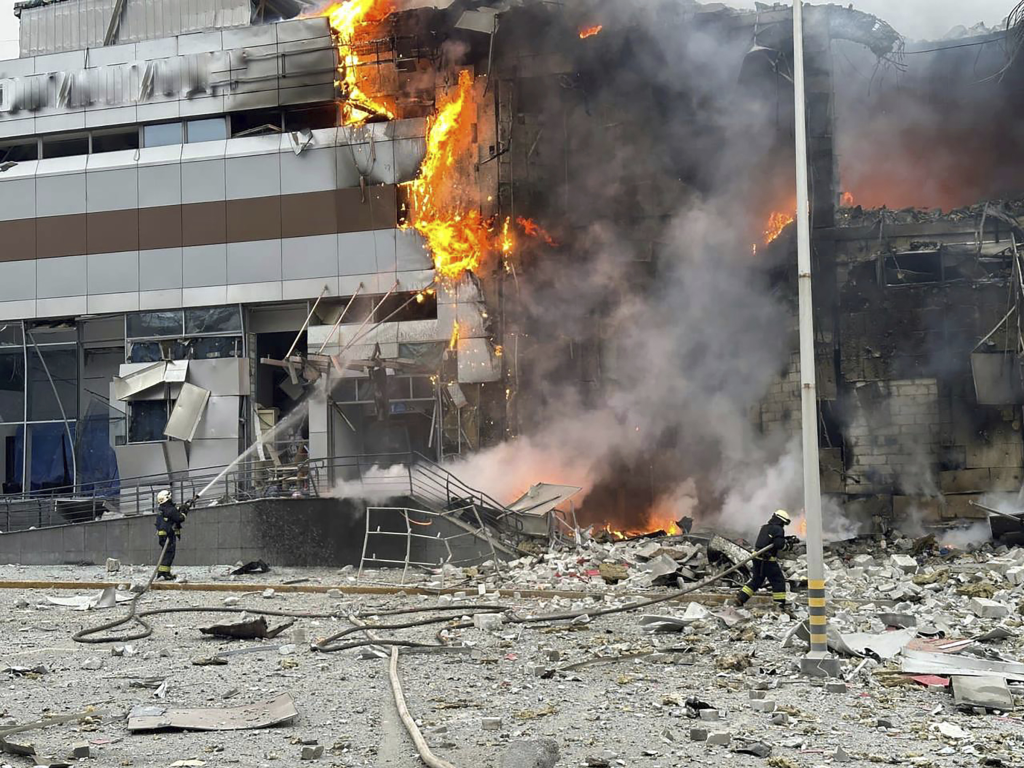
Russian forces have launched a heavy barrage of missiles and drones against the Ukrainian capital, Kyiv, on July 6, 2026. The coordinated assault comes on the immediate eve of a high-stakes North Atlantic Treaty Organization (NATO) summit, where Western leaders are expected to discuss further military aid and security guarantees for the embattled nation.
The timing of the strike appears specifically designed to coincide with the gathering of international heads of state. By targeting the capital during this critical diplomatic window, Moscow is projecting military strength as the alliance prepares to refine its long-term strategy for the conflict. Reports indicate that the attack involved a combination of aerial threats intended to challenge local defensive capabilities.
Aerial bombardment precedes major NATO diplomatic gathering
The scale of the Russian Federation’s latest operation reflects a continued reliance on long-range munitions to impact major urban centers. Air sirens sounded across the city as emergency teams responded to the influx of drones and missiles. This escalation serves as a blunt backdrop for the NATO summit, where member states must now navigate the immediate fallout of the strikes while finalizing their support packages.
For Ukraine, the barrage reinforces the urgent need for enhanced air defense systems and interceptors. The bombardment follows a pattern of high-intensity strikes used to influence political discourse among Ukraine’s backers. These events mirror other instances where geopolitical friction leads to a surge in regional activity, such as when China intensifies territorial assertions east of Taiwan in a similar display of regional pressure.
Pressure mounts on Western leaders for air defense support
International delegates arriving for the summit are faced with a stark reminder of the ongoing volatility in Eastern Europe. The attack on the capital effectively shifts the focus of the meeting toward immediate kinetic needs. Discussions are expected to center on the provision of advanced hardware capable of neutralizing the specific mix of missiles and drones currently being deployed by the Russian military.
But the political resolve of the alliance is also under scrutiny. Leaders must balance the demand for increased intervention with the risks of broader escalation. The internal politics of member nations often complicate these decisions, as seen in the United States where Representative Jared Huffman accuses Donald Trump of leveraging national events for political gain, reflecting the domestic hurdles that can impact foreign policy consistency.
Logistical strain on Kyiv infrastructure and emergency services
Kyiv’s municipal authorities are currently assessing the impact of the strikes on the city’s critical infrastructure. The use of drone swarms alongside high-speed missiles is a tactic designed to stretch the limits of even the most sophisticated defense grids. Engineers and repair crews have been deployed to address damage in residential and industrial sectors as the city remains on high alert.
While the immediate goal of the strikes is often physical destruction, the psychological impact on the civilian population is a persistent element of the Kremlin’s strategy. By maintaining a state of constant threat, Russia aims to create a sense of weariness among both the local population and their international allies.
This long-term war of attrition continues to test the social fabric and technical resilience of the Ukrainian capital.
Global security implications of sustained missile diplomacy
The international community is closely monitoring the situation as it signals a potentially more aggressive phase of missile activity. The ability of the Russian defense industry to continue these large-scale raids remains a primary concern for intelligence agencies. If the flow of dual-use components into Russia cannot be effectively curtailed through sanctions, these aerial campaigns may remain a permanent feature of the war.
As NATO leaders convene, the outcome of their deliberations will likely dictate the defensive posture of Ukraine for the coming months. The persistent “hammering” of urban centers ensures that the conflict remains at the forefront of the global security agenda.
This situation is further complicated by other international flashpoints, such as in the Middle East where the Iran Khamenei funeral begins amid calls for vengeance, adding to a complex global landscape of instability and military posturing.
The evolving nature of Russian air attacks on Ukraine
Russia’s consistent targeting of Ukrainian cities, particularly Kyiv, reflects a strategic shift from early-war attempts at rapid ground conquest. Instead, Moscow now relies heavily on asymmetric warfare tactics, using long-range munitions to degrade Ukrainian morale and infrastructure. This approach sidesteps direct confrontations with well-entrenched Ukrainian forces, opting for continued pressure from a distance.
The type of weaponry used in these attacks also points to an evolving threat. Combinations of ballistic missiles, cruise missiles, and various types of uncrewed aerial vehicles (UAVs) are employed. This mix forces Ukraine to expend valuable air defense assets against a diverse array of threats, complicating interception efforts and increasing the cost of defense.
Adapting to drone swarms and missile types
Ukrainian air defenses, though continually bolstered by Western military aid, face a persistent challenge in adapting to Russia’s ever-changing attack patterns. New generations of drones, often produced cheaply and in large numbers, are used to saturate defenses.
This allows more sophisticated and destructive cruise or ballistic missiles to potentially bypass the remaining interceptors. It’s a cat-and-mouse game played out over civilian populations.
NATO’s strategic response and aid considerations
The immediate challenge for NATO allies converging for the summit is to formulate a cohesive and effective response to this aerial campaign. While rhetorical condemnation is certain, the practicalities of supplying more advanced and integrated air defense systems will be paramount.
Member states will likely review existing commitments, assess delivery timelines, and consider new packages of military support. The goal isn’t just to defend Kyiv, but to protect Ukraine’s broader critical infrastructure, including energy grids and transportation hubs.
Long-term implications for Ukraine’s NATO aspirations
Beyond immediate military aid, the summit is expected to address Ukraine’s long-term relationship with NATO. While full membership remains a complex issue, discussions are likely to focus on concrete steps towards greater interoperability and security guarantees. This ongoing conflict has underscored the urgency for Ukraine to integrate more deeply with Western defense structures.
However, geopolitical realities and internal alliance dynamics mean any definitive timeline for full membership is still uncertain. The attacks on Kyiv serve as a stark reminder of the persistent security challenges facing Ukraine, reinforcing calls for clear and tangible paths to integration.
Reconstruction and stability efforts in war-torn regions
Even amidst the ongoing conflict, efforts to plan for Ukraine’s eventual reconstruction are quietly underway. The sustained attacks on cities like Kyiv highlight the immense scale of the eventual rebuilding required. This future endeavor will demand significant international cooperation and investment, a topic that may also feature indirectly in NATO discussions as members consider the long-term viability of Ukrainian statehood.
But stability is a prerequisite for any significant reconstruction, making robust defensive capabilities essential in the short term. The ability of Ukraine to protect its cities will directly influence investor confidence and the eventual return of its displaced population.
The human cost of continuous aerial attacks
Beyond the strategic and political implications, the attacks carry a profound human cost. Residents of Kyiv and other targeted cities endure frequent disruptions, psychological stress, and the constant threat of injury or death. Emergency services operate under immense pressure, consistently responding to new incidents.
This enduring human element often gets overshadowed by geopolitical analysis, but it remains at the core of the conflict. The international community’s discussions at the NATO summit must invariably consider the welfare and safety of the Ukrainian people. Continued support is essential to mitigate these severe impacts, providing both material aid and political solidarity.
