



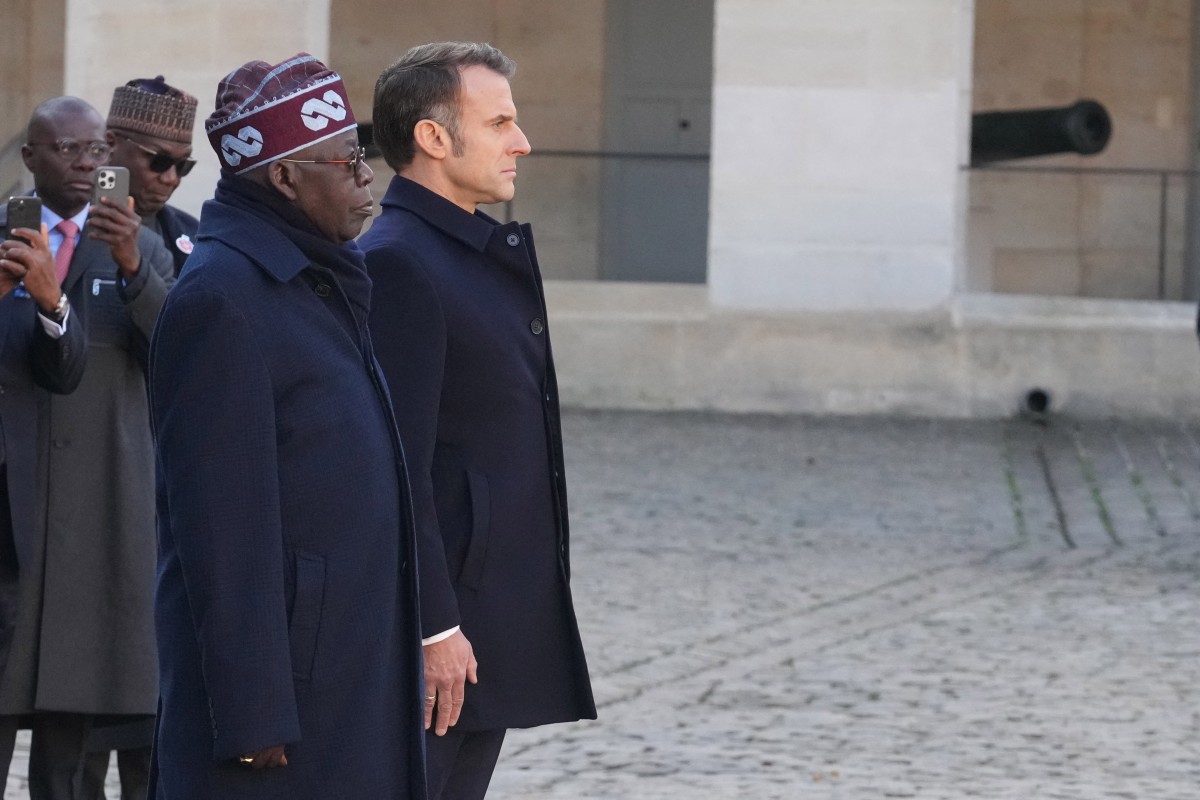
The hushed anticipation at the French National Day celebration in Abuja gave way to a significant announcement on Tuesday night, July 14, 2026. French Ambassador to Nigeria and ECOWAS, Marc Fonbaustier, revealed that President Emmanuel Macron would embark on a State visit to Nigeria in the autumn of 2026. This Macron Nigeria visit promises to be a pivotal moment for both nations.
The upcoming trip aims to solidify a strategic partnership that has steadily gathered momentum over the past two years. President Macron and his Nigerian counterpart, President Bola Ahmed Tinubu, will use the visit to review the progress of their bilateral roadmap. They’ll also outline fresh priorities for future cooperation across key sectors, building on the groundwork laid during Tinubu’s 2024 visit to Paris.
Macron’s return to a familiar African stage
For Emmanuel Macron, this isn’t just another stop on a diplomatic tour; it’s a deeply personal return. Ambassador Fonbaustier shared that Macron’s vision for Africa, which has sought to redefine France’s engagement with the continent, was profoundly shaped by a formative six-month stay in Nigeria.
He was a student intern here 24 years ago, an experience he himself credits with inspiring the broad outlines of his African diplomacy.
This personal history infuses the upcoming Macron Nigeria visit with a unique layer of meaning. France has actively worked to reframe its relationship with Abuja. Paris frequently describes this bond as a “partnership between equals,” built on equality, mutual respect, and non-interference. It’s a deliberate rhetorical strategy designed to address historical grievances and forge a new path in a continent increasingly assertive about its sovereignty.
Economic ambitions and shared prosperity
The agenda for Macron’s autumn visit is extensive, touching on areas critical for Nigeria’s development and regional stability. Economic and social development sits high on the list. Both nations are keen to foster job creation and improve living standards for their citizens, aligning with broader strategic goals.
Environmental protection, encompassing biodiversity, water, and air quality, also represents a shared commitment. This reflects growing global concerns about climate change and the need for collaborative solutions. Such cooperation aims to build resilience in regions particularly vulnerable to environmental and economic shocks.
Agriculture and food security remain a major focus, especially as Nigeria grapples with challenges in feeding its rapidly expanding population. Days before the visit announcement, on July 13, 2026, the France-Nigeria Agri-Business Dialogue in Lagos reaffirmed this commitment. It underscored pledges from an international summit where approximately €27 billion was committed to accelerate agricultural value chain development across Africa.
A notable €300 million from that sum is specifically earmarked for entrepreneurs and agribusinesses on the continent. The French Development Agency (AFD) is already deeply involved, supporting agricultural value chain projects, particularly across northern Nigeria. This direct investment goes beyond mere rhetoric, showing a tangible commitment to practical solutions.
The economic relationship between France and Nigeria is robust. Nigeria stands as France’s leading trading partner in sub-Saharan Africa and the fourth-largest overall in Africa. In 2021, Nigeria accounted for 20% of France’s trade with sub-Saharan Africa, totaling €3.53 billion.
French exports to Nigeria also saw a significant boost, rising by 16% in 2021 to reach €611 million. France’s foreign direct investment stock in Nigeria hit €7.2 billion in 2021, a figure that even surpassed investments from the UK and the US. This robust financial engagement demonstrates the depth of their economic ties.
Further cementing these ties, in November 2024, the Federal Government of Nigeria secured a €300 million development partnership with France. Nigeria’s Minister of Finance, Mr. Wale Edun, signed this agreement with the French Government and AFD. It targets vital sectors including healthcare, transportation, agricultural value chains, renewable energy, and human capital development.
Then, in December 2025, Nigeria’s Federal Inland Revenue Service (FIRS) and France’s tax authority, Direction Générale des Finances Publiques (DGFIP), signed a Memorandum of Understanding (MoU). This agreement aims to improve digital tax administration, including AI-powered audits and automated compliance systems. However, this pact has sparked some concerns among Nigerians regarding data sovereignty.
Security challenges and regional stability
Beyond economic considerations, security and counter-terrorism efforts form a critical pillar of the Franco-Nigerian strategic partnership. Both nations share a resolute commitment to strategic autonomy and the global fight against terrorism. They work in concert to bolster regional capabilities, particularly against extremist groups.
French officials consistently emphasize Nigeria’s indispensable role in maintaining regional peace and confronting insecurity, especially in the volatile Sahel. In December 2025, President Macron reaffirmed France’s readiness to intensify military support and intelligence sharing with Nigeria. This commitment followed a phone call with President Tinubu, responding to persistent terrorist threats in Nigeria’s northern regions.
This support isn’t just about providing equipment; it involves sharing intelligence and training to strengthen Nigeria’s ability to secure its own borders and communities. The challenges are immense, with Nigeria struggling against groups like Boko Haram and ISWAP in the North East, alongside banditry and kidnapping across other parts of the country. French assistance offers a layer of international backing to these critical domestic battles.
But French involvement in Sahelian security carries a complex history, often viewed through the lens of lingering colonial influence. Yet, African governments facing immediate threats often welcome the practical assistance. The cooperation is a delicate balance, reflecting both historical baggage and urgent contemporary needs.
The weight of history: beyond diplomacy
The relationship between France and its former African colonies, and indeed with Africa as a whole, has long been fraught with questions of sovereignty and influence. For decades, the narrative was often one of a patron-client relationship, a dynamic that many African nations, including Nigeria, have actively sought to dismantle. This upcoming Macron Nigeria visit comes against that backdrop.
President Tinubu’s own proactive engagement with France, including his State visit to Paris in 2024, signals a clear intent to forge partnerships on new terms. He used the 10th France-Nigeria Business Council Meeting in Nairobi on May 13, 2026, to emphasize a shift from “dialogue to delivery” in the bilateral relationship.
It’s a call for tangible outcomes over mere promises, reflecting a broader African demand for genuine collaboration.
This pursuit of a “partnership between equals,” as Ambassador Fonbaustier describes it, isn’t just diplomatic rhetoric. It represents an aspiration to move beyond a past where European powers dictated terms. It’s about building alliances that truly serve mutual interests, rather than perpetuating old dependencies.
The journey towards genuine equality is long and often uneven, but each high-level visit and every concrete agreement represents a step. From military support to digital tax agreements, these engagements redefine the boundaries of what is possible. It’s a dynamic interplay between historical precedent and present-day pragmatism, constantly negotiated on the global stage.
Looking ahead: the stakes of the visit
This Macron Nigeria visit in autumn 2026 isn’t simply a ceremonial affair; it carries significant weight for both leaders and their nations. For President Macron, it’s an opportunity to underscore his commitment to a new African policy, one he hopes will resonate more deeply across the continent. His personal connection to Nigeria makes this particular visit a crucial test of that vision.
For President Tinubu, hosting such a high-profile European leader reinforces Nigeria’s stature as a regional powerhouse and a critical voice in African affairs. It’s a chance to showcase his administration’s diplomatic prowess and its capacity to attract crucial investment and security cooperation. The discussions will likely shape policy for years to come.
The themes on the agenda—from economic development and job creation to environmental protection and counter-terrorism—are not abstract concepts. They directly affect the daily lives of millions of Nigerians. The success of this strategic partnership will be measured not just in signed agreements, but in their real-world impact.
As Nigeria strives to overcome its formidable challenges, from insecurity to economic instability, the nature of its international alliances becomes ever more critical. This Franco-Nigerian bond, with its blend of historical ties and contemporary aspirations, offers a compelling example of how old relationships are being reshaped. It shows how yesterday’s colonial narratives give way to today’s pursuit of mutual growth and shared security.
