



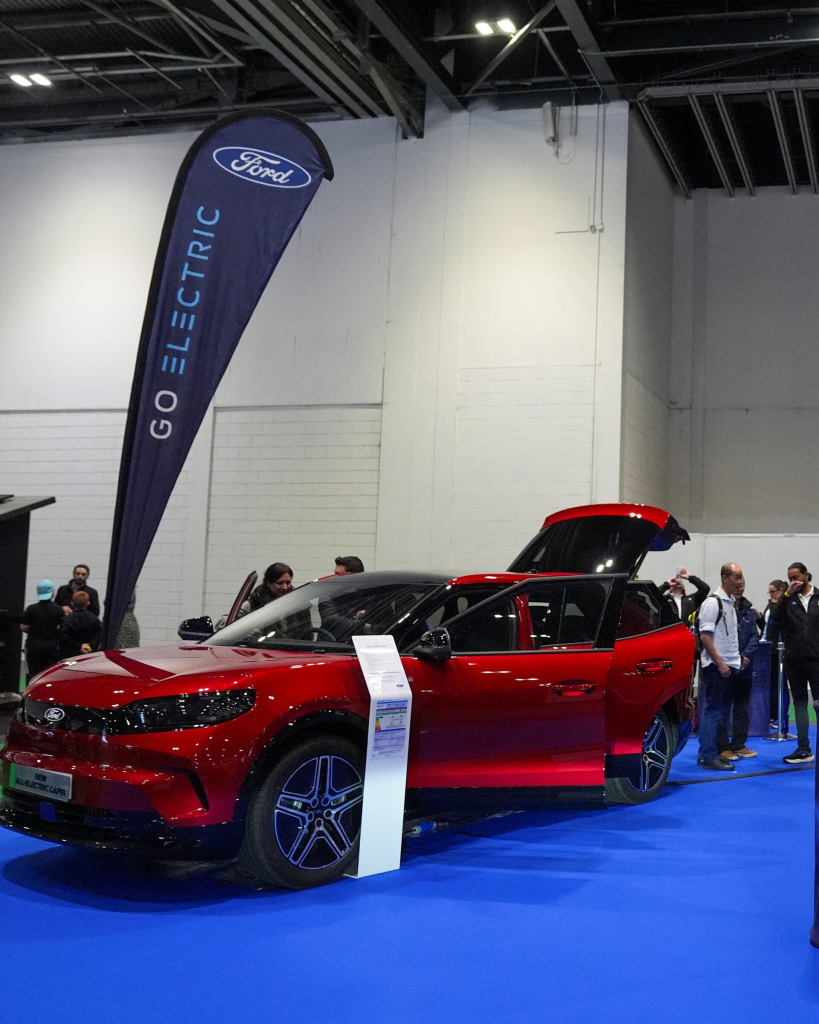
Ford Motor warns that over 1,500 stakeholders, including Nestlé and Tesla, are seeking urgent tariff exemptions from the Trump administration. , Nestlé, and Tesla, are seeking urgent tariff exemptions as the Trump administration weighs new levies following extensive trade investigations.
The proposed actions involve a 25% levy on imports from Brazil and a separate 10% to 12.5% tariff on goods from 60 trading partners linked to forced labor allegations. These investigations have left major retailers like BJ’s Wholesale Club and industrial giants scrambling for relief.
Ford Motor warns of tariff threats to electric vehicle transition
For many, the case for an exemption is simple: the materials they need are either entirely unavailable in the U.S. or cannot be produced in the volumes necessary to meet current demand.
This friction between national trade policy and industrial reality is a pattern often seen when International Monetary Fund lowers 2026 world economic outlook to 3.0% due to fragmented market conditions. Nigeria has faced similar dilemmas, notably during the structural adjustment eras when trade barriers were erected before local industries were ready to lead.
Today, American manufacturers find themselves in a comparable bind, insisting that decades of global integration cannot be reversed overnight without penalizing the very companies trying to invest at home.
Ford Motor Co. has emerged as a primary voice for the automotive sector, with President and Chief Executive Officer Jim Farley, Jr. already noting the heavy price of supply chain vulnerability. The company is seeking relief from aluminum tariffs following two fires at the Novelis plant in Oswego, New York, in 2025.
This facility was a critical provider of aluminum sheet for the Ford F-150, forcing the automaker to source alternatives from Europe and South Korea at tariff rates as high as 50%.
Ford CFO Sherry House expects these disruptions to continue weighing on the bottom line, following a US$2 billion headwind attributed to the Novelis fires and tariff impacts. The company is now urging the USTR to protect inputs required for its U.S. facilities producing battery cells, packs, and energy storage systems.
And while the USTR has exempted some goods already subject to Section 232 tariffs, automakers argue the current protections are insufficient for high-tech manufacturing.
The slow clock of industrial onshoring
Tesla has supported this stance, telling the USTR that while it is actively investing in domestic production, the “transition will take time.” The electric vehicle pioneer warned that certain critical inputs cannot yet be sourced at the scale and quality required to sustain competitive U.S. manufacturing.
For these tech-driven firms, a tariff on parts that do not yet exist in American factories is seen as a tax on innovation rather than a boost for local jobs.
This struggle to build domestic capacity while maintaining global competitiveness mirrors the Micron Technology, Inc. raises US investment to $250 billion through 2035 initiative, where heavy upfront capital is needed to shift supply chains.
Automotive manufacturers are essentially asking for a bridge — a period of tariff relief that allows them to build factories without being bled dry by the cost of the parts they must still import in the meantime.
Nestlé and food manufacturers target domestic supply gaps
In the food and beverage industry, major players including Nestlé and Mars Inc. are centering their appeals on the practical limits of American production. Nestlé is currently seeking tariff exemptions for various goods, joining a sector-wide push for products that can’t be produced in sufficient quantities within the U.S. to meet consumer demand.
The company maintains that without these imports, domestic supply chains would face significant shortfalls.
The food industry’s requests often hinge on geography and climate, which make certain ingredients impossible to source locally. Mars Inc. cited palm oil imports from Thailand and Malaysia as a critical example, stating that domestic alternatives with equivalent quality “do not exist.” McCormick and Co.
filed similar requests for various spices and herbs, arguing that exemptions would “promote efficiencies” in U.S. food manufacturing rather than hurting domestic farmers who don’t grow these specific crops.
Supply chain logic and grocery store prices
Nestlé’s global footprint makes it particularly sensitive to these shifts. Although CEO Laurent Freixe recently stated the company is largely “immune” to some tariffs because 90% of its U.S. sales are manufactured locally, CFO Anna Manz cautioned that new levies could “change the inflation picture considerably.”
This highlights a core reality for food companies: even if the final processing happens in America, the raw ingredients often have no domestic substitute.
When DHL Group projects full-year EBIT above €6.5 billion after 29% Q2 profit jump, it reflects the immense volume of these global movements that manufacturers rely on. For the food sector, the inability to find local substitutes means tariff costs are likely to flow directly to the consumer.
The USTR is now left to decide if protecting a hypothetical local industry is worth the immediate cost of rising grocery bills.
Retailers and the e-commerce defense against broad levies
The retail sector is perhaps the most exposed to the USTR’s proposed 10% or 12.5% tariffs on 60 trading partners. Companies like Tractor Supply Company have argued that these levies, intended to combat forced labor, may instead penalize American farmers and rural customers.
Seth Estep, EVP for Tractor Supply, noted that imposing tariffs on essential goods with no domestic capacity won’t change foreign practices but will definitely “burden a major U.S. retailer.”
eBay has taken a different approach, calling for a blanket exemption for second-hand goods. Cathy Foster, VP of global government relations for eBay, argued that a tariff on a used item creates no “economic signal” for the original producer.
If the policy goal is to stop forced labor at the factory level, taxing the resale of a vintage toy or a used lamp does nothing to achieve that mission while making the secondary market more expensive for low-income families.
Capital equipment and the cost of American jobs
GE Appliances and Whirlpool Corp. have pointed out a sharp contradiction in the current trade policy: tariffs on specialized factory equipment make it harder to create jobs in America. GE Appliances is seeking to shield specialized machinery, automation systems, and molds — the “tools of the trade” required to run its U.S. factories.
Jim Kiley, the company’s director of federal government affairs, warned that every dollar spent on “unnecessary tariff costs” is a dollar that cannot be spent on expanding U.S. staff or capacity.
Whirlpool has proposed that the government exempt businesses in good standing with the Customs-Trade Partnership Against Terrorism program, rewarding companies with ethical, visible supply chains. Meanwhile, Bissell Homecare has requested that Vietnam be given a lower tariff rate, citing its active bilateral consultations with the USTR.
These companies are not just asking for lower costs; they are asking for a more surgical approach to trade policy that recognizes the difference between a competitor and a necessary partner.
The history of Nigerian industrialization offers a sobering lesson here: protectionism without a ready domestic alternative often leads to scarcity and inflation rather than a manufacturing boom. As the Trump administration reviews these 1,500 requests, it must decide if the goal is to punish trading partners or to truly build a self-sufficient America.
For now, the requests from Ford and Nestlé suggest that the bridge to that self-sufficiency is still being built, one imported part at a time.
