



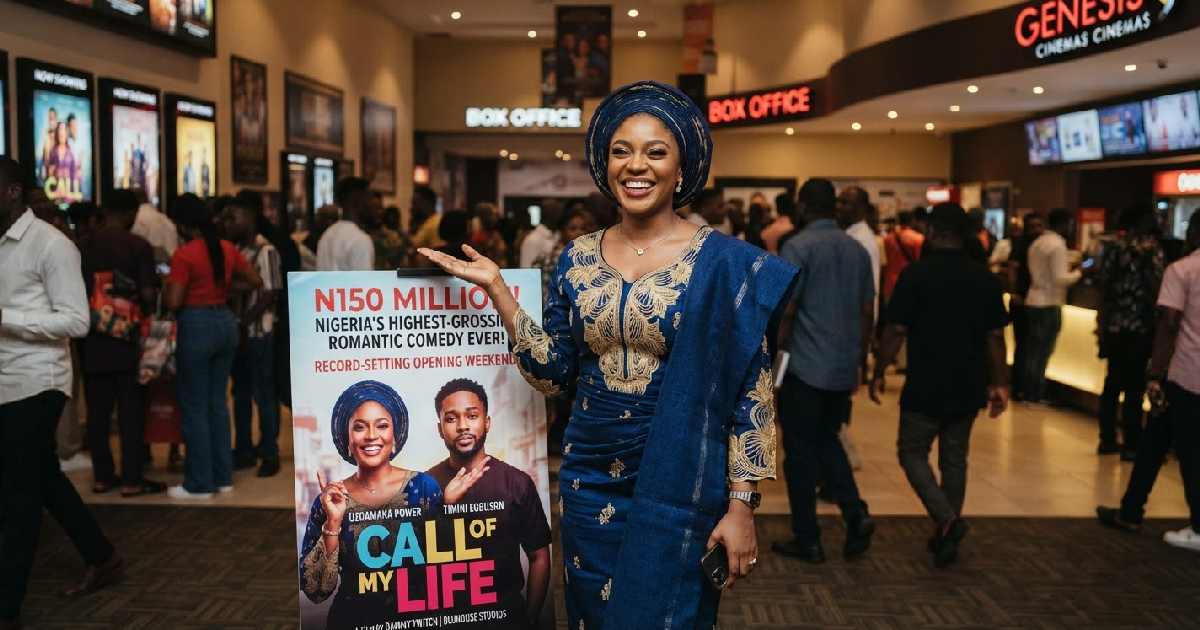
A new chapter has unfolded in Lagos’s vibrant film industry as “Call of My Life” breaks Nigerian box office records.
This isn’t just about numbers; it’s about timing. The film, directed by debutant Dammy Twitch and written by lead actress Uzoamaka Power, hit cinemas on May 15, well outside the traditional December holiday window when blockbusters usually premiere. Its sustained success, holding the number one spot for six consecutive weekends, is a compelling narrative of audience connection and strategic filmmaking.
A New Box Office Benchmark for Nollywood
The N817.6 million total isn’t just a momentary triumph; it carves out a significant new benchmark for Nigerian cinema. For years, the industry operated with an unspoken rule: massive box office returns were almost exclusively reserved for films released in December.
But Call of My Life defied this conventional wisdom. It became the first Nollywood film released outside that golden December window to cross the N600 million mark, reaching that milestone by June 19. This demonstrates a growing maturity in audience habits and distribution strategies, proving that compelling stories can succeed any time of year.
The Climb: From Opening Weekend to All-Time Lists
Its journey began strong, with an impressive N76.5 million during its opening weekend in mid-May, quickly followed by N78.2 million in its initial release. By June 10, the film had already crossed N498 million, putting it among the top 10 highest-grossing Nollywood releases of all time.
This steady climb culminated in its current position: among the top five highest-grossing Nollywood films ever and the seventh-highest-grossing Nollywood movie in the West African market. It’s a remarkable trajectory for a film that dared to step away from the industry’s comfort zone.
The Craft Behind the Commercial Success
Behind every record-breaking film is a team of creatives who poured their vision onto the screen. For Call of My Life, the synergy between a talented director and an emotionally resonant script proved to be a powerful combination. It’s a testament to rising talent within the industry.
Bluhouse Studios, the production company, now boasts two theatrical successes, with Freedom Way in 2025 preceding this latest hit. Their approach highlights a commitment to stories that speak directly to the Nigerian experience, presented with high production values.
Dammy Twitch’s Bold Directorial Debut
For Dammy Twitch, a name synonymous with high-quality music videos for artists like Davido and Angélique Kidjo, Call of My Life marks his feature film directorial debut. His transition from crafting visual narratives for music to a full-length romantic comedy has been seamless and impactful.
Twitch’s eye for aesthetics and his ability to draw out authentic performances from his cast have clearly translated to the big screen. This debut suggests a new wave of filmmakers, bringing fresh perspectives and technical prowess from other creative fields into Nollywood.
Uzoamaka Power: Writing and Embodying Soluchi
Uzoamaka Power, who not only penned the script but also starred as the lead character Soluchi, offered a deeply personal insight into the film’s genesis. She revealed that the story began as a personal curiosity, transforming into a responsibility to tell her characters’ truths.
“Starring in the film meant sitting with those emotions in a very real way,” Power explained. “This film is my way of holding love gently, in all its beauty and complexity.” Her dual role brought an undeniable authenticity to Soluchi’s journey of love and healing, resonating deeply with audiences.
Why Romantic Comedies Still Reign Supreme
The enduring popularity of romantic comedies in Nigeria is undeniable. These films offer a blend of humor, relatable emotional journeys, and aspirational storylines that consistently draw crowds. Call of My Life tapped into this vein with particular skill, avoiding common genre pitfalls.
Critics praised its fresh take, with Nolly Critic hailing it as an emotionally honest film with rare credibility. The Guardian described it as a deftly written tale, suggesting a new standard for narrative depth within the genre.
A Culturally Aware and Star-Studded Cast
Ini-Abasi Jeffrey, writing for What Kept Me Up, lauded the movie as a culturally aware addition to Nollywood’s romantic comedy landscape, particularly for its authentic portrayal of Igbo identity. This emphasis on cultural specificity, rather than generic tropes, likely contributed to its widespread appeal.
The film’s cast is a blend of veteran talent and popular new faces, ensuring broad audience draw. It features revered actors like Nkem Owoh and Patience Ozokwor, alongside contemporary stars such as Zubby Michael, Justin Chukwudi Ugonna (Justin UG), and Samuel Animashaun Perry (Broda Shaggi), who each bring their unique flavor to the narrative.
Nollywood’s Evolving Audience and Industry
The success of Call of My Life isn’t an isolated incident; it reflects broader shifts within the Nigerian entertainment industry. Audiences are increasingly discerning, seeking out films that offer both escapism and genuine connection. This drives filmmakers to push boundaries beyond conventional release patterns or themes.
This evolving dynamic suggests that the industry is becoming more adaptable, less reliant on seasonal spikes and more on sustained quality. It’s a positive sign for the diversity and reach of future Nigerian cinematic offerings, potentially opening doors for other genres to thrive outside traditional windows, much like how global audiences embrace diverse content, such as new summer anime.
Breaking the December Dependency
For a long time, the December holiday season was the primary target for major Nollywood releases. It was seen as the period with the highest footfall, guaranteeing maximum returns. This led to a predictable, sometimes overcrowded, release schedule.
Call of My Life has proven that a well-marketed, high-quality film can create its own demand, regardless of the calendar month. This is a crucial lesson for producers and distributors, freeing them from the pressure of a single, concentrated release window and allowing for more strategic scheduling throughout the year.
The Power of Story in Nigerian Cinema
This film’s achievement echoes a long-standing truth about Nigerian storytelling: when a narrative truly resonates, it finds its audience. From the earliest days of home video, Nigerian films have always excelled at capturing the everyday realities and dreams of ordinary people. What’s different now is the scale and the financial returns.
The journey of Nigerian cinema, from its humble beginnings to today’s record-breaking global music releases and cinematic triumphs, illustrates a continuous evolution. It shows a powerful resilience and an unyielding desire to tell stories that matter, stories that speak to identity, love, and community, regardless of the budget or platform.
What This Means for Nollywood’s Future
The triumph of Call of My Life serves as a powerful indicator for Nollywood’s future trajectory. It suggests a growing confidence within the industry to experiment with release dates, genres, and narrative styles, moving beyond established formulas. This paves the way for a more diverse and globally competitive cinematic landscape.
The N817.6 million figure isn’t just a number; it’s a call to action. It shows that Nigerian audiences are ready to support high-quality local content year-round. This could encourage further investment in production, marketing, and talent development, ultimately leading to even more polished and impactful films from the region.
Sustaining Momentum and Broadening Appeal
The challenge now lies in sustaining this momentum. Can Nollywood consistently deliver films that capture the public imagination outside peak seasons? The answer will depend on continued innovation in storytelling and a deeper understanding of audience preferences across different demographics.
It’s about building a robust film culture that rewards creativity and strategic thinking. Much like a politician understands the importance of public perception, the film industry must continually engage with its base to secure ongoing support, even when facing public challenges.
This record-breaking success reminds us that Nigerian history, particularly in its artistic forms, is not a static relic but a living, breathing force. It constantly reinvents itself, breaking old molds and proving that the power of a compelling local story can resonate across generations and redefine what’s possible.
