



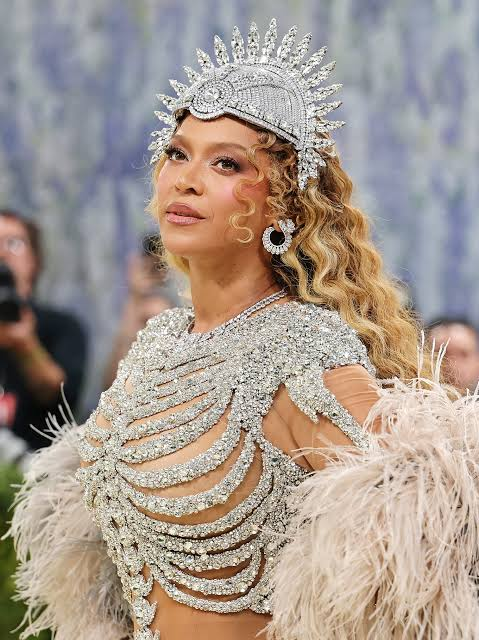
Beyoncé Giselle Knowles-Carter stunned the music world this weekend by surprise-dropping a new R&B-leaning single titled “Morning Dew (Donk),” a downtempo track that challenges industry expectations regarding the direction of her planned three-act project.
The release serves as the centerpiece of a packed New Music Friday on July 10, 2026, which also features the 25th studio album from The Rolling Stones, a feature-less 22-track solo effort from Future titled The Real Me, and Alice Suki Waterhouse’s third full-length album, Loveland.
Global Release Day and the ghost of piracy
The sudden arrival of “Morning Dew” underscores the unique power of the “Queen B” to disrupt the global cultural conversation without a traditional marketing rollout. It marks a sharp pivot from the country explorations of her March 2024 album, Cowboy Carter, and the house-infused energy of 2022’s Renaissance.
While fans have long speculated that her third act would dive into rock, this soulful release proves she is still focused on keeping her audience guessing as the trilogy nears its conclusion.
The industry’s current rhythm of Friday drops is a relatively recent invention, established to solve a very analog problem. Before the International Federation of the Phonographic Industry (IFPI) announced the policy on February 26, 2015, release schedules were a fragmented mess.
The United States and Canada typically released music on Tuesdays, while the United Kingdom used Mondays. This gap created a window for piracy, as fans in territories with earlier releases would upload files before others could legally buy them.
The full implementation of “New Music Friday” began on July 10, 2015, with synchronized drops at 00:01 local time in over 45 territories. While Beyoncé’s 2013 surprise album is often cited as a cultural precedent for breaking the Tuesday mold, the IFPI’s ultimate goal was to unify access for fans worldwide and combat music piracy.
Today, that global synchronization is what allows Nigerian fans on their mobile devices to listen to a new Future or Suki Waterhouse track at the same time as a listener in London or Los Angeles.
Future and the weight of the solo narrative
While Beyoncé dominates the singles conversation, Future has officially unveiled his tenth solo studio album, The Real Me. The 22-track project is a “behemoth” that avoids the modern industry trend of loading albums with high-profile guest stars. Instead, Future goes it alone, offering an introspective look at the man behind the ATL hip-hop myth.
Tracks like the grief-minded “If I Could” and the personal “Big Moment” show a side of the veteran artist that feels raw and unfiltered.
This decision to skip features mirrors a broader shift in how legacy artists assert their authority. By carrying a 22-track album solo, Future is betting on his own creative gravity.
Much like how the All Progressives Congress faces criticism over internal substitutions and narrative control in Nigeria, a major artist’s tenth album is often a battle to define their own legacy on their own terms, free from the noise of outside collaborators.
Suki Waterhouse and the search for aliveness
English singer-songwriter Alice Suki Waterhouse has returned with Loveland, her third full-length album. Following the eccentric 2024 release of Memoir of a Sparklemuffin, Waterhouse took to X (formerly Twitter) to describe the new project as a “memorialization of the places that made me.”
The album explores the move toward “aliveness” and the realization that reality must be continually pursued, a sentiment that resonates with a generation increasingly looking for authenticity in a digital world.
Waterhouse’s evolution from modeling into a respected indie-pop force shows the fluidity of the modern creative career. This cross-disciplinary success is not unlike the career of Isabelle Huppert, who has sustained a legendary presence in cinema by taking on new leadership roles at institutions like the Cinémathèque française.
Both women prove that a career in the arts is not a static result but a continuous reinvention across different platforms.
The Rolling Stones and the persistence of the veteran set
The Rolling Stones, the legendary English rock band formed in 1962, have shared their 25th studio album today. The project is described as a “fresh and tight set” for the veteran rockers, clocking in at just over an hour across 14 songs.
Mick Jagger’s vocals remain clear-eyed, and the band’s instrumentals are as driving as they were when they first became icons. This follows their 2023 studio album, Hackney Diamonds, which was their first original material in nearly two decades.
The Stones’ ability to release a 25th studio album in 2026 is a phenomenon of endurance that few other acts can match. In many ways, their longevity mirrors the historical weight of institutions that refuse to fade.
Just as the Culture Mile initiative in London seeks to reimagine ancient fayres for a modern audience, the Stones are reimagining the rock album for a streaming age that moves at lightning speed.
Breakups, ballads and the reverse timeline
The July 10 New Music Friday guide also captures a wide range of global sounds, from reggaetón to R&B. Colombian artist Feid shared “A Xon De Que,” a melancholic track powered by an electronic dance melody.
It marks the first single from his upcoming EP, El Club de las 19 Flores, which is set to drop on his birthday, August 19. Meanwhile, Teddy Swims released “Break Up In Reverse,” a downtempo ballad inspired by a Nas song titled “Rewind.”
Other notable essential releases this week include:
- Coco Jones: The Grammy winner returned with “Body So Tea,” a self-affirming R&B track co-produced by Stargate.
- The Linda Lindas: The punk band collaborated with Hayley Williams for “Closer,” their major-label debut single since signing with Reprise/Warner.
- Melanie Santiler: The Cuban newcomer dropped “Gataza,” an edgy reggaetón-pop fusion that samples Karen Paola’s 2004 hit “Toma Que Toma.”
- Chris Lake & Tiga: The duo released “Party Time,” featuring vocals from Lake’s wife, Gita (Aatig).
For the modern African listener, these weekly drops represent more than just music; they are the synchronized heartbeat of a global industry.
Whether it is Jaten Dimsdale (Teddy Swims) reflecting on the end of a relationship or the Rolling Stones proving their instrumentals are still driving, the lesson is the same: the past is always being sampled, rewritten, and released on a Friday morning.
Our history is never truly behind us—it is just waiting for the next beat to drop.
