



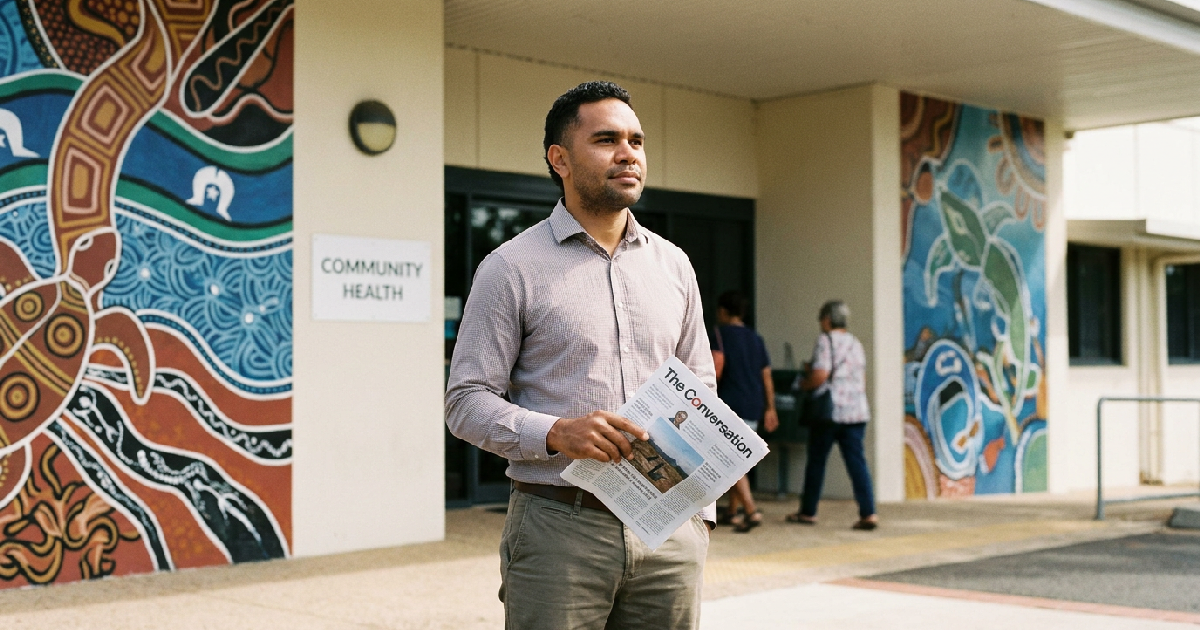
In a detailed assessment of contemporary health equity, researcher Jayden Murray argues that cultural safety is a fundamental human right and a critical lifeline for First Nations people navigating modern medical systems.
Writing for The Conversation, Murray emphasizes that cultural safety is not merely a corporate buzzword but a vital clinical requirement that determines whether Aboriginal and Torres Strait Islander people feel safe enough to seek medical intervention or avoid it altogether.
Establishing cultural safety as a clinical human right
The analysis makes it clear that the effectiveness of health outcomes is directly tethered to whether a patient can enter a clinic without being forced to leave their identity and cultural background at the door.
The core of this perspective lies in the shift of power from the practitioner to the patient; cultural safety is defined solely by the person receiving the care rather than the clinic or the health system providing it.
For First Nations communities, this means the difference between a practitioner who simply knows the right words and one who respects connection to Country as a clinical strength rather than a barrier.
This shift in healthcare philosophy seeks to dismantle the systemic racism and historical trauma that have long characterized the interaction between Indigenous populations and Western medical institutions, particularly in colonial contexts like Australia and Canada.
The significance of this approach is amplified when considering the historical context of healthcare as a tool of colonization. When people feel that their way of understanding health and healing is inferior to Western medicine, they often withhold their stories or skip follow-up appointments.
Jayden Murray notes that for many Aboriginal people, the clinic environment remains a space where they feel they must “edit” themselves to receive basic respect.
By establishing cultural safety as the “bare minimum” standard, health advocates are pushing for a system where Indigenous children and youth receive equitable, quality care that acknowledges their heritage as a protective factor for their long-term wellness.
For decades, the medical community viewed “cultural competence” as a checklist of facts about a specific group. However, the current framework for cultural safety demands a much deeper level of internal reflection from healthcare providers.
Key details
Jayden Murray states that cultural safety is the bare minimum that First Nations people should expect from the system, yet it is a standard that is too often unmet. This failure has tangible consequences, as it drives the persistent health gap between Indigenous and non-Indigenous populations.
When a patient feels unsafe, the resulting lack of trust leads to delayed diagnoses and poorer engagement with chronic disease management.
True safety in a healthcare setting is not achieved through a social media post or a tokenistic Acknowledgement of Country. It requires providers to understand the specific history of the region they serve, including the localized impacts of policies like the Stolen Generations.
In parts of the world where traditional structures are still being reimagined, such as how the Culture Mile initiative reimagines ancient summer fayre traditions to foster community, healthcare must also look backward to move forward.
Providers are encouraged to learn about the history of Aboriginal health in their specific region to understand why certain fears or hesitations exist within the community today.
Key details
Truth-telling is a cornerstone of the cultural safety journey. Healthcare providers must acknowledge that hospitals and clinics have historically been sites of trauma for First Nations people. From forced removals to medical experimentation, the memory of these events lasts for generations.
Addressing this history is not about assigning individual guilt to modern practitioners but about recognizing the collective systemic weight that an Indigenous patient carries when they walk through the door.
Effective truth-telling in a clinical setting might involve listening deeply to Elders and community leaders to understand local health priorities. It could also mean incorporating traditional healing spaces within hospitals, such as areas for ceremonies or gardens for traditional medicine.
When health systems prioritize time to listen to the community, they move away from a one-size-fits-all formula and toward a model of care that is genuinely responsive to the unique needs of the people it serves.
Global perspectives on Indigenous health and healing
While much of the recent focus on cultural safety has originated in Australia, the concept has strong roots in New Zealand and Canada as well. The term was actually developed over 20 years ago by Māori nurse Irihapeti Ramsden in Aotearoa New Zealand.
Today, Canadian practitioners are using similar frameworks to address the legacy of the residential school system and the findings of reports like “In Plain Sight,” which confirmed widespread anti-Indigenous racism in the British Columbia health system.
These global parallels suggest that the need for cultural safety is a universal requirement in any society with a history of colonial displacement.
In Canada, the framework is grounded in trauma-informed care and anti-racism. Pediatric healthcare providers are increasingly using a “learn, self-reflect, and act” model to ensure that Indigenous youth receive care that protects their cultural identity.
Key details
This includes educating oneself on the specific protocols of First Nations, Inuit, and Métis communities and ensuring that healthcare resources—such as pamphlets or nutritional advice—reflect the values and traditions of those groups rather than just Eurocentric standards.
Integrating traditional medicine into modern practice
One of the most practical applications of cultural safety is the integration of traditional healing practices alongside Western treatments. This does not mean replacing surgery or medication, but rather acknowledging that spiritual care and traditional knowledge are valid components of a patient’s recovery.
Some hospitals have introduced Elders councils to guide traditional medicine programs, providing spiritual care and cultural helpers to support patients and their families during stressful medical events.
This integration acknowledges that for many Indigenous people, the family—not just the individual—is the primary unit of decision-making. By allowing for family-based decision-making and creating space for traditional ceremonies, health systems can significantly reduce the alienation many First Nations people feel in sterile clinical environments. This holistic approach recognizes therapy as a “lifeline” that ensures patients actually show up for the care they need.
Future outlook for First Nations healthcare equity
Looking ahead, the shift toward cultural safety is expected to become a standardized legal and professional requirement. Organizations like the Australian Nursing and Midwifery Federation and the Australian College of Nursing have already signaled strong support for these codes of conduct.
As more medical schools incorporate Aboriginal and Torres Strait Islander history into their core curriculum, the next generation of doctors and nurses will enter the workforce with a better understanding of their role in dismantling systemic barriers.
However, the transition is far from complete. Critics and advocates alike point out that while policies are changing, the day-to-day experience for many First Nations patients remains inconsistent. The challenge lies in moving from “performing” cultural safety to genuinely living it within the clinical environment.
Key details
This requires ongoing monitoring and a willingness to be held accountable by the communities being served. The ultimate goal is a system where the “human right” of cultural safety is no longer a goal to be achieved, but a permanent, unquestioned reality of the healthcare experience.
Ultimately, Jayden Murray’s analysis serves as a reminder that healthcare is as much about the relationship as it is about the medicine. If the relationship is fractured by a lack of respect or a failure to acknowledge identity, the medicine will often fail.
By prioritizing time, listening to communities, and challenging racism at every level, the medical community can finally begin to provide the equitable care that First Nations people have long been denied. This is the only path toward genuine healing and the closure of the health gap that continues to divide modern society.
