



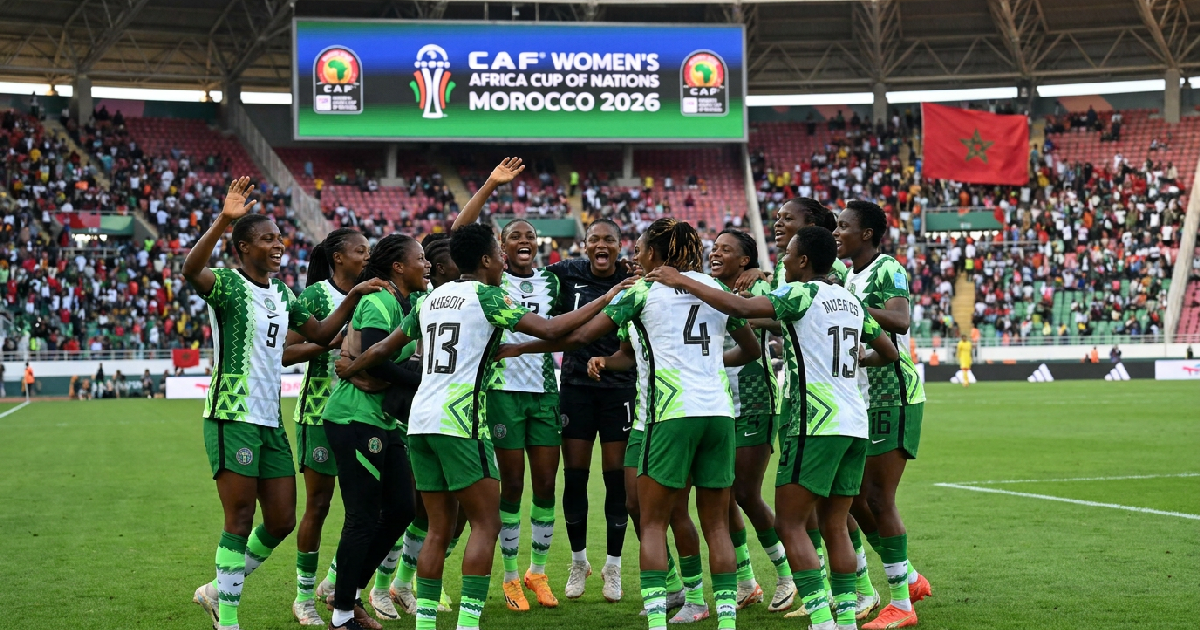
The stage is set for the 2026 African Women’s Cup of Nations, hosted by Morocco. Nigeria enters the tournament as the defending champion, fresh off a critical warm-up against West African rivals Ghana.
This tournament isn’t just a sporting event; it’s a fresh chapter in a story of fierce competition and growing recognition for women’s football across Africa. The Super Falcons carry the weight of expectation, a legacy built over decades of dominance that continues to inspire. Their journey in Morocco will be watched keenly by fans across the continent, particularly as they prepare for their opening game against Malawi.
Morocco steps onto the grand stage, again
For the third consecutive time, Morocco steps into the role of host, an unprecedented achievement for any nation in the tournament’s history. This continuity underscores the Confederation of African Football’s (CAF) deep commitment to developing the women’s game across the continent.
Matches will unfold across the vibrant cities of Rabat, Casablanca, and Fez, each offering a distinct cultural backdrop to the continental showdown. The decision to host repeatedly signals a strategic vision, aiming to solidify Morocco’s position as a hub for African football excellence.
Expanding the family: Malawi and Cape Verde join the elite
The 2026 African Women’s Cup of Nations will feature an expanded field of 16 participating nations, a significant jump from the 12 teams in previous editions. This move reflects a deliberate strategy to broaden the competition’s reach and elevate the standard of play across the region.
Among the nations making their debut at this enlarged tournament are Malawi and Cape Verde. Their inclusion injects fresh energy and new narratives into the championship, promising unexpected twists and highlighting the sport’s expanding footprint.
These debutantes will certainly test the established order, offering an opportunity for previously unheralded talents to shine on the continental stage. This expansion is a pivotal moment for African women’s football, signaling a shift towards greater inclusivity and competitiveness.
Nigeria’s enduring power and the shadow of history
The Super Falcons of Nigeria arrive in Morocco as the undeniable team to beat. They claimed the championship in 2024, overcoming the host nation 3-2 in a gripping final played in Rabat.
That victory cemented their status as continental powerhouses, a position they’ve held with remarkable consistency throughout the history of African women’s football. But holding onto that title demands more than just past glory; it requires constant evolution and an unyielding will to win against rising challengers.
Nigeria’s dominance isn’t a new phenomenon; it dates back to the very origins of women’s football in Africa. They’ve often led the charge, navigating challenges and setting high benchmarks for others to follow. Their story is one of resilience and consistent performance, inspiring generations of female athletes. The struggle for women’s economic parity has been a long one, and the Super Falcons exemplify breaking barriers through sport.
Many of today’s stars stand on the shoulders of legends who fought for recognition and resources. These pioneers laid the groundwork, transforming women’s football from a novelty into a powerful force. This historical context gives every Super Falcons match a deeper resonance for fans.
The World Cup dream fuels every kick
Beyond the honour of continental supremacy, the 2026 AWCON carries immense weight for every participating nation. It serves as Africa’s primary qualifier for the 2027 FIFA Women’s World Cup, scheduled to take place in Brazil.
This direct pathway to the global stage means every match, every goal, and every victory will be critical. The stakes are clear for all 16 teams: the four semifinalists from the AWCON will automatically secure their berths in the prestigious 2027 World Cup.
There’s also a crucial lifeline for the fifth-placed team, who will advance to an intercontinental playoff tournament. This offers another opportunity for World Cup participation, ensuring fierce competition right down to the final whistle of every game. It’s a system designed to push teams to their absolute limits, leaving no room for complacency.
The dream of representing Africa on the global stage is a powerful motivator, driving players to perform at their peak. For many, it’s the ultimate career aspiration, and the AWCON provides the most direct path to achieving it.
A million reasons to push: prize money and progress
The Confederation of African Football has underlined its commitment to the women’s game with a significant prize fund. The winning team of the 2026 AWCON will receive USD 1 Million, a substantial sum that reflects growing investment in the sport.
This isn’t merely a payout; it’s a substantial investment in the professionalisation and development of women’s football across the continent. Such financial incentives empower athletes, elevate the sport’s profile, and inspire future generations of players to pursue professional careers.
Increased prize money and broader participation signal a growing recognition of the economic and social impact of women’s sports. While the journey towards full economic parity continues, these steps are vital in dismantling historical barriers and securing a brighter future for female athletes. This reflects a broader trend where major events drive economic shifts, much like DHL Group’s projected EBIT growth demonstrates the impact of strategic investments.
The financial boost allows federations to invest more in training facilities, youth development programs, and coaching staff. This ripple effect helps to professionalise the entire ecosystem of women’s football, from grassroots to the elite level.
West African rivals tune up: Nigeria vs. Ghana
Ahead of their opening game against Malawi, the Super Falcons engaged in a crucial preparation match against long-standing rivals Ghana. This friendly encounter served as an invaluable gauge of their current form and tactical readiness.
Clashes between Nigeria and Ghana in any football discipline are always charged with history and regional pride. While the outcome of a warm-up game won’t dictate the tournament’s destiny, it offers a vital chance to fine-tune strategies and build team cohesion under competitive pressure.
These preparation matches are essential for understanding team dynamics and testing new formations before the main tournament kicks off on July 26. They allow coaches to assess individual performances and make necessary adjustments, ensuring the squad is at its sharpest. Just as Nigerian talents like Seun Akanji secure moves abroad, these national teams hone their skills on the international stage.
The experience gained from such high-intensity friendlies can be invaluable, especially when facing new opponents like Malawi in the group stage. It’s about translating training ground drills into effective on-field execution when it truly counts.
The future written in every match
As the 2026 African Women’s Cup of Nations approaches, the convergence of Nigeria’s quest to defend its title, the tournament’s expansion, and the direct World Cup qualification spots creates a compelling narrative. This is more than just a football tournament; it’s a defining moment for African women’s sports, a mirror reflecting decades of struggle and triumph.
Every match in Morocco, from July 26 to August 16, will echo far beyond the stadiums, shaping perceptions and fueling aspirations. It’s a continuation of a story that began decades ago with pioneering women who dared to play, a powerful reminder that nothing happening in African football today is without the deep, resonant precedents set by those who came before.
The lessons learned from previous tournaments, the sacrifices of past generations, and the unyielding spirit of competition converge in Morocco. This AWCON isn’t just about who lifts the trophy; it’s about reaffirming the continent’s place in global football and inspiring a new era of female athletes who will write their own history.
