



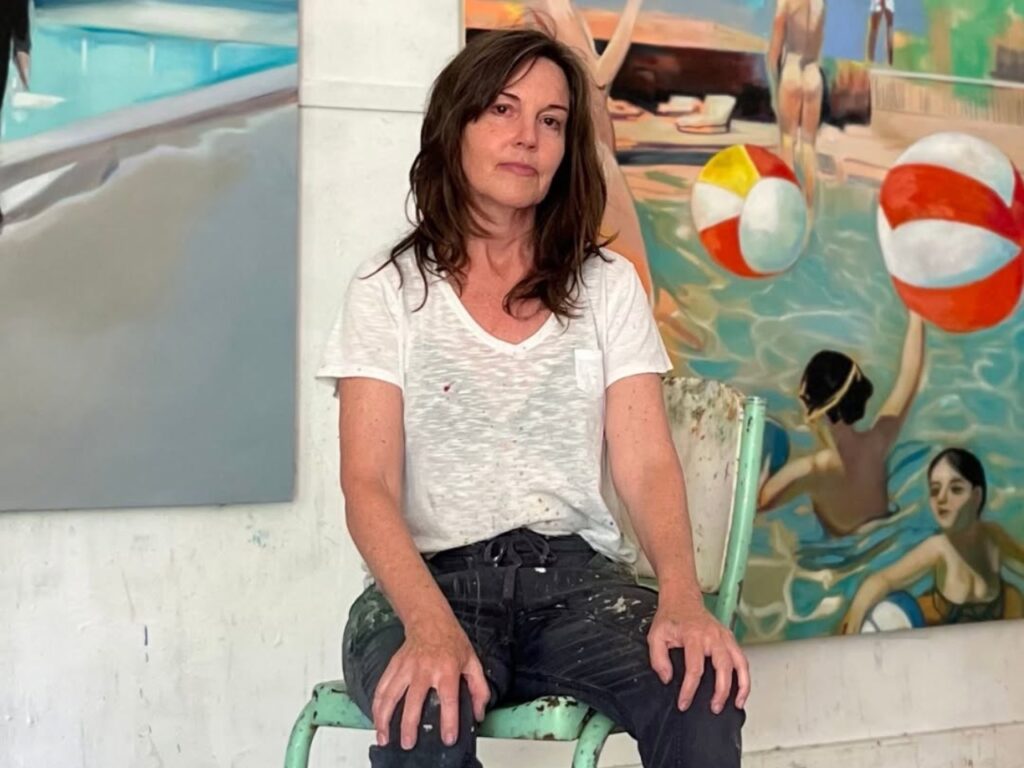
South African contemporary artist Kate Gottgens has publicly accused Cape Town-based SMAC Gallery and its director Baylon Sandri of failing to pay for sold artworks and withholding gallery-held pieces for years.
The situation reached a breaking point when Kate Gottgens shared a 2011 painting titled Audible Doom on Instagram, asking her followers if anyone had seen the work after it allegedly vanished following a 2022 art fair in Milan.
Kate Gottgens and the Instagram campaign for transparency
The post acted as a lightning rod, drawing out other creators who claimed they had been ghosted by the gallery for months or even years.
For many in the Cape Town art scene, the allegations against a gallery of SMAC’s stature—which regularly appears at prestigious fairs like Art Basel and The Armory Show—represent a sobering reminder of the power imbalance between creatives and the institutions that represent them.
The controversy is not merely about missing canvases; it is about the “sweat of artists,” as Gottgens put it, and whether the current gallery system provides any real safety net when things go wrong.
In a landscape where hierarchy hinders economic parity for many professionals, the art world remains particularly vulnerable to informal agreements that leave the creator at the mercy of the dealer’s cash flow or logistical competence.
Kate Gottgens spent over a decade with SMAC Gallery before cutting ties eight months ago. Despite her long tenure and the gallery’s role in elevating her career—including a solo presentation at The Armory Show in New York in 2024—the relationship soured over what she described as a lack of honesty regarding her inventory.
After months of unanswered WhatsApp messages and shifting explanations about her work being stuck in Belgium, she decided that public exposure was her only remaining leverage.
The pressure appeared to work almost immediately. Within twenty-four hours of her initial social media post, the gallery reportedly settled its outstanding debt to her, paying 297,500 rand (approximately $18,225). However, the money did not solve the mystery of the missing painting.
According to Gottgens, she later received confirmation from a logistics firm in Milan, not Belgium as previously claimed, that they were holding three of her other works but that Audible Doom remained unaccounted for.
Defending the gallery record against allegations of malice
In response to the mounting public pressure, SMAC Gallery issued a statement to ARTnews defending its long history in the industry. The gallery management expressed “deep disappointment” that artists they helped bring from obscurity to renown were now acting with what they termed “inexplicable malice.”
They argued that the majority of issues had already been resolved and that the remaining delays were the result of factors beyond their control.
Director Baylon Sandri, whose family is well-known in Cape Town for their influence in the culinary and business sectors, has pointed to external failures to explain the gaps. Specifically, the gallery blamed a third-party shipping company and the insolvency of an international partner gallery in Geneva for the difficulty in retrieving certain works.
While these may be factual hurdles, the affected artists argue that the gallery failed to communicate these issues transparently until they were cornered by public scandal.
Jody Paulsen and the high cost of retrieving art
Jody Paulsen, another prominent South African artist, shared a strikingly similar account of his dealings with the gallery. After SMAC organized a solo presentation of his felt collages at the Miart fair in Milan in 2023, the professional relationship ended.
Paulsen then spent two years attempting to recover more than ten pieces of his work that were being held in a Milanese storage facility. Like Gottgens, he was told the works were part of a “joint shipment” that never seemed to materialize.
The situation grew so desperate that Paulsen eventually bypassed the gallery and contacted the Miart fair organizers directly. He discovered that the gallery had reportedly failed to pay for the storage space, leaving his art effectively in a state of administrative arrest.
To secure the release of his own creations, Paulsen says he was forced to pay €6,000 in storage and release fees.
While the gallery eventually reimbursed him for the majority of these costs after he spoke to the media, the experience highlight the financial risks artists take when their primary representative fails to manage basic overhead.
This struggle for control over one’s professional safety and assets is a recurring theme in various sectors. For instance, activists like Jyedn Murray have called for cultural safety as a fundamental right, and in the art world, that safety includes the guarantee that a gallery will not hold an artist’s livelihood hostage through administrative neglect.
For Paulsen, the “stalling” felt like a deliberate strategy to slow the process of his departure to a new representative.
Former staffers describe a culture of financial instability
The accusations aren’t limited to the artists themselves. Former employees of SMAC Gallery have stepped forward to describe a workplace plagued by calls from angry suppliers and art fair organizers demanding payment.
Two former staffers, speaking on the condition of anonymity, recounted instances where artists would call the office in tears, pleading for information about their payments or the location of their paintings. These employees often found themselves caught in the middle, tasked with offering “excuses” to buy the gallery more time.
According to these accounts, the gallery’s difficulties extended beyond artist commissions. Contracted writers who provided essays for exhibition catalogs also allegedly faced long delays in receiving payment. The staffers described a business model that seemed to prioritize the prestige of international art fairs—where the gallery maintained an active and expensive presence—over the fundamental financial obligations to the creators who provided the inventory.
A shrinking roster and the decline of trust
Data from the gallery’s own digital history suggests a significant shift in its standing within the artist community. Between 2011 and 2022, the SMAC website listed as many as 28 artists on its roster. By 2023, that number had plummeted to 16, and it currently stands at just 14.
This exodus of talent suggests that the frustrations voiced by Gottgens and Paulsen are not isolated incidents but part of a broader trend of dissatisfaction among the gallery’s talent pool.
For many artists, the decision to leave was a difficult one. SMAC provided a rare bridge to the global art market, and many feared that speaking out would lead to being blacklisted or permanently losing access to their inventory.
The gallery’s defense—that it is working to mitigate damage to itself and its remaining artists—rings hollow to those who feel they were only treated with professional respect once lawyers or social media followers were involved.
The vanishing work of Gabrielle Kruger and the Geneva connection
Gabrielle Kruger, a painter based between Berlin and Cape Town, added her voice to the chorus of accusations. She sought the return of three large-scale works she had left with the gallery in 2022.
According to her, the gallery claimed that because she had chosen to leave their roster, the return of her work was no longer their problem. It was only after Gottgens’s post went viral that SMAC reportedly contacted Kruger regarding her missing pieces.
The gallery’s explanation involved a complex web of international business failures. They claimed the works were on loan to Galerie Bloom in Geneva, which had since declared insolvency.
While SMAC provided documentation showing that their legal counsel had been attempting to recover the works desde late 2025, Kruger maintains she was never informed of these legal proceedings or the status of her art for years.
This lack of communication is at the heart of the “distrust” that has now boiled over into the public domain.
This incident mirrors the difficulties faced by professionals in other fields during periods of organizational crisis. Much like how the All Progressives Congress faces criticism over internal administrative decisions, the art gallery’s lack of transparency has led to a collapse in confidence that no amount of late payments can easily repair.
For Kruger, the sudden “discovery” of her works immediately following a public scandal suggests the gallery was more capable of resolving these issues than they had previously admitted.
Broader implications for the South African art ecosystem
The fallout from the SMAC controversy highlights the precarious nature of the South African art market. SMAC was one of the few galleries that could offer local artists a seat at the table in Basel or Miami.
When such a dominant player is accused of “running on the sweat of artists,” it creates a chilling effect across the entire industry. It forces a hard conversation about the need for better contracts, more rigorous accounting, and perhaps even a regulatory body for art dealers.
For the artists involved, the choice was never easy. They were willing to overlook “poor business practices” and “emotional turmoil” because the opportunity to show with SMAC was, for a time, too significant to pass up. Now, that trade-off is no longer acceptable.
The bravery shown by Kate Gottgens in breaking the silence has signaled a shift in power.
In the digital age, a gallery’s reputation is no longer solely in its own hands; it belongs to the artists who, through their labor and their public voices, have the power to demand the transparency they were so long denied.
As the South African art world watches the resolution of these missing artwork claims, the lesson is clear: no amount of international prestige can protect an institution from the consequences of failing its most vital stakeholders.
History shows that when the silence of the creator is finally broken, the foundations of even the most established galleries can begin to shake. The current crisis at SMAC is a warning to the entire sector that the days of the “black box” gallery are coming to an end.
