



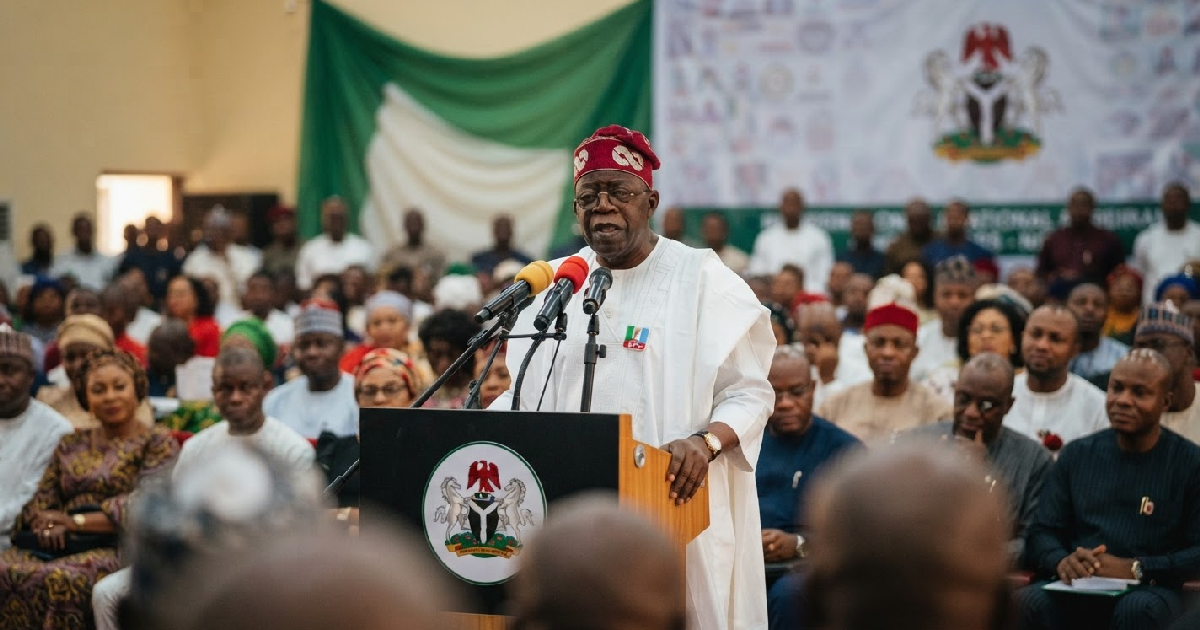
President Bola Ahmed Tinubu, who took office on May 29, 2023, now stands at a defining moment. His administration has embarked on bold economic reforms that have reshaped Nigeria’s trajectory, generating both commendation and criticism. As the political calendar inches closer to the 2027 general elections, the nation watches how these changes will truly impact millions of citizens.
This isn’t just about current policies; it’s a story rooted in decades of political maneuvering and governance. This path, marked by difficult choices and competing interests, now shapes what ordinary citizens can expect from their leadership. A period of rising inflation, high transportation costs, and dwindling purchasing power forms the backdrop for this critical assessment.
Nigeria’s present reality: The weight of reform
Leadership, as journalist Baba Dantiye observed, truly reveals itself not in comfort, but in the crucible of difficult decisions. President Bola Ahmed Tinubu inherited a nation grappling with significant challenges when he took the oath of office. Public debt was escalating, government finances were under severe strain, and foreign exchange distortions had become unsustainable.
The security landscape also presented a formidable hurdle. Insecurity continued to threaten lives, livelihoods, and investment across various regions of the country. These were not issues that emerged overnight, and they demanded urgent, structural reforms, prompting the administration to opt for decisive action rather than delayed responses.
One of the most consequential policy decisions involved the removal of the long-standing fuel subsidy. Simultaneously, the government unified the foreign exchange market, aiming to streamline economic processes. Supporters argue these measures were essential to liberate Nigeria from years of fiscal imbalances and foster a more sustainable economy.
However, these reforms have come with a steep cost for the average Nigerian family. Critics point to the rapid pace of implementation and insufficient social protection mechanisms, which have exacerbated the burden on ordinary citizens. The debate now centers on whether these tough choices are yielding their intended outcomes and if the government is adequately addressing the resulting hardships.
Baba Dantiye encapsulated this sentiment, stating that the true test isn’t just the willingness to make hard decisions. It’s the capacity to manage their aftermath effectively. Economic policies, he suggested, must ultimately be judged by their real-world impact on people’s lives, not merely by their theoretical elegance.
Architect of power: Tinubu’s political journey
No serious assessment of President Bola Ahmed Tinubu can ignore the extraordinary political journey that led him to the highest office. Few figures in contemporary Nigerian politics have exerted such profound influence on the nation’s democratic evolution. His career began in the trenches of the pro-democracy struggle during the military era, an experience that shaped his strategic approach to politics.
He steadily built a reputation as a shrewd strategist and an exceptional political mobilizer. His emergence as Governor of Lagos State in 1999 marked a significant chapter in this journey. Lagos, at the dawn of the Fourth Republic, faced enormous infrastructural, financial, and administrative challenges.
During his eight-year tenure, Tinubu initiated institutional reforms and aggressively mobilized revenue. He also recruited capable professionals into government, laying the groundwork for the state’s impressive economic transformation. This period cemented his preference for institution-building over short-term political gains, a philosophy that continues to define his approach to governance.
Beyond Lagos, Tinubu played a crucial role in fostering a competitive multi-party democracy. When the People’s Democratic Party (PDP) seemed politically unassailable, he became a principal architect of the coalition that formed the All Progressives Congress (APC). This merger of opposition parties culminated in the historic 2015 presidential election, proving that political change through the ballot box was indeed possible.
It was a landmark achievement, demanding immense patience, negotiation, and an uncommon ability to forge consensus across regional and ideological divides. This talent for identifying, nurturing, and mentoring future leaders has been a hallmark of his political career. Many governors, ministers, and legislators today owe their development to opportunities created within his political structure.
His choice of Senator Kashim Shettima as his running mate in the 2023 presidential election further reinforced this reputation for recognizing competence. It shows a leader who prepares individuals for greater responsibilities, understanding that leadership is measured not only by personal achievements but also by the quality of those empowered to carry the torch.
The 2027 calculus: Endorsements and grassroots mobilisation
As the nation looks towards 2027, the political landscape is already taking shape, with significant endorsements bolstering the APC political support. On July 24, 2026, President Tinubu secured a powerful regional endorsement for his re-election bid. Governors, elder statesmen, ministers, lawmakers, and traditional rulers from the six North-East states convened at the Presidential Villa in Abuja to formally back the Tinubu-Shettima ticket.
These leaders applauded President Tinubu’s decision to retain Vice President Kashim Shettima. They pledged to mobilise substantial grassroots support for his second term and for the All Progressives Congress (APC) across the entire North-East region. The President himself highlighted his administration’s commitment to the North-East, particularly in delivering on promises related to road infrastructure and security improvements.
Mobilising the grassroots for re-election
Further demonstrating widespread support, the Renewed Hope Ex-Councillors Forum pledged to rally citizens for President Bola Tinubu and the APC. This commitment was made during their official inauguration and first national executive council meeting in Abuja. The forum’s National Coordinator, Bashir Bukar Baale, affirmed their readiness, stating, “Leave the task of grassroots mobilisation to us. We shall take the message of your administration to every ward, every local government and every state of the Federation.”
The forum claims an impressive membership of over 100,000 former councillors, with structures spanning all 8,809 electoral wards across Nigeria. Yobe State Governor, Mai Mala Buni, chairs the forum’s Board of Trustees, while Ibrahim Kabir Masari, the President’s Special Adviser on Political Matters, serves as its Grand Patron. First Lady Senator Oluremi Tinubu also offers encouragement to the group, alongside Dr. Mujidat Folashade Tinubu-Ojo, the Iyaloja-General of Nigeria, who sent congratulations via Hajia Jamila Isa Ahmed.
Beyond national endorsements, local political movements are also falling into place. On May 1, 2026, APC leaders in Oyo State reportedly endorsed Senator Alli as their consensus governorship candidate for the 2027 election. This decision, ratified at a leadership summit in Samonda, Ibadan, reportedly followed extensive consultations.
Senator (Chief) Hamzat Ayo Adeseun confirmed this, while Alhaji Fatai Ibikunle, Director of the South West Development Commission, reiterated that he had discussed the matter with President Tinubu, who endorsed Alli for Oyo State. In another display of internal party organisation, an APC group in Oshodi-Isolo Local Government, the Tinubu Lagos State Ambassadors (AATLSA), inaugurated a special executive council specifically for 2027.
Meanwhile, the National Assembly has resolved not to introduce any further amendments to the Electoral Act before the 2027 general elections, aiming to ensure stability and prevent last-minute rule changes.
The harsh realities: Economic hardship and security concerns
While political alignments solidify, the lived reality for millions of Nigerian families remains challenging. They continue to grapple with a harsh economic climate characterized by persistently rising food prices and increasing transportation costs. This has led to a noticeable decline in household incomes, impacting their daily lives significantly.
Small and medium-scale enterprises, often considered the backbone of the economy, face mounting operational expenses. Many young Nigerians also remain deeply anxious about employment opportunities and their future prospects in this uncertain environment. These concerns are genuine and require thoughtful, responsive solutions rather than mere political rhetoric.
Beyond economic reforms, security remains a critical benchmark for any government’s performance. While the armed forces and other security agencies have achieved commendable successes in various operational theatres, significant challenges persist. Incidents of terrorism, banditry, kidnapping, and communal conflicts continue to undermine national stability and public confidence.
Economic development struggles to flourish where citizens live in fear. Investors are naturally hesitant to commit resources in environments where insecurity remains a pervasive threat. On June 14, 2026, Former Vice President Atiku Abubakar starkly described President Tinubu’s N4trn bond as a “racket,” highlighting the ongoing scrutiny of the administration’s financial strategies.
Another recurring criticism points to an apparent lack of effective coordination among government ministries, departments, and agencies. Even the most well-conceived policies risk losing public confidence if their implementation is slow, fragmented, or poorly communicated. Government operates most effectively when its institutions work in harmony, with clearly defined responsibilities.
Communication that inspires public confidence is equally vital. Strengthening policy coordination, improving institutional efficiency, and ensuring greater synergy across government should therefore remain urgent priorities. These efforts are crucial as the administration enters the second half of its first term.
Nation-building, however, is a shared responsibility, extending beyond the government alone. Political leaders, public servants, the organised private sector, civil society organisations, traditional institutions, religious leaders, and the media all play vital roles. Democracies thrive not solely on good governance, but on active citizen participation in the search for solutions.
Leadership also demands humility, acknowledging that policies, however well-intentioned, may need adjustment. No responsible leader deliberately introduces measures to cause hardship, yet good governance requires continuous evaluation and listening to citizens.
Lessons for tomorrow: Experience and the path to 2027
Managing Nigeria’s economy, responding to national security threats, and balancing diverse regional interests will undoubtedly test President Tinubu’s experience. Few Nigerian political leaders can lay claim to the breadth of political and administrative experience he has accumulated over several decades.
From his foundational role as a pro-democracy activist and a senator in the Third Republic, to his impactful tenure as Governor of Lagos State, his influence in opposition politics, and his pivotal contribution to building a ruling coalition, he has navigated almost every facet of democratic leadership.
But the Presidency itself offers lessons no previous position can fully prepare one for. The immense complexities of leading Africa’s most populous nation provide a unique education in governance. By 2027, President Tinubu will have accrued four years of direct experience at the very pinnacle of national responsibility.
So the crucial question becomes how effectively this extensive experience will translate into refined governance. As Baba Dantiye wisely observed, experience should foster refinement, not rigidity. It should encourage a readiness to adjust policies where necessary, strengthen institutions, and enhance communication, ensuring government decisions are more closely aligned with the daily realities of ordinary Nigerians.
As President Tinubu contemplates his 2027 re-election bid, Nigerians will seek more than mere continuity. They will expect an administration that has learned from its initial term, addressed weaknesses, and developed a clearer understanding of effective solutions. The true value of experience isn’t just the years spent in office; it’s the capacity to transform those years into superior judgment and more impactful leadership.
One area where the President’s proven political strength can continue to serve the nation is in his ability to identify and empower capable individuals. The same talent for recognising leadership potential that marked his political career must now be fully deployed to strengthen public administration. Effective governance relies not solely on policies, but critically on the quality, competence, and commitment of those tasked with implementing them.
The coming years will therefore provide a crucial test: can the administration effectively convert political experience into administrative excellence? Nigerians will closely observe whether government coordination improves, institutions become more efficient, and security measures yield tangible results. They will want to see if economic reforms genuinely translate into visible improvements in their daily lives, such as affordable necessities, better opportunities for young people, and a thriving business environment.
The journey from yesterday to 2027 transcends simple political calculations or electoral strategies. It represents the evolution of leadership under the immense weight of national responsibility. President Tinubu assumed office with decades of political experience, yet the Presidency has undeniably presented novel challenges and lessons only direct governance can impart. These profound lessons should now form the bedrock of a more responsive, coordinated, and people-centered administration.
History rarely favors leaders who merely occupy office; it remembers those who learn, adapt, and ultimately leave their nations stronger than they found them. The ultimate measure of President Tinubu’s leadership will not only be the difficult decisions he made but whether those choices eventually fostered greater economic opportunity, enhanced security, strengthened institutions, and delivered a better quality of life for all Nigerians.
As the nation moves towards 2027, the central question remains: will the experience gained from his first term truly translate into a second phase of governance marked by greater effectiveness, deeper public trust, and a stronger connection with the aspirations of the Nigerian people? If, as the saying goes, experience is indeed the best teacher, then the years between yesterday and 2027 should emerge as a period of profound learning, adjustment, and renewal, ultimately transforming difficult choices into lasting progress for the people.
ng/nigeria-ai-infrastructure-challenge/”>infrastructure challenge and economic stability demand continuous learning from leadership.
